
The short version
- Safe-on-arrival water can turn unsafe inside a dirty storage tank — the tank is a contamination point you fully control.
- The diseases that matter are the faecal-oral ones: typhoid, cholera, hepatitis A and E, giardia, amoebiasis, E. coli gastroenteritis and acute diarrhoea.
- The culprits inside a neglected tank: biofilm on the walls, sediment and sludge on the floor, dead pests, and sewage or dirty-water ingress through bad lids, cracks and unscreened pipes.
- Most at risk: infants, the elderly, pregnant women, and anyone immunocompromised — and entire shared buildings when one tank is bad.
- Prevention is boring and effective: scrub-clean plus disinfection every six months, a sealed lid, screened pipes, and not ignoring colour or smell.
A purifier guards the glass you drink. A clean tank guards every tap in the house. You need both.
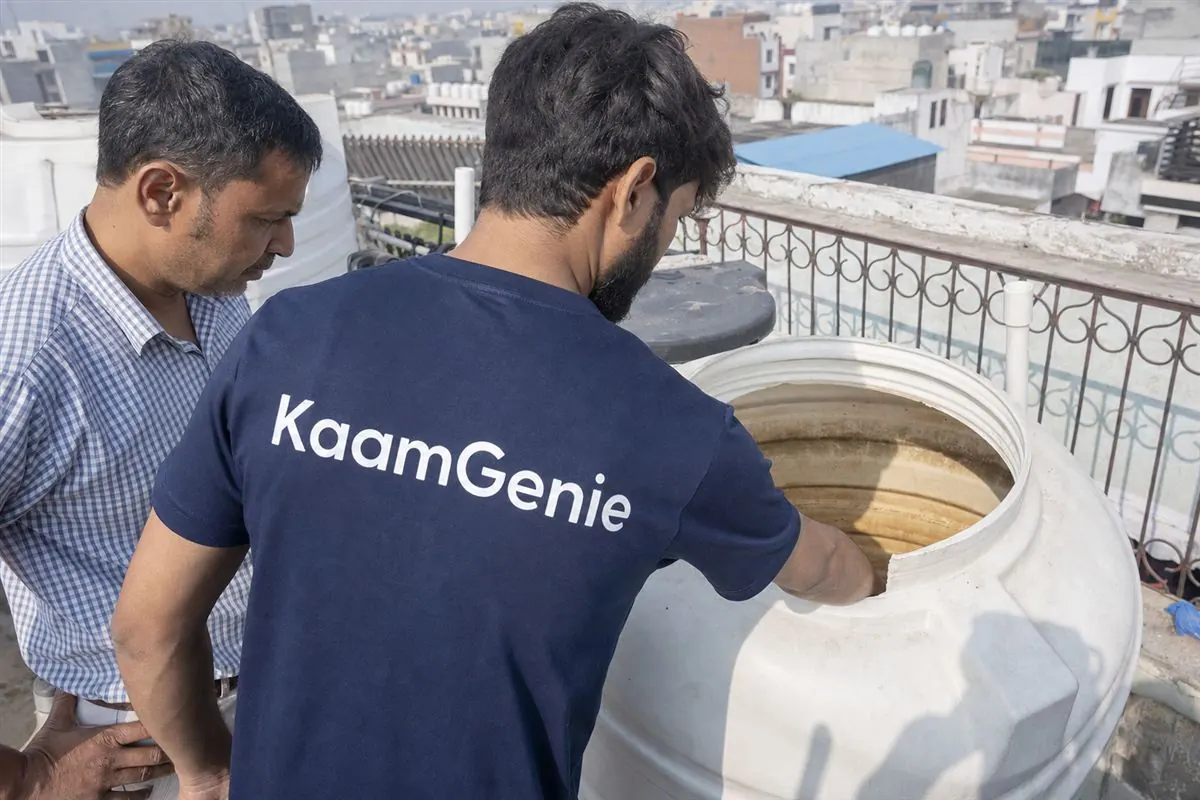
Most people in Delhi assume the water problem is upstream — the river, the treatment plant, the pipes. Those matter. But the part of the journey closest to your family, and the part nobody from the water utility ever sees, is your own storage tank. Water that left the Delhi Jal Board plant within safe limits can sit for days in an overhead tank with a cracked lid and a finger of black sludge on the floor. By the time it reaches the kitchen tap, it is a different liquid.
This article is the part of the conversation we have on rooftops every week, written down: which illnesses are genuinely linked to stored water, exactly how a tank causes them, who in your home is most vulnerable, and why a real cleaning — the scrub-and-disinfect kind, not a rinse — is the cheapest preventive health step a Delhi household can take. We have kept it sourced to WHO, BIS and FSSAI guidance, with no scary invented numbers.
| Illness | Cause | How a tank is involved | Typical symptoms |
|---|---|---|---|
| Typhoid & paratyphoid | Salmonella Typhi / Paratyphi | Faecal contamination via ingress or unwashed hands; bacteria persist in sediment | Prolonged fever, weakness, abdominal pain |
| Cholera | Vibrio cholerae | Sewage cross-contamination, low chlorine residual in stagnant tanks | Severe watery diarrhoea, rapid dehydration |
| Hepatitis A & E | HAV / HEV viruses | Faecal-oral spread through contaminated water; HEV notably water-linked | Jaundice, fatigue, nausea, dark urine |
| Giardiasis & amoebiasis | Giardia / Entamoeba (protozoa) | Cysts survive in sediment and resist weak chlorine | Persistent loose motions, cramps, bloating |
| E. coli gastroenteritis | Pathogenic Escherichia coli | Indicator of faecal contamination; thrives in biofilm | Diarrhoea, vomiting, stomach cramps |
| Acute diarrhoeal disease | Mixed bacteria / viruses | General outcome of an unclean, under-disinfected tank | Loose stools, dehydration, fatigue |
This table is a plain-language summary of well-established public-health knowledge, not a diagnosis. The thread running through every row is the same: these are faecal-oral diseases, meaning they spread when even a trace of human or animal waste reaches water that someone then swallows. A storage tank is simply one of the places where that trace can sneak in.
Not sure when your tank was last cleaned?
If you can’t remember, that’s your answer. Book a real scrub-and-disinfect clean — before/after photos, food-grade disinfectant, fixed price. ₹699 onwards.
How a clean supply becomes unsafe inside the tank
The World Health Organization’s guidance on drinking water is built around one idea: water has to be safe not just at the source but all the way to the point of use. The storage tank is the last leg of that journey in almost every Delhi home, and it is where four specific things go wrong.
1. The disinfectant runs out. Treated water leaves the plant with a small chlorine residual that keeps killing germs on the way to you. By the time water has crawled through ageing mains, sat in your underground sump, and stood for a day or two in a warm rooftop tank, that residual is largely gone. A tank with no chlorine left and some organic matter on the floor is an open invitation for bacteria to multiply.
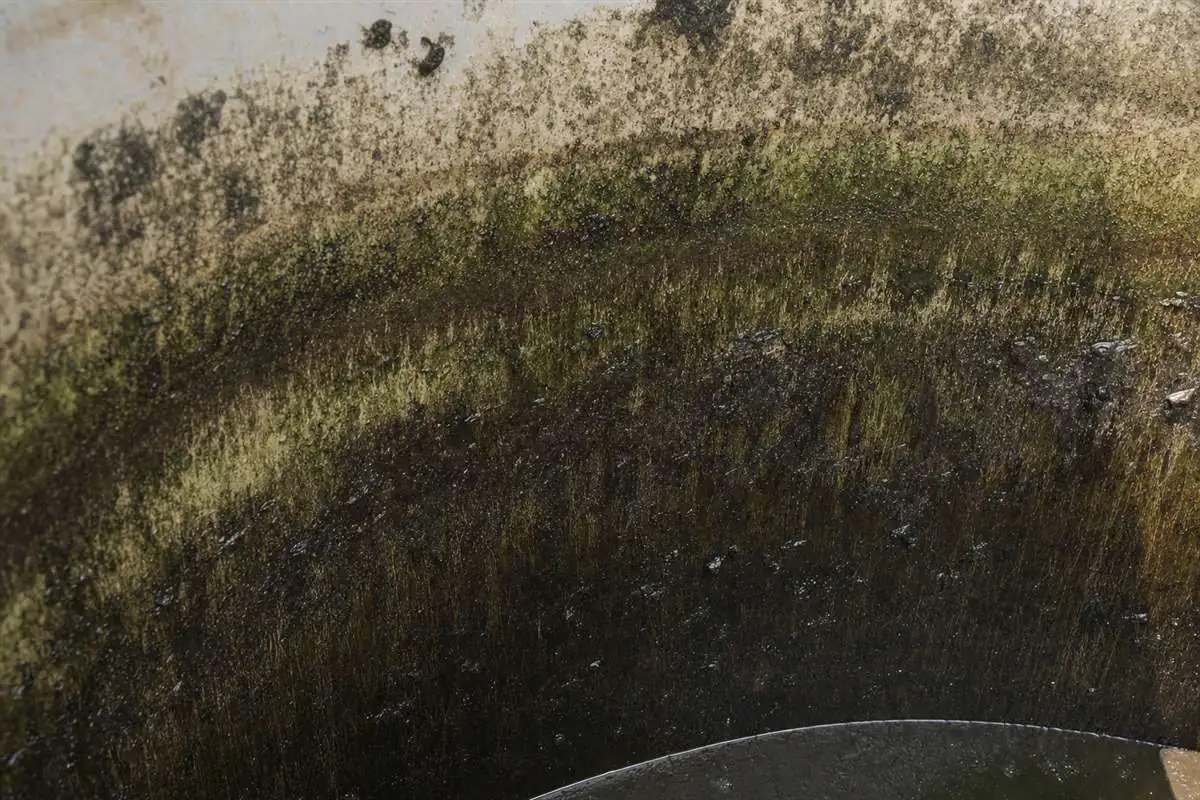
2. Biofilm builds on the walls. Over months, a thin slimy layer of bacteria and organic matter grows on the inside surfaces. Biofilm is stubborn: it physically shields the microbes underneath from disinfectant, and it periodically sheds clumps of bacteria back into the water. This is why a top-down rinse achieves almost nothing — you have to scrub the film off and then disinfect the bare surface, which is exactly what proper tank disinfection chemicals are for.
3. Sediment and pests collect on the floor. Sand, rust off old pipes, tanker grit and dead insects settle into a sludge layer. Protozoan cysts like giardia and the bacteria behind typhoid survive happily in that sediment, partly protected from whatever chlorine is left. We routinely open year-neglected tanks and find drowned lizards, cockroaches and pigeon droppings — each one a direct faecal-oral risk.
4. Contamination gets in. A loose, cracked or missing lid lets dust, leaves, birds and rodents in. An unscreened overflow or vent pipe is a highway for pests. A hairline crack near a drain or an overhead tank sitting close to a soil pipe allows actual sewage ingress. And during Delhi’s intermittent supply, low pressure in the mains can suck dirty groundwater back into the line. Any one of these turns a clean tank into a contaminated one.
The diseases, in plain terms
It helps to know what you are actually preventing. None of this is meant to alarm — these illnesses are well understood and largely preventable.
Typhoid and paratyphoid are bacterial infections (Salmonella Typhi and Paratyphi) that spread through water or food contaminated with faecal matter. They cause a drawn-out fever, weakness and abdominal pain, and they remain common in Indian cities wherever water and sanitation overlap. Cholera, caused by Vibrio cholerae, is the dramatic one — profuse watery diarrhoea that dehydrates a person fast — and it is classically linked to water contaminated by sewage.
Hepatitis A and hepatitis E are viral liver infections that also spread by the faecal-oral route through contaminated water; hepatitis E in particular is strongly water-associated and tends to flare where supply is unreliable. Giardiasis and amoebiasis are protozoal infections that cause stubborn, recurring loose motions and cramps — the kind that get misread as “a weak stomach” for weeks. E. coli in water is both a cause of gastroenteritis and the standard indicator that faecal contamination has occurred, which is why drinking-water norms test for it specifically.
Delhi reliably sees these illnesses rise in the hot months and again in the monsoon — summer because supply gets scarce and people lean on tankers and stored water, the monsoon because floodwater and cross-contamination spike. The seasonal pattern is real; the exact numbers vary year to year and we won’t pretend to a precise figure we can’t source.
Who in your home is most at risk
Waterborne infection does not hit everyone equally. WHO and paediatric health guidance consistently flag the same vulnerable groups: infants and young children, whose small bodies dehydrate quickly with diarrhoea; the elderly; pregnant women, for whom hepatitis E can be especially serious; and anyone immunocompromised — people on chemotherapy, transplant recipients, or those with chronic illness.
Delhi’s living patterns raise the stakes. A single overhead tank often feeds an entire builder floor in Shahdara or a packed colony house in Najafgarh, so one neglected tank can sicken a whole household at once. PGs and hostels concentrate dozens of young tenants on shared tanks. High-rise societies in Dwarka run large common reservoirs where the consequences of skipping a clean are multiplied across hundreds of flats. The more people a tank serves, the less excuse there is to let it slide.
What we most commonly find inside Delhi tanks not cleaned in 12+ months
KaamGenie field observation across residential jobs — illustrative, not a clinical survey
Bars reflect how often our crews encounter each issue in long-neglected residential tanks — a qualitative field pattern, not a measured statistic. The point is simple: the contamination risks are the rule in neglected tanks, not the exception.
How regular cleaning and disinfection breaks the chain
Here is the genuinely good news: this is one health risk you can almost entirely engineer out, cheaply, on a schedule. A proper clean attacks every one of the four failure points above.
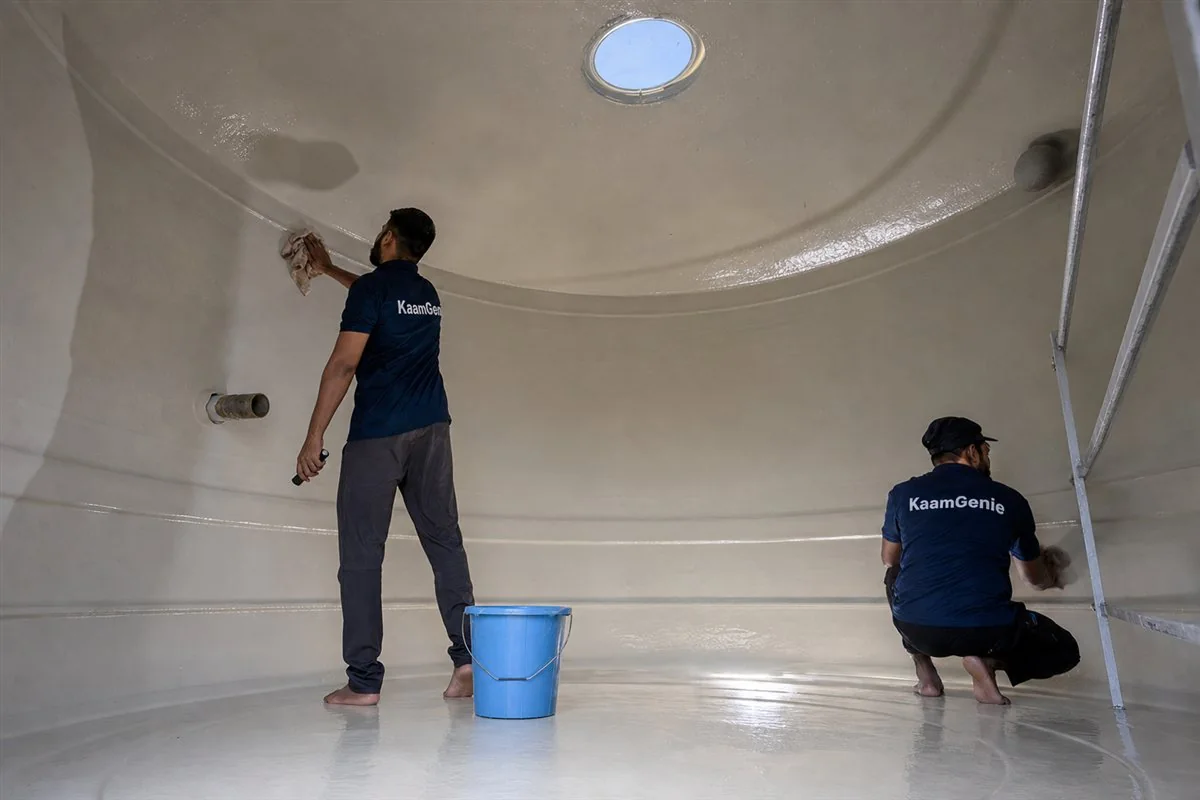
A real cleaning drains the tank, scoops out the sludge, and physically scrubs the biofilm off the walls — that removes the sediment where cysts hide and the slime that shelters bacteria. It then disinfects with food-grade sodium hypochlorite at the correct concentration, left in contact long enough to kill what the scrubbing loosened, before a final rinse. Scrubbing handles the physical contamination; disinfection handles the microbial part. Do one without the other and the job is half done — which is exactly why we never treat disinfection as optional. If you want the full sequence, we wrote it up in our step-by-step cleaning process.
Around the clean, a few cheap habits keep the tank safe between visits:
- Seal the lid. A tight, intact lid is the single most effective barrier against pests, dust and droppings.
- Screen the pipes. Mesh on the overflow and vent stops insects and rodents getting in.
- Fix cracks and keep distance from drains. Repair hairline cracks promptly and make sure no overhead tank sits hard against a soil or sewage line.
- Clean the sump too. In most Delhi homes water hits the underground sump first; a dirty sump re-seeds a clean overhead tank within days, so do both together.
- Don’t ignore the warning signs. Colour, smell, floating particles or recurring stomach upsets all mean: open the tank and look. Our guide to the signs a tank needs cleaning urgently covers what to watch for.
On frequency, a sensible Delhi default is every six months, and once a year as the absolute floor. Go more often if you rely on tanker water, have hard or borewell supply, or run a shared building. Our detailed take on how often to clean a water tank in Delhi walks through the variables.
Put your tank on a six-month schedule
Cleaning plus food-grade disinfection, before/after photos, and a service record for your RWA. Homes from ₹699 onwards; society, sump and commercial quoted on site.
A purifier is not a substitute for a clean tank
The most common pushback we hear is: “We have an RO, so the water is fine.” It isn’t that simple. An RO or UV unit treats only the trickle you draw for drinking and cooking. The same tank water reaches the rest of the kitchen tap for rinsing vegetables, washing utensils and filling pots; the bathroom basin where children brush their teeth; and every other outlet in the home. People swallow far more untreated tank water across a day than the purifier ever sees. The purifier and the clean tank protect different parts of the same problem, and skipping the tank to lean on the purifier leaves a wide gap open.
The bottom line for Delhi homes
Waterborne disease in a city like Delhi is rarely about one dramatic failure. It is the slow accumulation of sludge, biofilm and a lid that never quite closed, in a tank nobody opened for two years. The fix is unglamorous and reliable: open the tank, scrub it properly, disinfect it, seal it, and repeat on a schedule. That is the whole protective story.
If it has been more than a year since your tank was last opened — or you simply don’t know — that is reason enough to act. You can book water tank cleaning in Delhi with us directly, see the full scope of our water tank cleaning services across Delhi NCR, and get a documented clean with before/after photos and a record you can hand to your RWA. It is the cheapest piece of preventive healthcare your household will buy this year.
Frequently asked questions
Can a dirty water tank really make you sick?
Yes. WHO is clear that microbially unsafe drinking water transmits diseases like cholera, typhoid, dysentery and hepatitis A. A storage tank sits between treated supply and your tap, and if it carries sediment, biofilm, dead pests or sewage ingress, it can re-contaminate water that arrived clean. The tank is one of the few contamination points that is fully within your control.
Which diseases are linked to contaminated stored water in Delhi?
The faecal-oral diseases: typhoid and paratyphoid (Salmonella Typhi), cholera (Vibrio cholerae), hepatitis A and hepatitis E (which spread through contaminated water), giardiasis and amoebiasis, E. coli gastroenteritis, and general acute diarrhoeal disease. Delhi sees seasonal rises in these around summer and the monsoon when supply is patchy and contamination risk is higher.
Doesn’t my RO purifier remove all the germs anyway?
An RO or UV purifier only treats the small stream of water you drink. The same tank water reaches your kitchen tap for washing vegetables and utensils, your bathroom for brushing teeth, and the rest of the house. People swallow more untreated tank water than they think. A purifier and a clean tank solve different parts of the problem — you need both.
How does an overhead tank get contaminated if the municipal water is treated?
Delhi Jal Board treats water at the plant, but the disinfectant residual fades by the time water travels through old mains, sits in your underground sump, gets pumped up, and stands in the overhead tank. Add a loose or missing lid, a cracked wall, an unscreened overflow pipe, intermittent supply that pulls in dirty water during low pressure, and tanker top-ups of unknown quality, and a clean supply becomes an unsafe store.
What is biofilm and why does it matter?
Biofilm is the slimy layer of bacteria and organic matter that builds up on tank walls and inside pipes. It shields micro-organisms from chlorine, lets them multiply, and sheds them back into the water in clumps. You cannot rinse biofilm off — it has to be physically scrubbed away and then the surface disinfected. This is exactly why a quick top-down rinse is not a real cleaning.
Who is most at risk from waterborne illness at home?
Infants and young children, the elderly, pregnant women, and anyone with a weakened immune system are most vulnerable to dehydration and complications from waterborne infection. In shared Delhi setups — PGs, hostels, large joint families and tenant-heavy buildings — one contaminated tank affects many people at once, which is why society and PG tanks deserve stricter schedules.
How often should I clean my tank to prevent waterborne disease?
A practical rule for Delhi homes is every six months, and at least once a year as a bare minimum. Go more often if you depend on tanker water, have hard or borewell supply, run a PG or shared building, or notice any colour, smell or sediment. Pair the schedule with disinfection every time — cleaning without disinfection leaves the job half done.
Does tank cleaning include disinfection, or is that separate?
A proper cleaning always ends with disinfection. We drain, remove sludge, scrub away biofilm, jet wash, vacuum, and then apply food-grade sodium hypochlorite at the correct concentration with a contact time before rinsing. Scrubbing removes the physical contamination; disinfection kills what remains. Skipping the disinfection step is the most common corner cut and the one that most directly affects disease risk.
We get tanker water in summer — is that riskier?
It can be. Tanker water quality varies with the source and how clean the tanker itself is, and it is often pumped straight into your underground reservoir where sediment settles. During Delhi’s summer water crisis many homes in outer and unauthorised colonies rely heavily on tankers, so the storage tank does more work and needs cleaning more often. Disinfecting the tank after a tanker-fed season is sensible.
What are early warning signs my tank water is unsafe?
Yellow, brown or cloudy water, a musty or chlorine-gone smell, visible particles in a glass left to stand, slimy taps or aerators, and recurring stomach upsets in the household with no other clear cause. Any of these means open the tank and look. If it has been over a year since the last cleaning, treat that alone as reason enough to book.
Sources & references
- Bureau of Indian Standards (BIS) — IS 10500:2012 is the canonical Indian Standard for drinking water specification, defining acceptable limits for physical, chemical, and biological parameters including E. coli.
- WHO Guidelines for Drinking-water Quality, 4th edition — the global reference for water quality, including guidance on safe storage, disinfection and protecting water all the way to the point of use.
- Food Safety and Standards Authority of India (FSSAI) — defines water quality requirements for food businesses, including hygiene standards for stored water and acceptable disinfection chemicals.
- WHO Fact Sheet on Drinking Water — overview of how microbially contaminated water transmits diseases such as diarrhoea, cholera, dysentery, typhoid and hepatitis A.
- CPHEEO — Manual on Water Supply and Treatment — the Government of India’s engineering manual covering tank design, cleaning protocols, and disinfection practices.
Last verified: 30 June 2026. If you find any of these links broken, please let us know.