
Key takeaways
- Sump tank cleaning in Delhi costs ₹1,500–2,500 — more than a same-size overhead tank.
- The premium reflects confined-space work through a narrow hatch, not just volume.
- Sumps collect the heaviest silt and scale because water reaches them first.
- A dirty sump re-contaminates a clean rooftop tank on the next pump cycle.
- Clean every 3–4 months; a post-monsoon clean clears the worst silt.
- Always bundle the sump with your overhead tanks for the best combined rate.
This guide covers what sump tank cleaning costs in Delhi in 2026 and why it’s priced differently from an overhead tank. We explain the confined-space work that makes a sump job more involved, the silt-and-scale build-up unique to underground storage, why cleaning the sump matters even if your rooftop tank looks fine, the right frequency, and how bundling the sump with your overhead tanks gets you the best overall rate.
What sump cleaning costs in Delhi
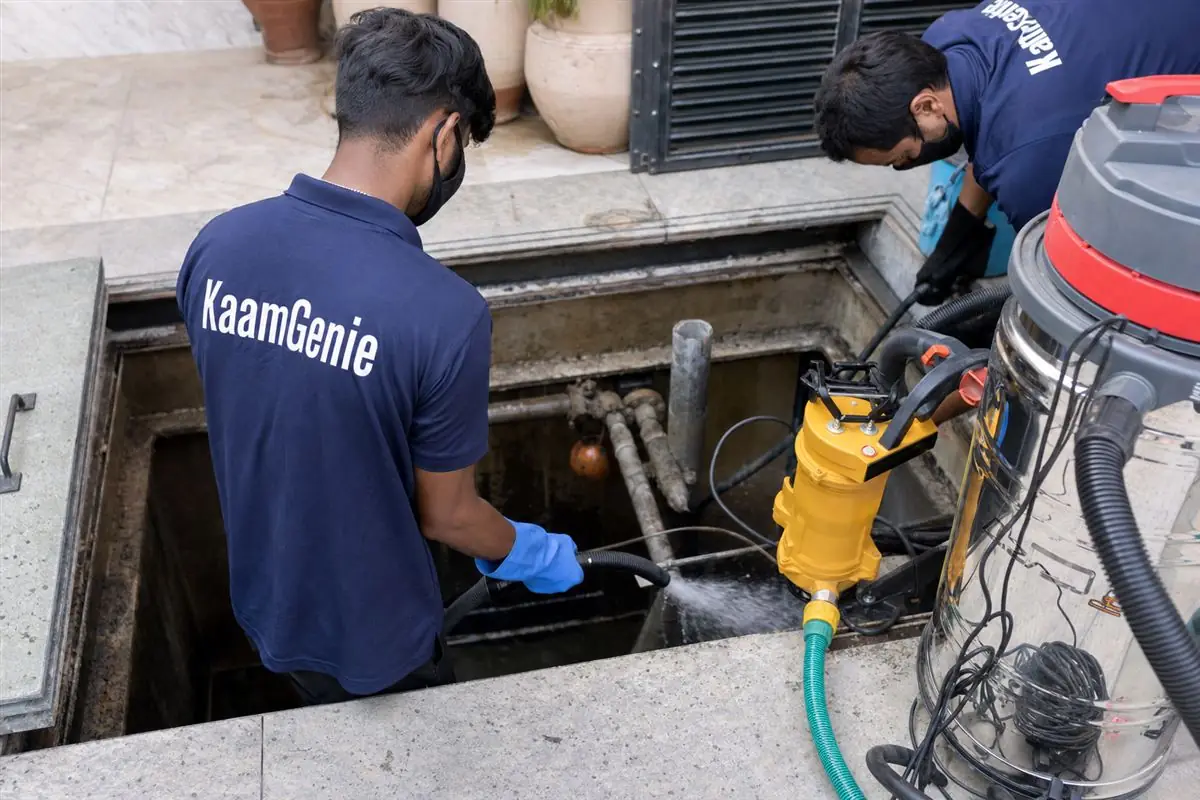
A typical underground sump clean in Delhi costs ₹1,500 to ₹2,500, depending on the sump’s size, how accessible the opening is and how much sludge has built up. That’s higher than an equivalent-volume overhead tank, and for good reason: a sump is a confined space, usually with a narrow access hatch, so the work is slower, more physically demanding and needs extra care. KaamGenie gives a fixed quote once we know your sump’s size and access. Compared with the overhead tank tiers, the sump premium reflects the difficulty of the job, not just the volume.
Why sumps cost more than overhead tanks
An overhead tank is open and easy to reach; a sump is the opposite. Cleaning one properly is confined-space work through a small hatch, which slows every step — scrubbing, extraction and rinsing all take longer when a technician is working in a tight, damp underground chamber. Sumps also tend to hold heavier settled silt because they’re the first stop for incoming supply. The extra time, the physical difficulty and the powerful pump needed to evacuate a large volume of dirty water from below ground level are what lift the price above a same-size overhead tank clean. It’s a genuinely harder job.
The silt and scale hiding underground
Because the sump receives water first and stores it before pumping, it collects the heaviest sediment load in the whole system. DJB supply drops fine silt that settles into a soft base layer; during monsoon this thickens noticeably. Delhi’s hard borewell water adds calcium scale to the walls. The damp, dark, closed environment then encourages biofilm and, in badly neglected sumps, an unpleasant smell. A proper clean tackles all three — sludge, scale and biofilm. The problem is that none of it is visible from your kitchen tap until the water quality has already dropped, which is exactly why sumps get ignored until there’s a taste or smell complaint.
Book your water tank cleaning
Trained crew, food-grade process, before/after photos and a service record every job. ₹699 onwards, same-day where possible across Delhi NCR.
Why a clean sump matters even with a clean roof tank
Many Delhi homes clean the rooftop tank diligently and never touch the sump — which undoes the effort. Water flows sump first, then up to the overhead tank, so a dirty sump re-contaminates a freshly cleaned tank on the very next pump cycle. Think of the two as one system:
- Sump = the reservoir where sediment first settles
- Overhead tank = the buffer that feeds your taps
How often to clean a sump
Clean your sump every three to four months, on the same rhythm as your overhead tanks. Bring it forward if you’re on hard borewell water, if the sump lid doesn’t seal well, or if you notice any change in taste or smell at the tap. Because the sump collects the heaviest monsoon silt, a post-monsoon clean around September or October is especially worthwhile. Homes with infants, elderly members or anyone with a weak stomach should hold a strict quarterly schedule — the sump is the single most impactful tank to keep clean because everything downstream depends on it.
Bundle the sump for the best rate
The most economical way to clean a sump is never on its own — it’s alongside your overhead tanks in one visit. A combined booking (sump plus your 1,000-litre or 2,000-litre overhead tank) costs less than two separate jobs, and it keeps the whole system on one schedule so nothing gets re-contaminated. To book, call or WhatsApp 95603 66362 with your sump size, access and how many overhead tanks you have. You’ll get a fixed combined quote. An annual plan covering the full system takes 15–25% off each visit and removes the “did we clean the sump this time?” guesswork for good.
Frequently asked questions
How much does underground sump tank cleaning cost in Delhi?
A typical sump clean costs ₹1,500 to ₹2,500, depending on the sump’s size, access and sludge build-up. That’s more than a same-size overhead tank because a sump is confined-space work through a narrow hatch — slower, harder and needing a powerful pump to evacuate dirty water from below ground level.
Why is a sump more expensive than an overhead tank to clean?
A sump is an underground confined space with a small access hatch, so scrubbing, extraction and rinsing all take longer and are more physically demanding than an open rooftop tank. Sumps also hold heavier settled silt because they receive supply first. The extra time, difficulty and pumping are what raise the price.
Do I need to clean the sump if my rooftop tank is already clean?
Yes. Water flows into the sump first, then up to the overhead tank, so a dirty sump re-contaminates a freshly cleaned rooftop tank on the next pump cycle. Cleaning only the overhead tank is like washing a glass and refilling it from a dirty jug. Keep both on the same schedule for real hygiene.
How often should a sump tank be cleaned in Delhi?
Every three to four months, on the same rhythm as your overhead tanks. Clean sooner on hard borewell water or if the taste or smell changes. A post-monsoon clean around September or October is especially valuable, since the sump collects the heaviest monsoon silt. Homes with vulnerable members should keep a strict quarterly schedule.
Can I get the sump and rooftop tanks cleaned together?
Yes, and it’s both cheaper and smarter. A combined visit costs less than two separate jobs and keeps the whole system on one schedule so nothing gets re-contaminated. Call 95603 66362 with your sump size and overhead tank count for a fixed combined quote. An annual plan takes 15 to 25 percent off each visit.
Is it safe for your crew to enter my underground sump — isn’t there a suffocation risk?
Confined underground sumps can trap stale, low-oxygen air, so our crew follows a safety routine: ventilating the space, checking it before entry, and never sending someone in alone. This care is a big reason sumps cost more than overhead tanks. Please don’t attempt it yourself — sump cleaning is genuinely hazardous without the right precautions and equipment.
My sump water smells and looks muddy — does that mean it urgently needs cleaning?
A musty smell or muddy, oily film usually means silt, algae and bacteria have built up at the bottom, so yes, book a clean soon. Delhi sumps collect fine dust and DJB-supply sediment that settle underground where you can’t see it. Our before photos will show exactly what was down there; the after photos confirm it’s gone.
How much does sump size change the price, and do you charge by litres or by the job?
Sump cleaning is quoted after we know the size and how much silt has collected, because a small 1000-litre sump and a large 5000-litre one are very different jobs. Access, depth and sludge level all matter more than a flat per-litre rate. Share rough dimensions on 95603 66362 and we’ll give you a fair, fixed figure.
Do you drain and disinfect the sump, or just scoop out the visible dirt?
The full process: pump out the water, remove settled silt and sludge, hand-scrub the walls and floor, then disinfect with food-grade agents before refilling. Scooping visible muck alone leaves bacteria on the walls. Since the sump feeds your whole home’s supply, that disinfection step is exactly what keeps the water reaching your rooftop tank clean.
Can I keep using water in the house while you clean the sump?
During the sump clean the motor stays off, so the pump won’t draw dirty water or run dry. If your overhead tank is already full, you’ll have that water for taps meanwhile. Store a few buckets as backup for a two-to-three-hour job. Normal supply resumes as soon as we refill the sump and restart the motor.
Sources & references
- Bureau of Indian Standards (BIS) — IS 10500:2012 is the canonical Indian Standard for drinking water specification, defining acceptable limits for physical, chemical and biological parameters.
- WHO Guidelines for Drinking-water Quality, 4th edition — the global reference for water quality standards, including guidance on safe storage and disinfection.
- Food Safety and Standards Authority of India (FSSAI) — defines water quality requirements for food businesses, including hygiene standards for stored water and acceptable disinfection chemicals.
- WHO Fact Sheet on Drinking Water — overview of safe drinking water requirements and contamination risks.
- CPHEEO — Manual on Water Supply and Treatment — the Government of India’s engineering manual covering tank design, cleaning protocols and disinfection practices.
Last verified: 6 July 2026. If you find any of these links broken, please let us know.