
The short version
- Villas and farmhouses run one big sump plus several rooftop tanks — not the single tank a flat has.
- Most run on borewell water, which is hard and silty, so sediment and scale build up faster.
- The system is usually staff-managed and quietly neglected — topped up for years, rarely cleaned.
- Large storage that turns over slowly is exactly where sludge and biofilm settle.
- Doing every tank in one visit earns a multi-tank discount — one mobilisation, lower cost per tank.
- Clean tanks and a dated record are an easy win before a resale or handover.
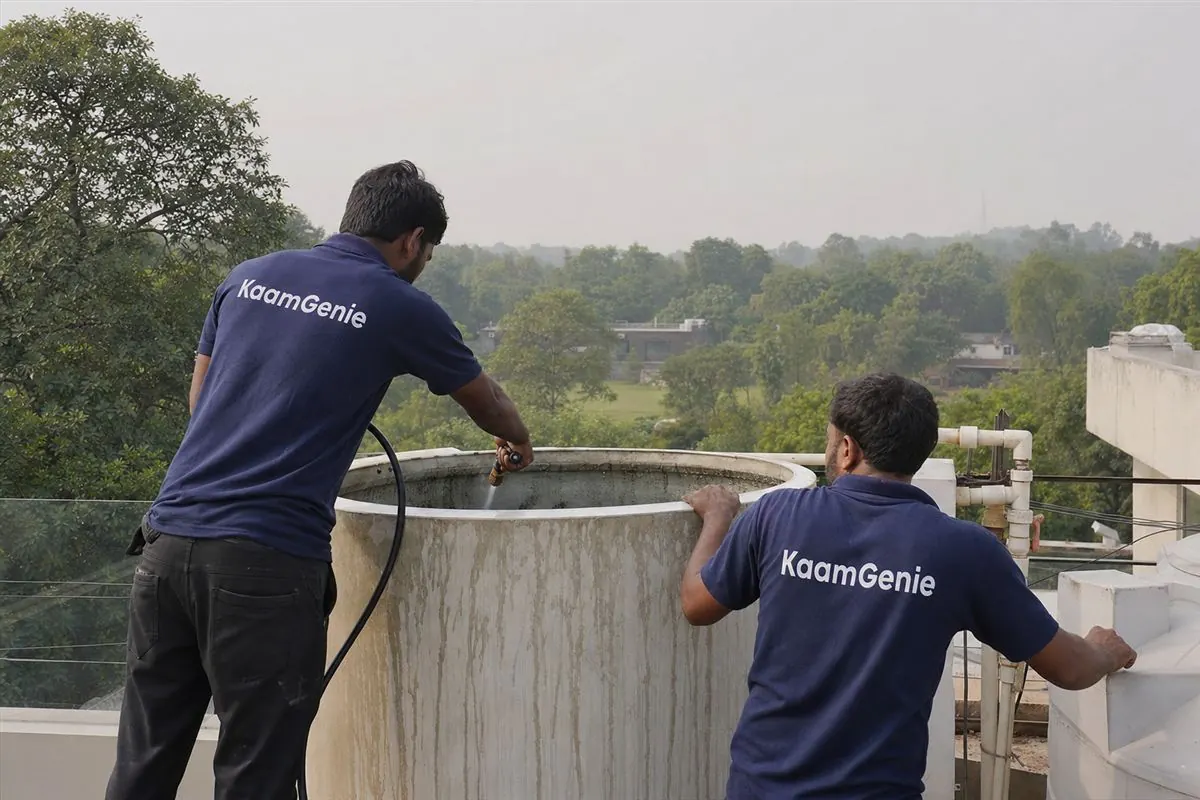
If you own a bungalow in Vasant Vihar or a farmhouse off the Chattarpur or Mehrauli road, your water setup looks nothing like the flats most cleaning advice is written for. You probably have a large underground reservoir fed by a borewell or a tanker, a pump that lifts water to two, three or four rooftop tanks across different blocks, and a set of household staff who keep everything running without anyone ever opening a lid to look inside. That combination — big storage, hard water, and out-of-sight neglect — is precisely why these properties need a proper clean more than the average home, and why a half-hearted rinse misses the worst of it.
This guide is about how that gets done well. If you want the broader service and pricing picture, our main page on water tank cleaning in Delhi covers the basics; here we’re focused specifically on the South Delhi villa and farmhouse belt.
| Component | Typical size | The problem it hides | Clean frequency |
|---|---|---|---|
| Underground sump (UGR) | 5,000–20,000 L | Borewell silt & iron settle as sludge on the floor | Every 6 months |
| Main house rooftop tanks | 2–4 × 1,000–2,000 L | Scale on walls, biofilm under the lid | Every 6 months |
| Staff quarter / guard tanks | 500–1,000 L | Often the most neglected & rarely opened | Every 6 months |
| Garden / pool top-up tank | 1,000–3,000 L | Algae from sunlight & standing water | 6–12 months |
| Borewell & pump line | — | Carries sand & minerals into everything above | Checked each visit |
One visit, every tank cleaned
Sump plus all your rooftop tanks done in a single mobilisation — multi-tank discount, before/after photos, fixed price. ₹699 onwards per tank, package pricing for villas & farmhouses.
Why borewell water makes farmhouse tanks dirtier, faster
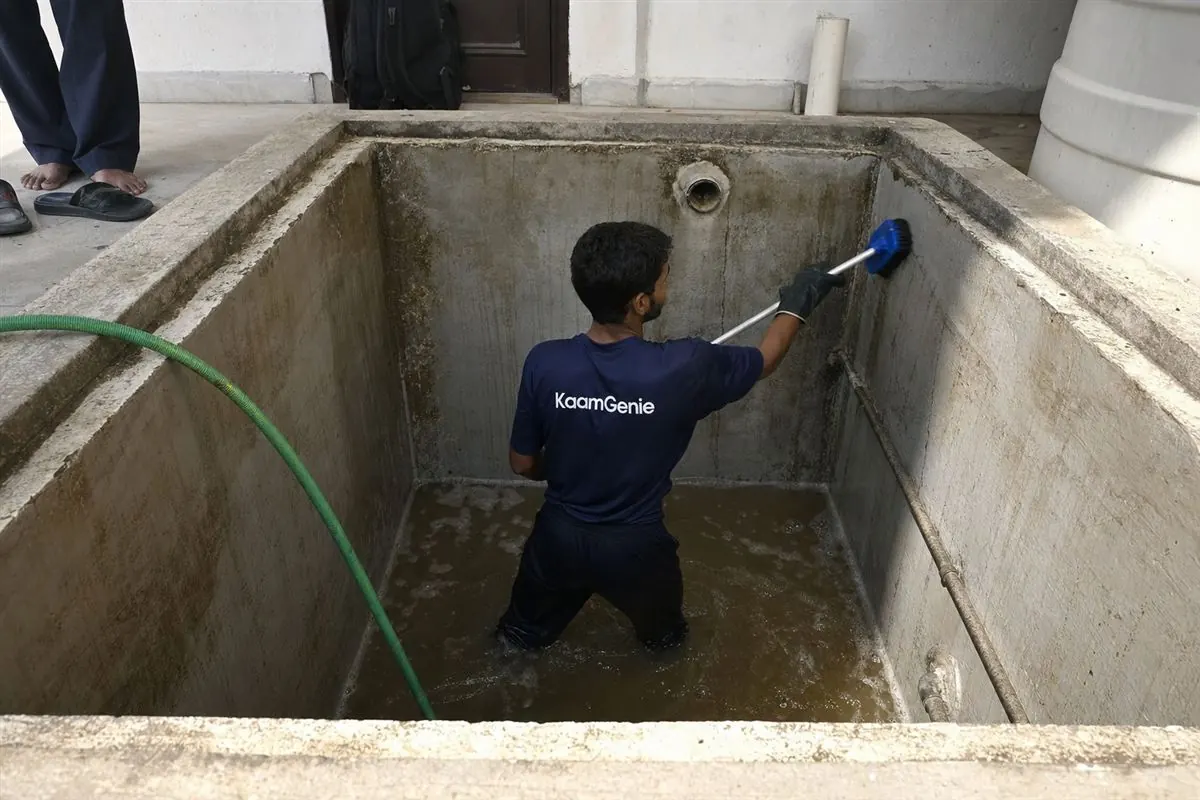
Most of the Chattarpur, Sainik Farms and Mehrauli belt sits beyond reliable Delhi Jal Board piped supply, so these properties lean heavily on private borewells, and in peak summer on tanker water as well. Borewell groundwater in South Delhi is hard — high in dissolved calcium and magnesium — and it carries fine sand and iron up from the aquifer. None of that is dangerous in a glass of water, but it does not stay suspended. It settles.
In a large underground reservoir that holds tens of thousands of litres and turns over slowly, that settling has time to happen. A layer of silt and iron sludge builds across the floor of the sump, and a film of hard-water scale bakes onto the walls of every rooftop tank above it. A kitchen RO unit cannot touch any of this — it only treats the trickle going to one tap, while the bathrooms, the staff quarters and the garden all draw from the dirty storage. If you want the detail on why hardness behaves this way, our guide on hard water tank cleaning in Delhi goes deeper; the short version is that borewell-fed tanks need cleaning more often, not less.
The neglect nobody notices: staff-managed water systems
The second thing that defines these properties is who looks after the water. In a flat, the owner notices when the water smells off because they live on top of the tank. In a villa or farmhouse, the staff handle it. The pump gets switched on, the tanks stay full, the taps run — and because nothing ever stops working, nobody ever climbs up to open a lid. We have opened rooftop tanks on beautifully kept estates that had not been cleaned in three or four years, simply because the system never gave anyone a reason to look.
That is not a criticism of the staff; it is the nature of a system that hides its own problems. The sump is underground and out of sight. The rooftop tanks are across different blocks. The water keeps flowing. By the time the family notices — a faint smell, a yellow tinge, sediment in the bathroom bucket — the contamination has had years to build. The fix is simply to put the cleaning on a calendar instead of waiting for a symptom. If you are unsure how overdue you are, the warning signs are worth a read, but for a large property the honest answer is usually “if you cannot remember the last clean, you are overdue.”
Big sumps need real confined-space work
A large underground sump is the part of the job that genuinely should not be done by an unequipped handyman. Once it is drained, a crew member has to physically enter to scoop the sludge and scrub the floor and walls — and that is confined-space work, with real risks around ventilation and footing. Our crew ventilates before anyone goes in, never sends one person down alone, and carries the right safety gear. The sludge is scooped into sealed buckets and taken off-site, not flushed into the property’s soak pit or drain where it just settles downstream.
The choice between cleaning the underground reservoir and the overhead tanks differently is a real one, and it matters on a farmhouse where you have both at scale. We’ve written separately about overhead versus underground tank cleaning in Delhi and the specific safety and pricing factors of sump cleaning cost and safety — both are worth a look if your property leans heavily on a big UGR. The point for villa owners is that the sump is usually the dirtiest and most labour-heavy element, so it anchors the schedule and the quote.
Why one visit for every tank is the smart way to book
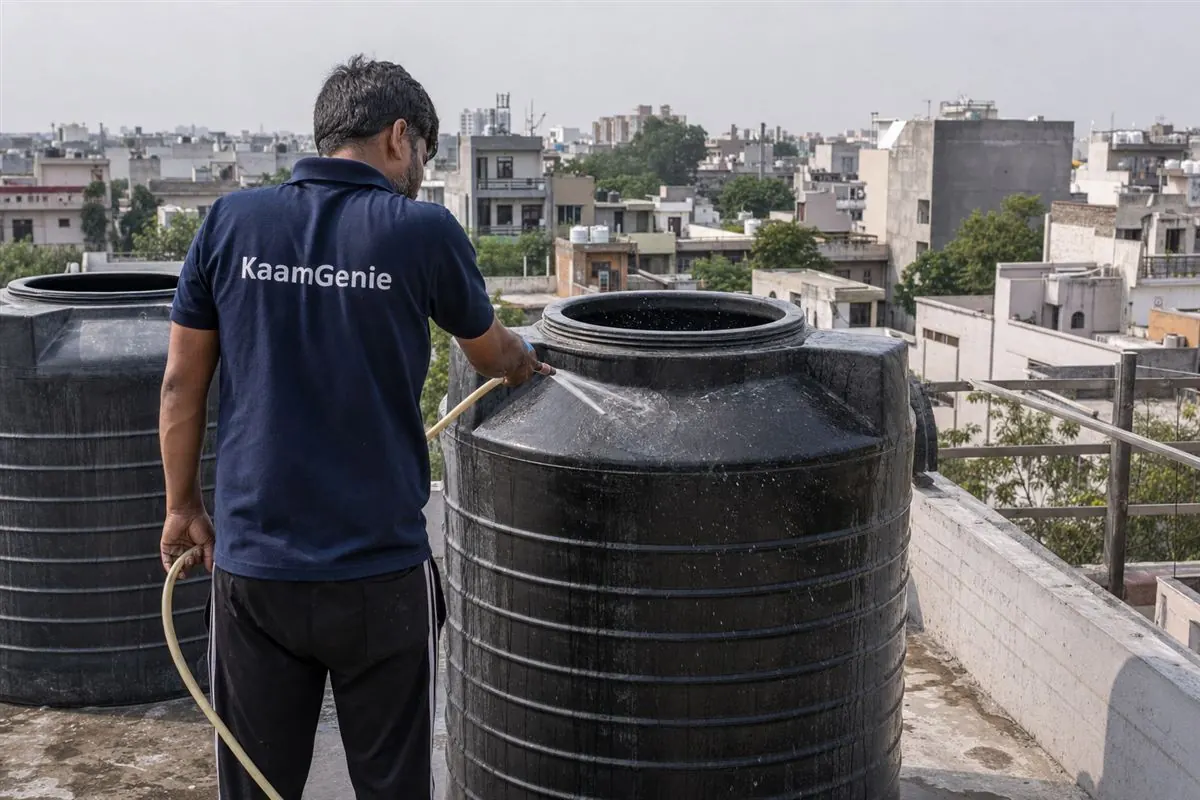
Here is the part that saves you money. The single biggest cost in any tank cleaning is mobilisation — getting a trained crew, a pump, a jet washer, a wet vacuum and food-grade chemicals to your gate. That cost is the same whether they clean one tank or six. So once the crew is on your property, each additional tank only adds labour and chemical, which is why we price villa and farmhouse jobs as a package with a clear multi-tank discount rather than charging the ₹699 rack rate per tank.
Doing everything in one go also matters technically. There is no point cleaning the rooftop tanks while the sump that feeds them is still full of sludge — the dirty water just travels back up. Cleaning the sump and every downstream tank in the same visit means the whole system is genuinely clean at the same moment, not a clean tank fed by a dirty reservoir. The standard process — drain, sludge removal, manual scrub with food-grade brushes, high-pressure jet wash, wet vacuum, food-grade chlorine disinfection at the right concentration, refill, and before/after photos — runs on every single tank, with the sump getting the extra confined-space attention it needs.
For owners who want this handled on a recurring schedule rather than re-booked each time, the same logic underpins our annual and half-yearly arrangements; you can see the full scope of our water tank cleaning services for what a maintained system looks like across a year.
Clean tanks before a resale or handover
One more reason these jobs come up: property changing hands. The South Delhi villa and farmhouse market moves on details, and a buyer’s inspector or a tenant’s family will notice water that smells or runs cloudy during a final walkthrough. A full clean of the sump and every tank, with a dated cleaning record and clean before-and-after photos, quietly answers the “has this been maintained?” question before it is asked. For a property worth what these are, it is one of the cheapest pre-sale fixes available, and it closes off an easy objection at exactly the wrong moment to be negotiating.
Where the cleaning hours go on a fully-loaded farmhouse
One large sump plus four rooftop tanks — why it’s a half-day job
Illustrative only — a fully-loaded villa or farmhouse runs about a half-day, often with two crews in parallel so it finishes in one visit. The sump is the single biggest block of time.
Which South Delhi areas we cover
We work right across the bungalow and farmhouse belt — Chattarpur, Sainik Farms, Vasant Vihar, Ghitorni and Mehrauli — with the same trained crew, the same fixed package pricing, and the same documentation on every job. If you want the area page nearest you, we have dedicated pages for water tank cleaning in Ghitorni, tank cleaning in Mehrauli, and the wider South Delhi water tank cleaning zone. Wherever your villa or farmhouse sits in this belt, it’s the same standard: every tank in one visit, the sump done properly, and photos in your hand before the crew leaves.
Get a fixed quote for your whole property
Send us a couple of photos of your sump and rooftop tanks on WhatsApp and we’ll come back with one all-in package price — no per-tank surprises. ₹699 onwards.
Book your villa or farmhouse clean
Whether it’s a single bungalow tank or a full estate with a big sump and tanks scattered across blocks, we handle the whole property in one visit and leave you with photos and a record. Pricing and the full service area are on our water tank cleaning in Delhi page.
To book, call +91 95603 66362 or use the booking form on this site — we’ll confirm shortly.
Frequently asked questions
How much does villa or farmhouse water tank cleaning cost in Delhi?
Standard residential cleaning starts at ₹699 per tank, but villas and farmhouses are rarely a single-tank job. Pricing depends on the number of tanks, the size of the underground sump, and access. A property with one large sump and three or four rooftop tanks is priced as a package, not per the ₹699 rack rate, and almost always works out cheaper per tank than booking each separately. We quote a fixed all-in figure after a quick look at the property or a few photos on WhatsApp.
Do you give a discount for cleaning multiple tanks in one visit?
Yes. The biggest cost in any cleaning is sending a crew, equipment and a vehicle to your address. Once we are already on site, each additional tank only costs labour and chemical, so we price multi-tank villa and farmhouse jobs at a clear per-visit discount. Properties with a big sump plus several rooftop tanks see the best saving because everything is done in one mobilisation.
My farmhouse runs entirely on borewell water — does it still need tank cleaning?
More than a DJB-fed home, not less. Borewell water in South Delhi is hard and carries dissolved minerals, fine sand and iron. Over months that settles into the sump and bakes onto tank walls as scale. A purifier at the kitchen tap does nothing for the sediment sitting in a 10,000-litre underground reservoir that also feeds your bathrooms, garden and staff quarters. Borewell-fed tanks usually need cleaning more often, not less.
How often should a large private sump be cleaned?
Every six months is the sensible default for a villa or farmhouse, and twice a year is what BIS and CPHEEO guidance effectively points toward for stored drinking water. Borewell-fed sumps and big storage that turns over slowly drift toward the six-month end because sediment has more time to settle. If the property sat empty for a season, or the water has started to smell or look cloudy, clean before the next heavy use.
The staff manage the tanks — can you coordinate with my caretaker instead of me?
Yes, and for most farmhouses that is exactly how it works. We coordinate the visit, access and the after-photos with one point of contact — owner, estate manager, caretaker or household help. The full before-and-after photo set and the cleaning record go to you on WhatsApp regardless of who let the crew in, so you can confirm the job was done properly even if you were not on site.
How long does it take to clean a farmhouse with multiple tanks and a big sump?
Plan for a half-day. A large underground sump alone takes two to three hours because of the volume and confined-space entry. Add three or four rooftop tanks at roughly 60 to 90 minutes each and a fully-loaded villa or farmhouse is typically a four to six hour job, sometimes with two crews working in parallel to finish in a single visit. We give you a realistic time window when we quote.
We’re selling the property — is a tank cleaning worth it before handover?
It is one of the cheapest things you can do before a sale or handover. A dated cleaning record and clean before-and-after photos tell a buyer or their inspector that the water system was maintained, and clean tanks remove the smell-and-sediment complaints that surface during a final walkthrough. For a property changing hands it is a small spend that closes off an easy objection.
Do you clean underground sumps that need confined-space entry?
Yes. Large villa and farmhouse sumps almost always need a crew member to physically enter, which is confined-space work and the reason it should never be a DIY or unequipped-handyman job. Our crew carries the right safety gear, ventilates before entry, and never sends one person in alone. The sump is drained, the sludge is scooped and removed off-site, walls and floor are scrubbed and jet-washed, then disinfected before refill.
Which South Delhi areas do you cover for villas and farmhouses?
We cover the South Delhi farmhouse and bungalow belt — Chattarpur, Sainik Farms, Vasant Vihar, Ghitorni and Mehrauli — along with the surrounding colonies. Same trained crew, same fixed package pricing, same documentation. If your address is anywhere in this belt we can usually schedule a same-week visit, and a same-day slot when one is open.
Sources & references
- Bureau of Indian Standards (BIS) — IS 10500:2012 is the canonical Indian Standard for drinking water specification, defining acceptable limits for physical, chemical, and biological parameters.
- WHO Guidelines for Drinking-water Quality, 4th edition — the global reference for water quality standards, including guidance on storage and disinfection.
- Food Safety and Standards Authority of India (FSSAI) — defines water quality requirements for food businesses, including hygiene standards for stored water and acceptable disinfection chemicals.
- WHO Fact Sheet on Drinking Water — overview of safe drinking water requirements and contamination risks.
- CPHEEO — Manual on Water Supply and Treatment — the Government of India’s engineering manual covering tank design, cleaning protocols, and disinfection practices.
Last verified: 30 June 2026. If you find any of these links broken, please let us know.