
The short version
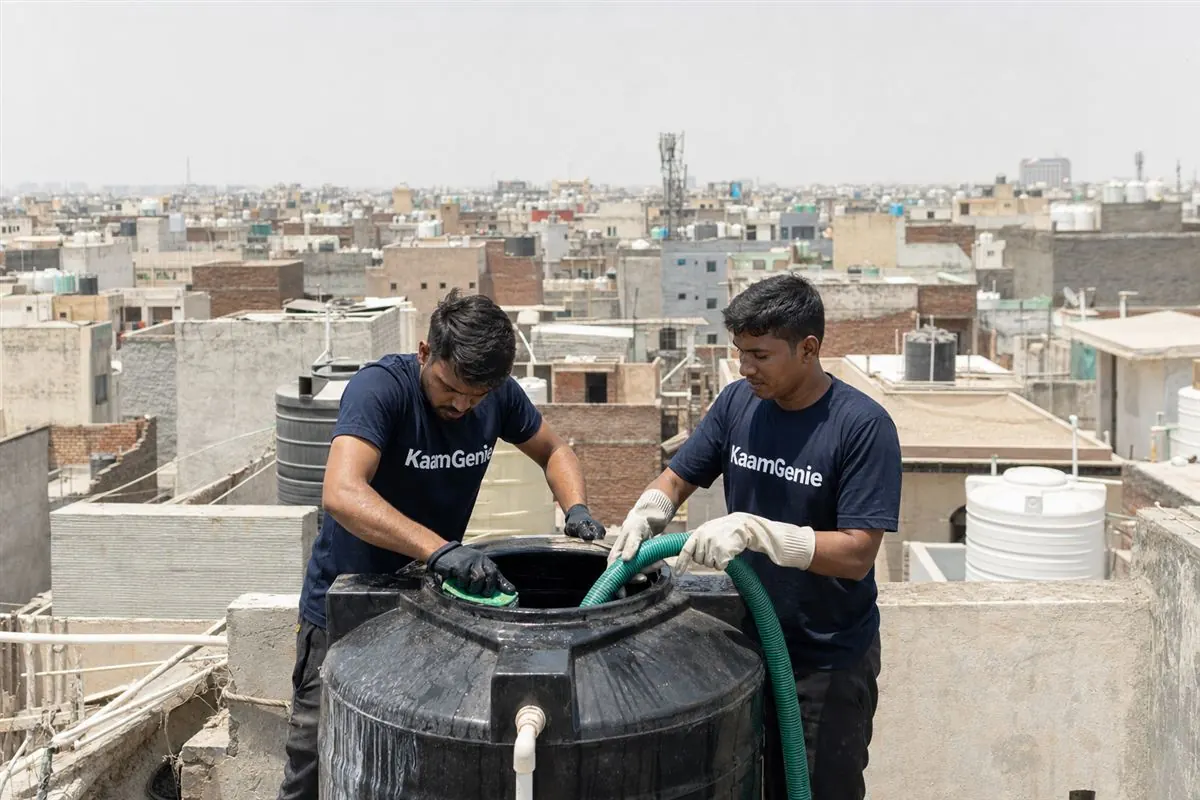
- We clean overhead tanks and underground sumps across all five Delhi zones plus NCR — 236 area pages and counting.
- Same trained crew, same documented process, same fixed price (₹699 onwards residential) — your pin code doesn’t change the price.
- Same-day where possible across most of Delhi NCR when you book in the morning.
- Water source varies by zone — DJB surface supply in much of the core, borewell hard water in outer pockets — and that changes how often your tank needs cleaning.
- Find your zone below, then jump to your area page to book locally.
Not sure which zone you’re in? Start at the main Delhi water tank cleaning page and pick your area from there.
One city, five very different water stories
People assume “water tank cleaning in Delhi” is one thing. It isn’t. A flat in Lajpat Nagar on Delhi Jal Board (DJB) surface supply has a completely different tank to a kothi in outer Dwarka running off a borewell. The DJB tank scales slowly with treated, relatively soft water. The borewell tank builds calcium scale on its walls within weeks because groundwater here is hard.
That difference — where your water comes from — is the single biggest thing that decides how often your tank actually needs cleaning. So instead of a generic city-wide guide, this page is organised the way Delhi really works: zone by zone. Find your part of the city, see what the water is typically like there, and click through to your area page to book.
What stays constant everywhere: the same trained crew, the same 8-step documented process, before/after photos, a cleaning record, and a fixed price starting at ₹699 onwards for residential tanks. We don’t price by postcode.
| Delhi zone | Typical water source | Scale / cleaning note | Area page |
|---|---|---|---|
| South Delhi | Mostly DJB surface supply; borewell in some outer/farmhouse pockets | Moderate scale; clean every 4–6 months, sooner near borewell pockets | South Delhi → |
| North Delhi | DJB supply in the core; borewell in outer belts (Narela side) | Mixed; older RCC tanks here scale faster — 3–5 months | North Delhi → |
| East Delhi | Largely DJB (Yamuna-side treatment plants) | Moderate; dense flats mean shared tanks — clean every 4 months | East Delhi → |
| West Delhi | Heavy borewell dependence in outer belts (Dwarka, Najafgarh side) | Hard water, fast calcium scale — clean every 3 months | West Delhi → |
| Central Delhi | Predominantly DJB surface supply, well-treated | Slower scale; clean every 5–6 months, dense older buildings | Central Delhi → |
| NCR (Gurgaon / Noida / Faridabad) | Mix of municipal supply and borewell; Gurgaon especially borewell-heavy | Often hard water — high-rise tanks, clean every 3–4 months | Book via main page → |
Book in your area — same price citywide
South, North, East, West, Central Delhi or NCR — same trained crew, same documented process, same fixed price. ₹699 onwards.
Delhi zone by zone — find yours
South Delhi
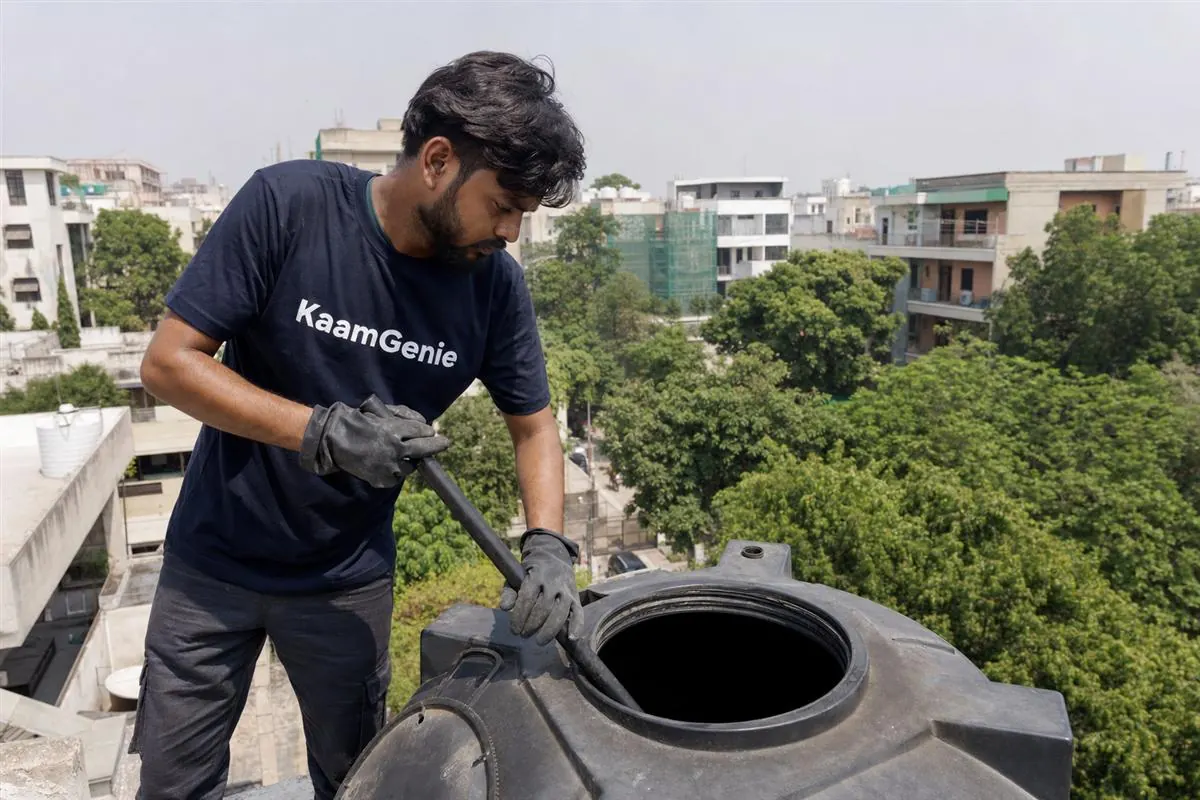
South Delhi runs largely on DJB surface supply — relatively soft, treated water — though outer and farmhouse pockets dip into borewells, which raises hardness. Tanks here are a mix of overhead Sintex on flats and underground sumps in the independent kothis. Typical cleaning interval: every 4–6 months, sooner where borewell water is in play. Book on the South Delhi water tank cleaning page, or jump straight to a specific colony such as Saket or Lajpat Nagar.
North Delhi
North Delhi’s core sits on DJB supply, but the outer belts toward Narela and beyond lean borewell, so hardness is mixed. There’s also a lot of older RCC (concrete) tankage here, and concrete scales and harbours bio-film faster than fresh plastic — so 3–5 months is a sensible gap. Start on the North Delhi page, or go directly to a high-density area like Pitampura.
East Delhi
East Delhi is largely DJB-fed from the Yamuna-side treatment plants. The defining feature here is density — lots of multi-flat buildings sharing rooftop tanks — which means more usage per tank and a sensible cleaning interval of around every 4 months. Find your locality on the East Delhi water tank cleaning page.
West Delhi
West Delhi is where hard water bites hardest. Outer belts — the Dwarka and Najafgarh side especially — depend heavily on borewells, and that groundwater is high in dissolved calcium. You’ll see white scale building on tank walls and around fittings within weeks. Here we genuinely recommend cleaning every 3 months. Book via the West Delhi page, or go straight to Dwarka or Paschim Vihar.
Central Delhi
Central Delhi is predominantly on well-treated DJB surface supply, so water is among the softest in the city and scale builds slowly — every 5–6 months is usually fine. The catch is the building stock: a lot of old, dense construction with hard-to-access overhead tanks and sumps, which is more about crew skill than water chemistry. Start on the Central Delhi page.
NCR — Gurgaon, Noida, Faridabad
Across the border into NCR, the water mix shifts. Gurgaon in particular is borewell-heavy and notoriously hard; Noida and Faridabad run a mix of municipal supply and groundwater. High-rise societies dominate, with large shared tanks and sumps, so 3–4 month intervals are common and RWA contracts are popular. Book the whole of NCR through the main water tank cleaning page.
Why water source & hardness change your cleaning frequency
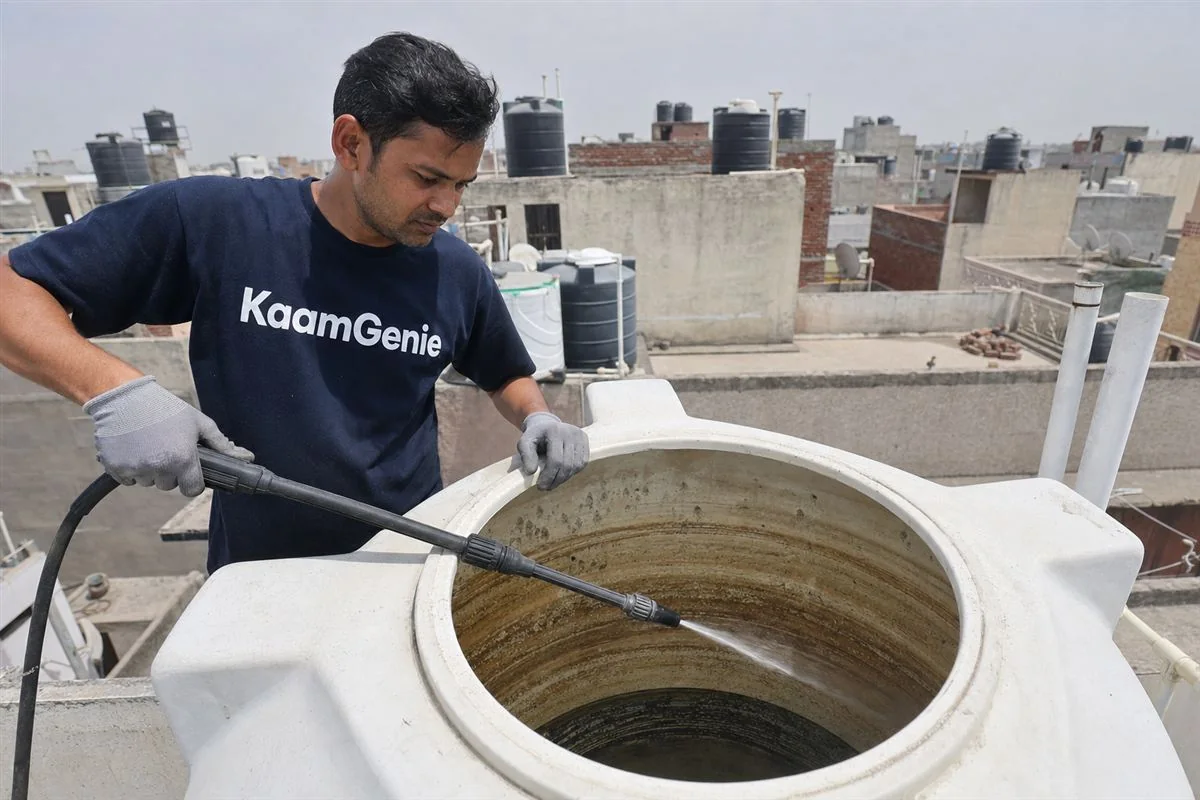
Here’s the mechanism in plain terms. DJB surface supply comes from treatment plants drawing on the Yamuna, Ganga and Bhakra systems. It’s treated, and relatively soft — so the film it leaves on a tank wall builds slowly. Borewell water is groundwater pulled straight from the aquifer; as it sits underground it dissolves calcium and magnesium (and sometimes iron), which is exactly what “hard water” means. That dissolved mineral precipitates out as scale on your tank walls, floor and fittings.
Scale is not just cosmetic. Its rough, porous surface is where bio-film clings and bacteria hide, which is why a heavily scaled tank needs a proper jet-wash and disinfection rather than a rinse. The harder your water, the faster scale returns — so a borewell-fed tank in outer West Delhi genuinely benefits from a 3-month cycle, while a soft-water DJB tank in Central Delhi can stretch to 5–6 months.
If you want the full picture of how the two supplies differ, we wrote a dedicated comparison: borewell vs DJB water in Delhi. And if your area is on the hard end, the hard-water tank cleaning guide for Delhi covers what changes in the actual cleaning.
Typical cleaning interval by Delhi zone (months between cleanings)
Driven mainly by water source — harder borewell water means shorter intervals
Indicative only — your tank’s material, usage and last-cleaned date matter too. Borewell pockets within any zone shorten the interval. See how often to clean your tank in Delhi for the full logic.
Pricing & how to book in your area
Pricing is deliberately simple and the same across every area of Delhi NCR. Residential cleaning starts at ₹699 onwards; the actual figure depends on tank type and capacity — a single 1000L overhead Sintex tank is at the lower end, an underground sump or a society reservoir costs more because it holds more water and takes longer. Your pin code does not change the price: a tank in Greater Kailash and the same tank in Rohini cost the same. For the full breakdown by tank type, see our water tank cleaning cost in Delhi guide.
To book in your neighbourhood:
- Know your area? Go straight to your area page — for example Saket, Dwarka, Lajpat Nagar, Pitampura or Paschim Vihar — and book locally.
- Know your zone but not the exact page? Use the zone page (South, North, East, West, Central) and pick from the area list.
- Not sure at all? Start on the main Delhi page, search your area name in the search bar at the top, or just call us.
Booking through your specific area page helps us route the nearest crew to you, which is what makes same-day where possible actually possible.
Find your area & book
236 areas across Delhi NCR. Pick yours, get the same trained crew at a fixed price. Standard residential cleaning ₹699 onwards.
Ready to book in your part of Delhi?
Wherever you are in Delhi NCR, the offer is the same: a trained crew, a documented 8-step cleaning, photos and a certificate, and a fixed price from ₹699. Pick your zone or area above, or head to the water tank cleaning service page to choose your neighbourhood and book.
To book, call +91 95603 66362 or use the booking form on this site — we’ll confirm shortly.
Frequently asked questions
Which areas of Delhi NCR does KaamGenie cover?
We cover all five Delhi zones — South, North, East, West and Central Delhi — plus the wider NCR including Gurgaon, Noida and Faridabad. That’s 236 area landing pages and counting. The same trained crew, the same fixed prices and the same documented process apply whether you’re in Saket, Rohini, Dwarka, Lajpat Nagar or Janakpuri.
Is the price the same across every Delhi area?
Yes. Residential cleaning starts at ₹699 onwards regardless of whether you’re in South, North, East, West or Central Delhi, or out in NCR. Price depends on tank type and capacity, not your pin code. We don’t charge a “posh-colony premium” — a 1000L overhead tank in Greater Kailash costs the same as the same tank in Rohini.
Does the water source in my area change how often I should clean my tank?
Yes, significantly. Areas on borewell water — large parts of outer West, outer North and outer South Delhi — have harder water with more calcium and iron, so tanks scale faster and benefit from cleaning every 3 months. Areas on consistent DJB surface supply scale more slowly and can often go 4–6 months. Your zone page lists the typical source for your neighbourhood.
Can you do same-day cleaning in my area?
Same-day is possible across most of Delhi NCR when you book in the morning, subject to crew availability in your zone. Central and South Delhi slots fill fastest. If same-day isn’t available we’ll offer the next morning. Booking through your specific area page helps us route the nearest crew to you.
How do I find the page for my specific neighbourhood?
Start from your zone page — South, North, East, West or Central Delhi — and you’ll find a list of every area we cover in that zone, such as Saket, Dwarka, Lajpat Nagar, Rohini or Janakpuri. Each area page has local booking and the same fixed pricing. You can also search your area name in the search bar at the top of the site.
Why does water hardness differ so much between Delhi zones?
It comes down to the water source. Colonies fed mainly by DJB surface treatment plants (Yamuna, Ganga and Bhakra sourced) get softer, treated water. Outer pockets that rely on borewells draw groundwater that has picked up dissolved calcium, magnesium and sometimes iron as it sits in the aquifer — that’s hard water, and it leaves scale on tank walls and fittings much faster.
Do you clean both overhead tanks and underground sumps in every area?
Yes. Across every zone we clean Sintex and plastic overhead tanks, RCC (concrete) overhead tanks and underground sumps. Underground sumps are more common in independent houses across South and West Delhi; overhead Sintex tanks dominate in flats and DDA colonies. The crew handles both — pricing varies by capacity, not tank location.
What if my area isn’t listed yet?
We’re adding areas continuously and already cover 236 neighbourhoods across Delhi NCR. If you don’t see your exact locality, pick the nearest area page or your zone page and book — or just call us. We almost certainly serve your area even if a dedicated page isn’t live yet.
Is hard-water scale a bigger problem in some Delhi areas?
Yes. Borewell-fed pockets in outer West (Dwarka, Najafgarh belt), outer North (parts of Rohini, Narela) and outer South Delhi see heavier calcium scale on tank walls and around fittings. That scale traps bio-film and shortens the gap between cleanings. We cover the specifics in our hard-water tank cleaning guide for Delhi.
Sources & references
- Bureau of Indian Standards (BIS) — IS 10500:2012 is the canonical Indian Standard for drinking water specification, defining acceptable limits for physical, chemical, and biological parameters.
- WHO Guidelines for Drinking-water Quality, 4th edition — the global reference for water quality standards, including guidance on storage and disinfection.
- Food Safety and Standards Authority of India (FSSAI) — defines water quality requirements for food businesses, including hygiene standards for stored water and acceptable disinfection chemicals.
- WHO Fact Sheet on Drinking Water — overview of safe drinking water requirements and contamination risks.
- CPHEEO — Manual on Water Supply and Treatment — the Government of India’s engineering manual covering tank design, cleaning protocols, and disinfection practices.
Last verified: 24 June 2026. If you find any of these links broken, please let us know.