
Key takeaways
- Yellow water almost always means rust, dissolved iron, or disturbed sediment — not usually a health emergency, but worth fixing.
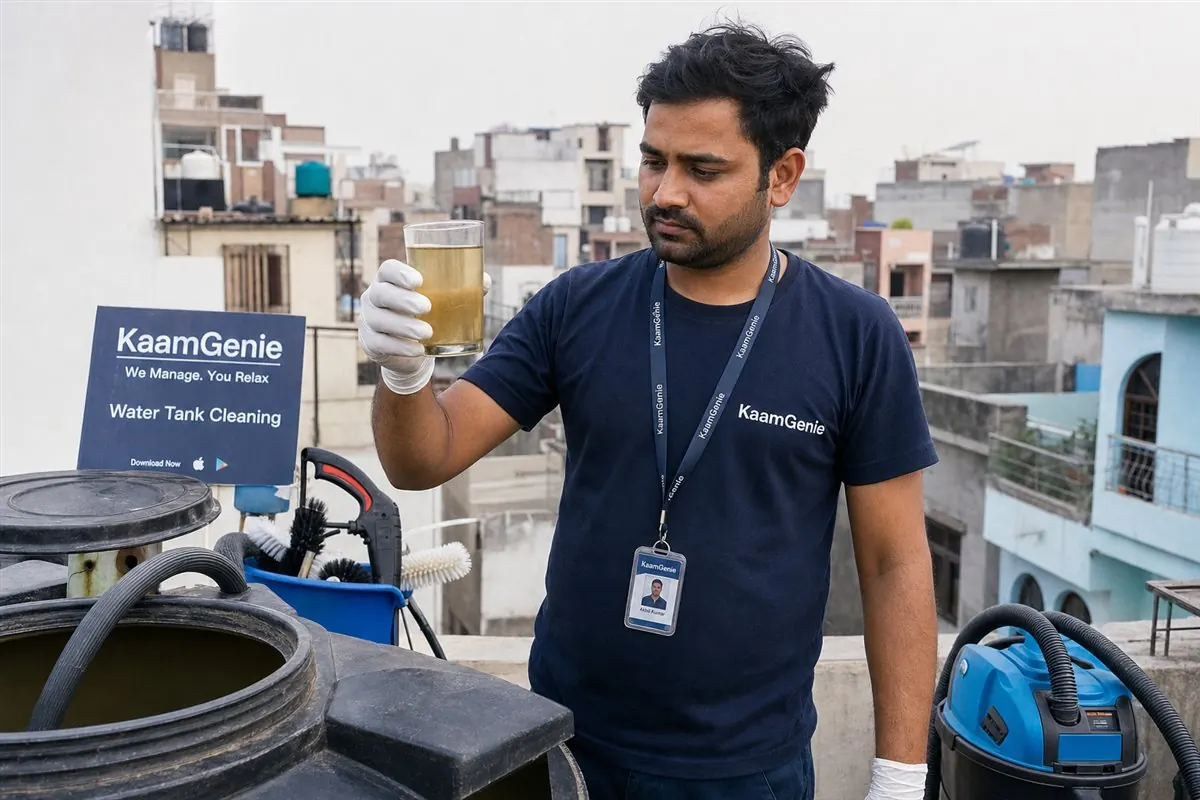
- The 30-minute glass test tells you sediment (settles) from iron (stays tinted).
- Old GI pipes and metal tank fittings shed rust — swap to CPVC and plastic.
- Borewell areas in Delhi often have iron and hard water that stains and tints.
- A thorough scrub-and-vacuum cleaning removes settled sludge; overhead tanks from ₹699.
- Fix the source first, then clean — otherwise the colour returns in weeks.
This guide walks you through why tank water turns yellow in Delhi homes — from rusting metal fittings and dissolved iron in borewell supply to sediment stirred up after a DJB refill. We cover simple tests you can do in five minutes, when a proper cleaning solves it, and when the pipes or overhead tank itself are the real culprit. You’ll finish knowing exactly what to check and who to call.
What yellow water usually means
Yellow to brownish water is almost always a sign of iron, rust or suspended sediment — not a health scare, but not something to ignore either. The three usual sources in Delhi are:
- Rust from old galvanised iron pipes or a corroding metal tank lid, valve or bracket.
- Dissolved iron in borewell or mixed supply, common in outer Delhi, Najafgarh and parts of the NCR fringe.
- Sediment and settled sludge at the bottom of the tank, kicked up when the supply refills with pressure.
Rust from pipes and metal fittings
Many older Delhi kothis and DDA flats still run galvanised iron pipes that corrode from the inside over years. When flow restarts after the daily DJB cut, the first rush carries loose rust flakes into your tank and taps. You’ll notice the yellow tint is worst in the morning’s first draw and clears after a minute or two of running. Inside the tank, a rusting metal inlet, float-valve arm or old lid can shed particles directly into stored water. Replacing corroded GI sections with CPVC and swapping metal tank fittings for plastic stops the source. A tank cleaning removes the rust that has already settled, but if pipes keep feeding it, the colour returns — fix both together.
Iron and hard water in borewell supply
If your building runs partly or fully on borewell water — common in Dwarka, Najafgarh, Chattarpur farmhouses and unauthorised colonies — dissolved iron and high TDS are frequent causes. Iron is invisible in fresh groundwater but oxidises to a yellow-orange tint once it hits air in an open overhead tank. You’ll often see reddish staining on tiles, taps and white clothes too. Cleaning the tank removes the iron sludge that has already precipitated at the bottom, which stops the worst discolouration. For a lasting fix you may need an iron-removal filter or aeration at the source. Get your TDS and iron tested first so you treat the actual problem, not a guess.
Book your water tank cleaning
Trained crew, food-grade process, before/after photos and a service record every job. ₹699 onwards, same-day where possible across Delhi NCR.
Disturbed sediment after a refill
Delhi’s intermittent supply means most tanks refill in a hard burst once or twice a day. That pressure stirs up the fine silt, dust and biofilm that settles at the tank floor between fills — and for an hour afterwards your taps run cloudy or yellow. Monsoon makes it worse, when rooftop tanks pick up extra dust and organic matter through poorly sealed lids. If your yellow water appears only around supply timing and clears on its own, sediment is almost certainly the cause. A thorough tank cleaning that scrubs and vacuums the settled layer — not just a rinse — usually clears it completely. A well-fitted lid keeps new dust out afterwards.
How a proper cleaning fixes it
For sediment- and rust-driven yellow water, a full tank cleaning is the direct fix. A KaamGenie crew drains the tank, scrubs walls, floor and baffles, vacuums out the sludge, disinfects and refills — removing the exact material that colours your water. Overhead tank cleaning starts from ₹699; underground sumps run ₹1,500–2,500 depending on size and access. Societies and commercial buildings are quoted after a site check, and an AMC brings 15–25% off for scheduled visits. Book cleaning right after the source is fixed — if you clean while corroded pipes or an untreated borewell keep feeding iron, the tint creeps back within weeks.
When to test, treat or call
Do the settle-in-a-glass test first, then act:
- Sediment settles & clears — book a tank cleaning.
- Even tint that won’t settle — get iron/TDS tested; you likely need source treatment plus a clean.
- Only hot water is yellow — flush or service the geyser, not the tank.
- Yellow only on first morning draw — inspect and replace corroded pipes.
Frequently asked questions
Is yellow tank water safe to drink in Delhi?
Iron- or rust-tinted water is usually not an immediate health danger, but it tastes metallic, stains clothes and often signals a dirty tank or corroding pipes. If the colour comes with odour, cloudiness or particles that never settle, stop drinking it, get the tank cleaned and have the water tested before using it again.
Why is my water yellow only in the morning?
A yellow first-draw that clears after a minute of running points to rust building up in the pipes overnight when water sits still. Corroding galvanised iron plumbing is the usual cause in older Delhi homes. Cleaning the tank helps, but the lasting fix is replacing the corroded GI sections with CPVC pipe.
Will cleaning my tank stop the yellow colour?
If the cause is settled sediment or rust sludge inside the tank, a full scrub-and-vacuum cleaning usually clears it completely. If dissolved iron in borewell supply or corroding pipes keep feeding the tank, the tint returns within weeks — so fix the source alongside the cleaning for a permanent result.
How do I know if it is iron or sediment?
Fill a clear glass and let it stand for 30 minutes. If the yellow settles to the bottom and the top clears, it’s suspended sediment — a cleaning fixes it. If the water stays evenly tinted, it’s dissolved iron, which usually needs a filter or aeration at the source plus a tank clean.
How much does it cost to fix yellow water in Delhi?
A full overhead tank cleaning with KaamGenie starts from ₹699 and underground sumps run ₹1,500–2,500. If the cause is pipes or borewell iron you’ll also budget for plumbing or a filter. Call 95603 66362 for a rooftop inspection so you only pay for the fix you actually need.
Is it safe to bathe my kids in yellow tank water while I wait for cleaning?
Light, occasional yellowness from settled sediment is usually fine for bathing, but rinse skin with clear water afterwards and keep it out of eyes and mouth. If the water is strongly discoloured, smells off, or stains, switch to stored clear water for children until the tank is cleaned. When in doubt, book a same-day clean rather than risk it.
Can yellow water stain my clothes and bathroom fittings permanently?
Yes — iron and rust in yellow water leave brown-yellow marks on white clothes, basins and tiles that get harder to remove over time. Stop washing light fabrics in it and wipe fittings dry. A proper tank clean plus flushing the pipes removes the source, and early stains usually lift with a mild acidic cleaner before they set.
Do I need to clean both my overhead tank and sump to fix yellow water?
Often yes. If sediment or iron is settling in the underground sump, it gets pumped up and the overhead tank turns yellow again within days. We inspect both, and if the sump is the source we recommend cleaning it in the same visit so the fix actually lasts. Cleaning only the top tank is often why the problem returns.
After you clean the tank, how long before the yellow tinge fully clears?
Once we finish and refill, the tank water runs clear immediately. Any lingering yellow usually comes from rust sitting in your pipes, so run each tap for a minute or two to flush it out. If it clears at the tap after flushing, the tank was the issue; if it stays yellow, the pipework needs attention next.
I’m a tenant — should I ask my landlord before booking a clean for yellow water?
For a shared society tank, yes — that is the RWA or owner’s job. For your own flat’s tank, most tenants just book it themselves as basic upkeep from ₹699 and, if they wish, share the before and after photos with the landlord. Keep the service record; it proves the tank was maintained during your tenancy.
Sources & references
- Bureau of Indian Standards (BIS) — IS 10500:2012 is the canonical Indian Standard for drinking water specification, defining acceptable limits for physical, chemical and biological parameters.
- WHO Guidelines for Drinking-water Quality, 4th edition — the global reference for water quality standards, including guidance on safe storage and disinfection.
- Food Safety and Standards Authority of India (FSSAI) — defines water quality requirements for food businesses, including hygiene standards for stored water and acceptable disinfection chemicals.
- WHO Fact Sheet on Drinking Water — overview of safe drinking water requirements and contamination risks.
- CPHEEO — Manual on Water Supply and Treatment — the Government of India’s engineering manual covering tank design, cleaning protocols and disinfection practices.
Last verified: 6 July 2026. If you find any of these links broken, please let us know.