
The short version
- High-rise societies (Dwarka, Rohini, outer Delhi) run one large underground reservoir (UGR) → pumps → overhead tanks on every tower. The RWA contracts the whole job, usually on an AMC.
- Plotted & builder-floor homes share one ground-level sump and have a separate drum or tank per flat on the roof. Each owner mostly decides separately.
- The cleaning method is identical — drain, scrub, jet wash, food-grade disinfect — only the scale, access, scheduling and who pays change.
- Society work is tower-by-tower so the whole complex is never dry; plotted work is a quick per-tank visit.
- Per-tank cost is lower for societies (and for plotted streets that book together) because one crew mobilisation covers many tanks.
Same standard, different logistics. Book yours through water tank cleaning in Delhi.
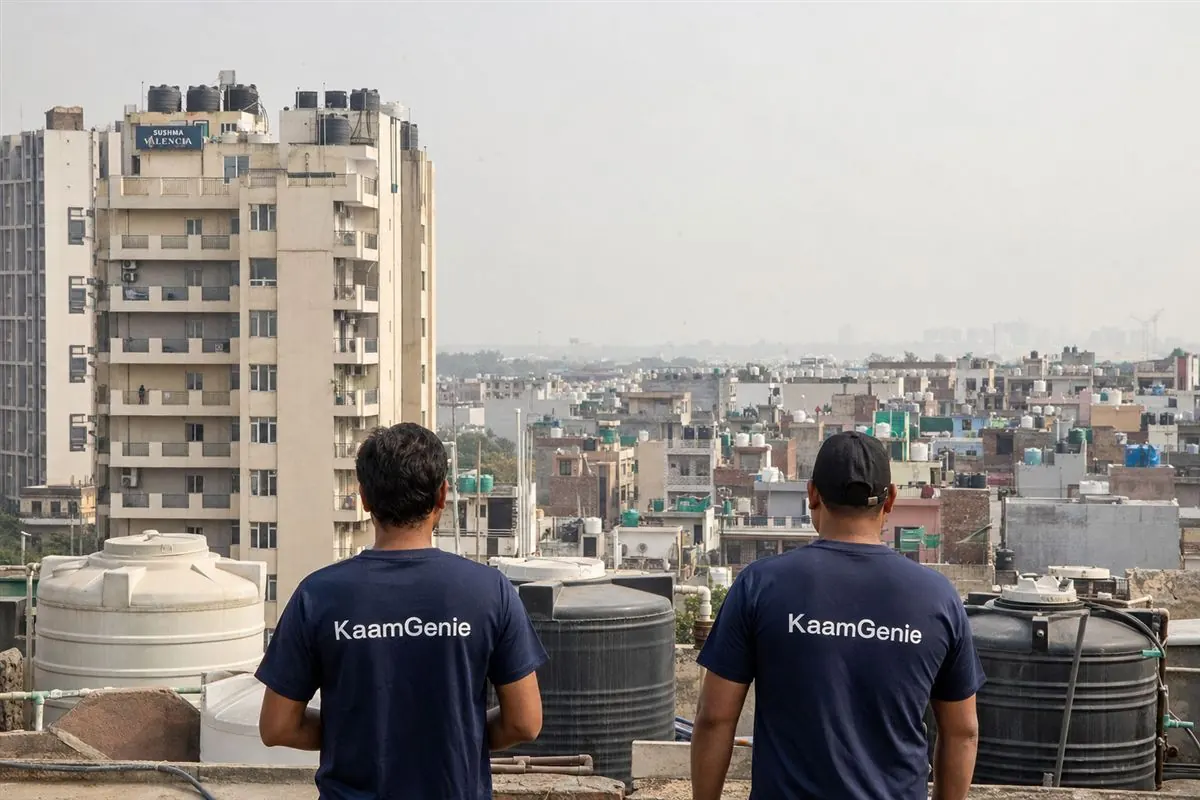
Delhi doesn’t have one kind of home, so it doesn’t have one kind of water tank. On one side you have the cooperative group-housing societies and builder high-rises of Dwarka, Rohini and outer Delhi — towers fed by a giant underground reservoir and a pump room. On the other you have the plotted bungalows, DDA flats and builder floors that fill most of the city, each with a modest sump and a rooftop drum or two. When someone calls us and says “clean my tank,” the very first question is which of these worlds they live in, because everything after that — the equipment, the crew size, the schedule, the paperwork and the bill — follows from it.
This guide lays out those differences plainly so you know what a proper job looks like for your building, whether you’re an RWA secretary in Dwarka signing for fourteen towers or a single owner in Pitampura with one Sintex drum on the roof.
| Factor | High-rise group-housing society | Plotted / builder-floor home |
|---|---|---|
| Storage setup | Large UGR + pumps + OHT on each tower | One shared ground sump + drum per flat |
| Who books & pays | RWA / managing committee, from maintenance funds | Each owner, or owners splitting the sump |
| Typical contract | Annual or half-yearly AMC | One-off booking; AMC optional |
| Tank count per visit | 1 UGR + many OHTs (tower-by-tower) | 1 sump + 1–4 rooftop drums |
| Time on site | Half-day to multi-day, phased | 1.5–3 hours |
| Equipment | Confined-space gear, high-capacity pumps | Standard residential kit |
| Per-tank cost | Lower (volume mobilisation) | Higher per tank; ₹699 onwards |
| Documentation | One consolidated report, all tanks | Record per tank cleaned |
One crew, every tank in your building
Society UGR + tower OHTs, or a plotted sump + rooftop drums — documented, photographed, food-grade disinfected. ₹699 onwards for homes; custom quotes for societies.
How a Delhi high-rise society stores water
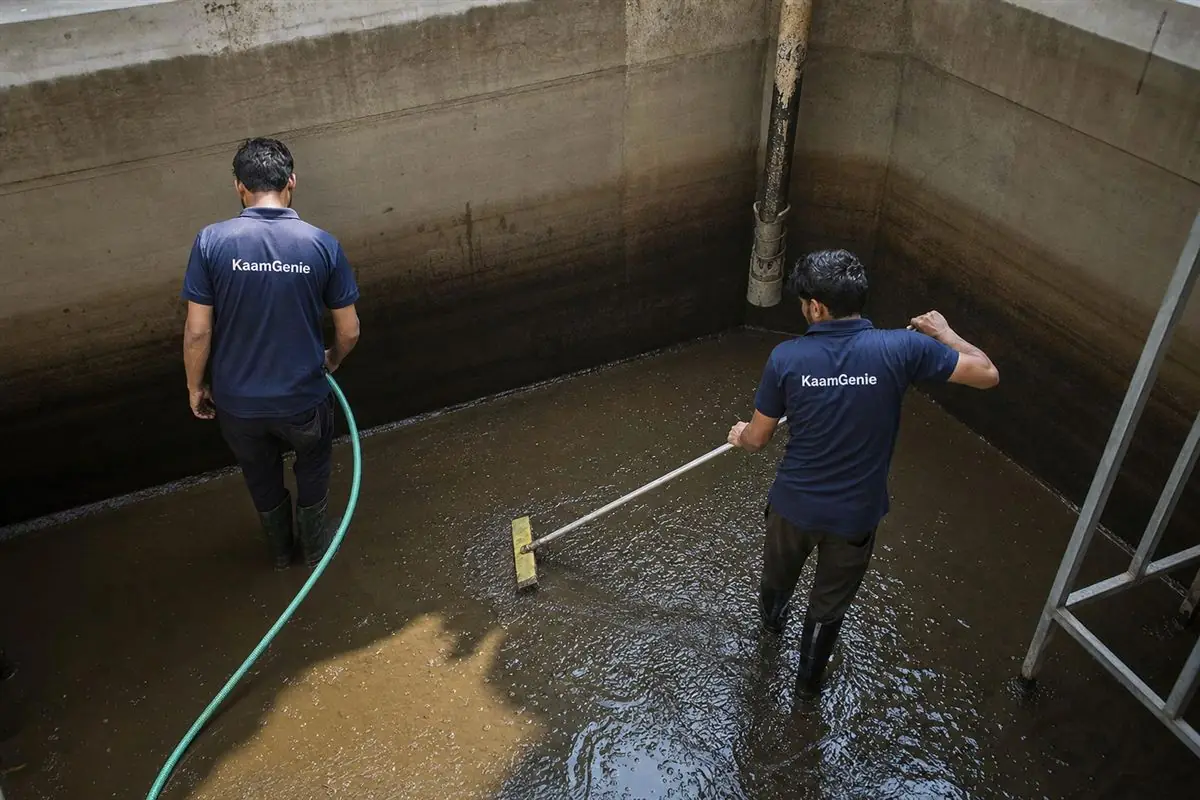
A cooperative group-housing society or builder high-rise in Dwarka, Rohini or the outer-Delhi belts runs water in three stages. First, the Delhi Jal Board piped line — or a private water tanker during the summer crisis — fills a large underground reservoir, the UGR, usually built into the basement or under the podium. This single reservoir can hold tens of thousands of litres, sized for hundreds of flats. Second, a pump room lifts that water up the height of each tower. Third, the water lands in overhead tanks (OHTs) on each tower’s terrace, from where gravity feeds the flats below.
So a single society might have one massive UGR and a dozen or more rooftop OHTs. Cleaning it is not one job — it’s a coordinated set of jobs. The UGR is the heaviest part: it’s a confined space holding huge volumes, so it needs proper dewatering, ventilation, confined-space safety protocol and high-capacity pumps. The tower OHTs are each a normal overhead-tank cleaning, just repeated across the complex. We almost always run a society tower-by-tower, phasing the work so no tower goes without water for more than a short window. If you want the deeper mechanics of reservoirs versus rooftop tanks, our note on overhead vs underground tank cleaning in Delhi covers it.
How a plotted or builder-floor home stores water
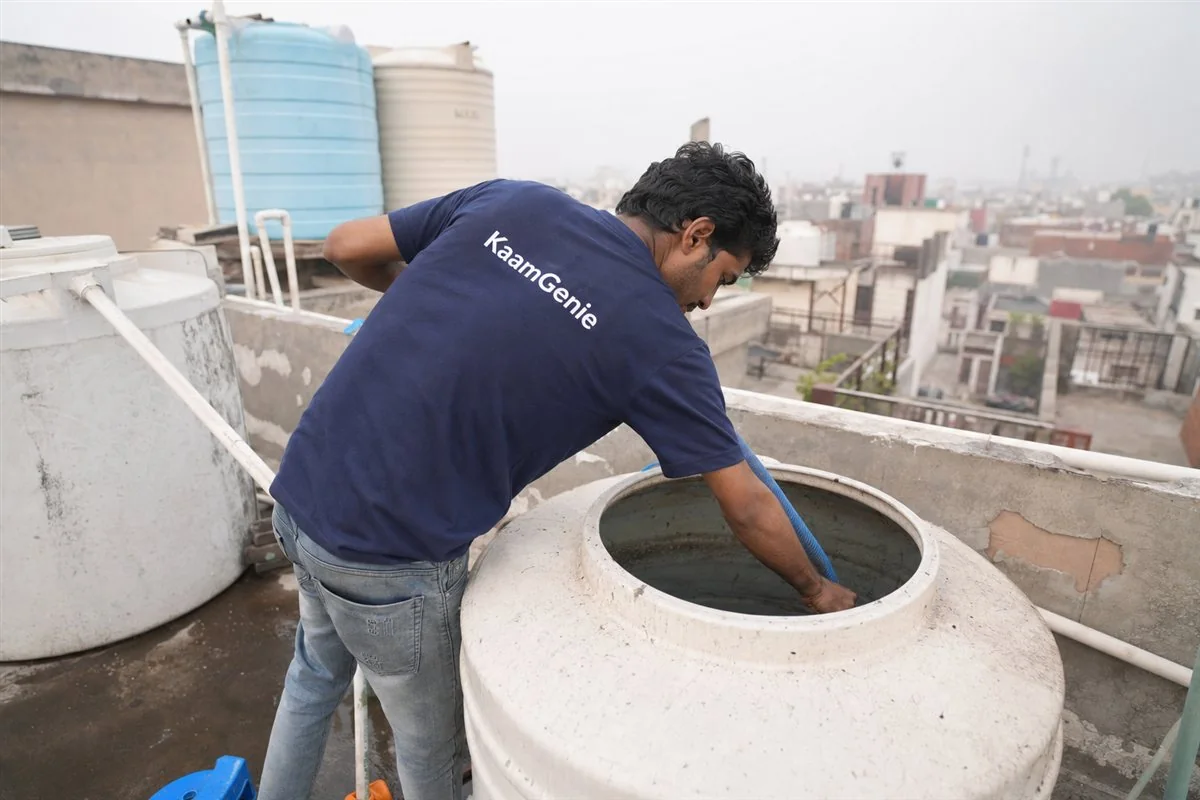
The far more common Delhi setup is the plotted home or builder floor. A typical builder floor is a G+3 or G+4 building where the original plot was redeveloped into one flat per floor. There’s usually one underground sump at ground level that the DJB line or a tanker fills, and then each floor runs its own small pump up to its own rooftop drum or Sintex tank — which is why a builder-floor terrace in Pitampura or a colony in south-west Delhi often has three or four tanks lined up, one per owner.
The consequence is structural: the sump is a shared asset, so its cleaning cost is usually split between the owners, while each rooftop drum is the individual owner’s responsibility. In practice we often clean the shared sump in one go and then do each floor’s drum as a small separate job, sometimes for different owners on different days. Plotted bungalows in places like South Delhi work similarly — a private sump plus one or two overhead tanks — just under single ownership, which makes the decision simpler. For the sump side specifically, our guide on sump cleaning cost and safety in Delhi goes into the confined-space details.
The cleaning method doesn’t change — the logistics do
This is the part people get wrong. They assume a society tank gets a fundamentally different “industrial” clean and a home tank gets something lighter. Not true. Every tank — UGR, tower OHT, shared sump or single rooftop drum — gets the same 8-step method: inspect, drain, scoop out sludge, hand-scrub with food-grade brushes, high-pressure jet wash, wet-vacuum the residue, disinfect with food-grade sodium hypochlorite at the correct concentration, then refill and document. The chemistry and the standard are constant. You can read the full sequence in our water tank cleaning process walkthrough, and the same approach underpins our water tank cleaning services across Delhi NCR.
What actually changes between a high-rise and a plotted home is four things:
- Scale and equipment. A 40,000-litre UGR needs bigger pumps, more dewatering time and confined-space gear; a 1,000-litre rooftop drum needs a standard residential kit.
- Access. Societies mean a caretaker, a pump room, lift coordination and terrace keys; plotted homes mean one owner letting the crew onto the roof.
- Scheduling. Societies are phased tower-by-tower around pumping timings so the complex never runs dry; a plotted home is a single window.
- Who decides and pays. An RWA committee versus one owner — this is the biggest practical difference of all.
Who organises it — RWA contracts vs the individual owner
In a true high-rise society, you as a flat owner generally don’t book your own OHT, because the overhead tanks are shared building assets sitting on common terraces. Instead the RWA or managing committee signs a contract — most commonly an annual or half-yearly RWA annual cleaning contract — and the cost comes out of the maintenance corpus. The caretaker arranges access, residents get a notice a day before, and we deliver one consolidated report covering every tank for the society’s records. It’s tidy precisely because it’s centralised.
Plotted and builder-floor homes are the opposite: decentralised. Each owner decides when their rooftop drum gets cleaned, and the shared sump needs a small bit of coordination between floors to split the cost. That freedom cuts both ways — you can book the day it suits you, but there’s no committee making sure it actually happens twice a year. Our honest advice to builder-floor owners is to fix a calendar reminder, because a neglected shared sump quietly contaminates everyone’s supply above it.
Typical time on site — high-rise society vs plotted home
Society totals are phased across the day (and sometimes days), not a single dry window
Indicative ranges for planning only. Actual time depends on tank count, capacity, sludge load and access — a society is always quoted after a site walk.
Why per-tank cost is lower for societies (and how plotted homes can copy it)
Here’s the economics. A standalone plotted home pays for a full crew mobilisation — travel, setup, pump-down, pack-up — for just one or two tanks, which is why residential cleaning is priced per visit from ₹699 onwards. A society spreads that same mobilisation across one UGR and a dozen OHTs in a single deployment, so the cost per tank falls sharply. Nobody is being charged twelve separate call-out fees.
The useful insight for plotted Delhi neighbourhoods: you can manufacture society economics. If several builder floors or bungalows on the same lane book together — a street-level RWA, or even a neighbours’ WhatsApp group — we mobilise one crew for the whole block and everyone gets group per-tank pricing instead of paying for separate trips. It’s the single easiest way for a plotted area to clean cheaper without cutting any corners. Society, UGR and commercial jobs are always quoted custom against tank count and capacity; standalone homes stay on the published residential rate.
What to insist on — for each type
The non-negotiables are the same for both: hand-scrubbing (not just a rinse from the top), food-grade disinfection with the right contact time, sludge physically carried away, and before/after photos with a dated certificate. On top of that:
If you’re an RWA in a high-rise:
- Get the UGR confined-space safety protocol in writing — ventilation, dewatering, and crew never working a reservoir alone.
- Insist on a tower-by-tower schedule so the complex is never fully without water, and a resident notice a day ahead.
- Ask for one consolidated report listing every tank, its capacity, chemicals used and crew — you’ll need it for the AGM and any audit.
- Put it on an AMC so it actually happens on schedule rather than only when someone complains about smell.
If you’re a plotted or builder-floor owner:
- Clean the shared sump as well as your rooftop drum — a clean drum fed by a dirty sump stays clean for about a week.
- Split the sump cost fairly between floors and keep the receipt; it avoids arguments later.
- If you’re on heavy borewell water in outer Delhi, expect hard-water scale and consider quarterly cleaning — see hard water tank cleaning in Delhi.
- Organise a lane-level group booking to drop your per-tank price.
Book the right job for your building
Whether you run a fourteen-tower society in Dwarka or own one builder floor in Pitampura, the cleaning standard we hold is identical — the only thing that changes is how we plan and price it. Tell us your setup and we’ll quote the right way: per-tank for a home, or a phased custom plan for a society. Start at the Delhi hub for water tank cleaning in Delhi, call +91 95603 66362, or use the booking form on this page — we’ll confirm shortly.
Society AMC or a single rooftop drum?
We do both to the same standard — phased tower-by-tower for societies, a tidy single visit for homes. Photos and certificate every time. ₹699 onwards for residential.
Frequently asked questions
What is the real difference between cleaning a high-rise society tank and a plotted home tank in Delhi?
Scale and structure. A high-rise group-housing society in Dwarka or Rohini usually has one large underground reservoir (UGR) that a tanker or DJB line fills, pumps that lift water to overhead tanks (OHTs) on each tower, and a single RWA that contracts the whole job. A plotted or builder-floor home typically has one shared underground sump at ground level and a separate small drum or tank per flat on the roof, with each owner deciding separately. So the society job is a planned, multi-tank, half-day-or-more operation; the plotted job is a quick per-tank visit.
Who arranges and pays for tank cleaning in a Dwarka or Rohini high-rise society?
The RWA or the managing committee. They sign a contract (often an annual or half-yearly AMC), the cost comes out of maintenance funds, and the caretaker coordinates access to the UGR, pump room and tower terraces. Individual flat owners almost never book their own tank in a true high-rise because the OHTs are shared building assets, not flat-specific.
In a builder floor, does each flat have its own water tank?
Usually yes on the roof. A typical Delhi builder floor (G+3 or G+4) shares one underground sump that the DJB line or tanker fills, then each floor has its own pump and its own overhead drum or Sintex tank on the terrace. That means the sump is a shared cost to split between owners, but each floor’s rooftop drum is the individual owner’s responsibility. We often clean the shared sump once and then do each floor’s drum as separate small jobs.
How long does it take to clean a full high-rise society versus a plotted home?
A plotted home with one sump and one or two rooftop drums is usually 1.5 to 3 hours. A high-rise society is a different animal: the central UGR alone can take 3 to 5 hours, and then every tower OHT is cleaned on top of that, so a full society is commonly a half-day to multi-day job done tower-by-tower with more than one crew. We schedule societies in phases so no tower is without water for long.
Will our whole society be without water during the cleaning?
No, if it is planned properly. We clean tower-by-tower and time the UGR around the society’s pumping schedule, so only the section being worked on has a short supply pause while the rest of the complex stays running. The RWA usually puts up a notice a day ahead so residents can store a bucket or two for the window. A good crew works around your pump timings, not against them.
Why is the per-tank cost lower for a society than for a single plotted home?
Volume and travel. When one crew cleans a UGR plus a dozen tower OHTs in a single mobilisation, the cost per tank drops because there is no repeated travel, setup or pump-down. A standalone plotted home pays for a full crew visit for just one or two tanks. Residential plotted cleaning starts at ₹699 onwards; society, UGR and commercial jobs are quoted custom against tank count and capacity.
Does a high-rise underground reservoir need different equipment than a plotted sump?
Often yes. A society UGR can hold tens of thousands of litres and is a confined space, so it needs proper confined-space safety gear, ventilation, higher-capacity pumps and dewatering, and sometimes a two-person-inside protocol. A plotted shared sump is smaller and shallower, so the same 8-step method applies but with lighter equipment. Both still get hand-scrubbing, jet wash and food-grade disinfection — the method does not change, only the scale.
How often should each type of tank be cleaned in Delhi?
Both should be cleaned at least every six months, and BIS-aligned good practice is twice a year. High-rise societies on tanker or borewell water during the summer crisis often go quarterly because tanker water carries more sediment. Plotted and builder-floor homes on heavy borewell supply in outer Delhi also benefit from quarterly cleaning because of hard-water scale. Document each cleaning with photos and a certificate either way.
We are a plotted-home RWA street — can we book a group cleaning like a society?
Yes, and you should. Several plotted homes or builder floors on the same lane booking together get society-style per-tank pricing because we mobilise one crew for the whole block instead of separate trips. It is one of the easiest ways for plotted Delhi neighbourhoods to get high-rise economics. Your street’s RWA or a WhatsApp group of neighbours is usually enough to organise it.
Do you provide cleaning certificates for both societies and plotted homes?
Yes. Every job — society UGR, tower OHT, shared sump or single rooftop drum — gets before and after photos and a dated cleaning record listing tank type, capacity, chemicals used and crew. Societies usually want one consolidated report covering all tanks for their records and any audit; plotted owners get a record per tank. For food businesses or RWA audits that paperwork is the proof that matters.
Sources & references
- Bureau of Indian Standards (BIS) — IS 10500:2012 is the canonical Indian Standard for drinking water specification, defining acceptable limits for physical, chemical, and biological parameters.
- WHO Guidelines for Drinking-water Quality, 4th edition — the global reference for water quality standards, including guidance on storage and disinfection.
- Food Safety and Standards Authority of India (FSSAI) — defines water quality requirements for food businesses, including hygiene standards for stored water and acceptable disinfection chemicals.
- WHO Fact Sheet on Drinking Water — overview of safe drinking water requirements and contamination risks.
- CPHEEO — Manual on Water Supply and Treatment — the Government of India’s engineering manual covering tank design, cleaning protocols, and disinfection practices.
Last verified: 30 June 2026. If you find any of these links broken, please let us know.