
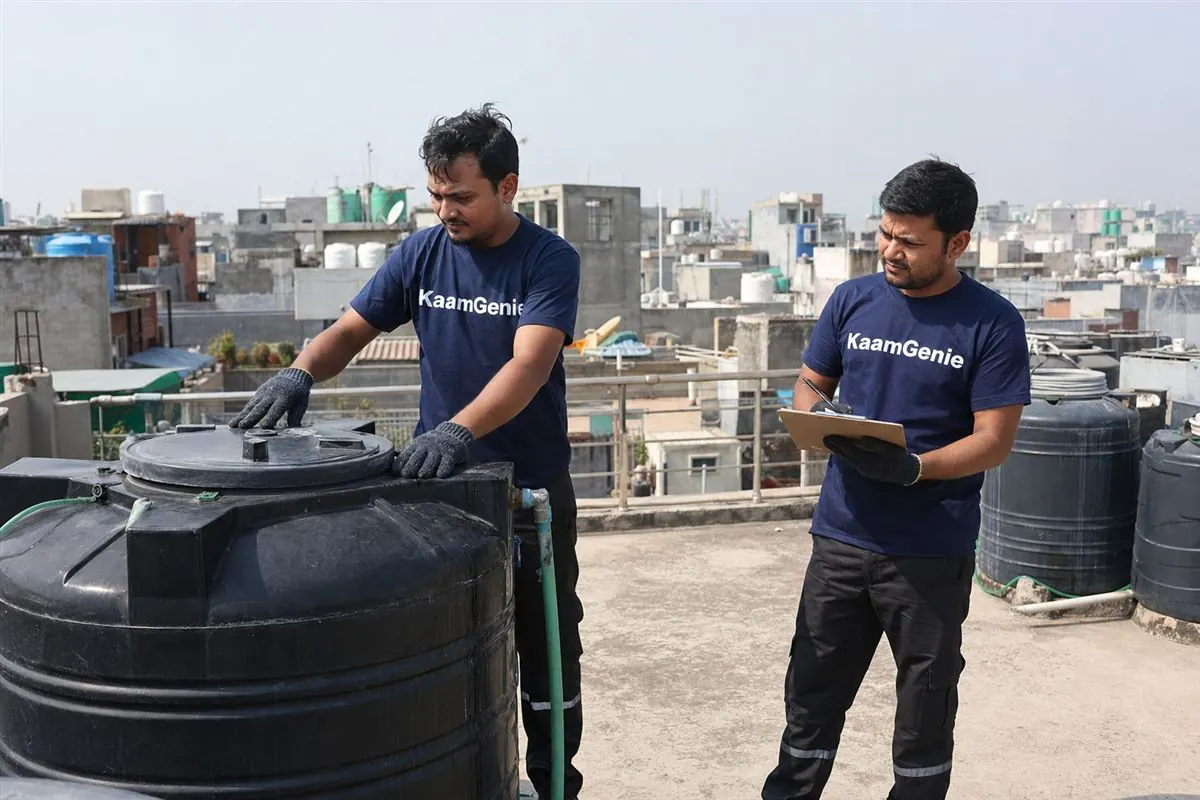
The whole guide in 30 seconds
- Why it matters: stored water collects sludge, scale and bacteria — a dirty tank quietly affects health and your plumbing.
- How often: every 6 months for most Delhi homes; more often for hard water, sumps, restaurants and societies.
- The process: drain → scoop sludge → scrub → jet wash → vacuum → food-grade disinfect → refill. A top-spray is not a cleaning.
- How long: 75–90 minutes for a home tank; longer for sumps and reservoirs.
- Cost: ₹699 onwards residential. Beware ₹200–300 “rinses”.
- Choosing a service: demand before/after photos, a cleaning record, and food-grade chemicals.
This page is the overview. Each topic below links to a full, dedicated guide if you want to go deeper.
| Topic | The one-line answer | Where to go deeper |
|---|---|---|
| Why it matters | Sludge, scale and bacteria build up in any stored-water tank. | Warning signs |
| How often | Every 6 months for most Delhi homes. | Frequency guide |
| The process | Drain, scoop, scrub, jet, vacuum, disinfect, refill. | Step-by-step |
| Methods | Manual + jet + vacuum used together, not in isolation. | Methods guide |
| Chemicals | Food-grade sodium hypochlorite, 50–100 PPM. | Chemicals guide |
| How long | 75–90 min for a home tank; more for sumps. | Timing guide |
| Cost | ₹699 onwards residential; sumps cost more. | Cost guide |
| DIY vs pro | You can scrub; you can’t safely jet, vacuum and disinfect. | DIY vs pro |
| Choosing a service | Photos, records, food-grade chemicals, fixed price. | Buyer’s guide |
Just want it done?
Skip the reading — book a real, fully-documented cleaning with before/after photos and a fixed price. ₹699 onwards.
What water tank cleaning is — and why it matters
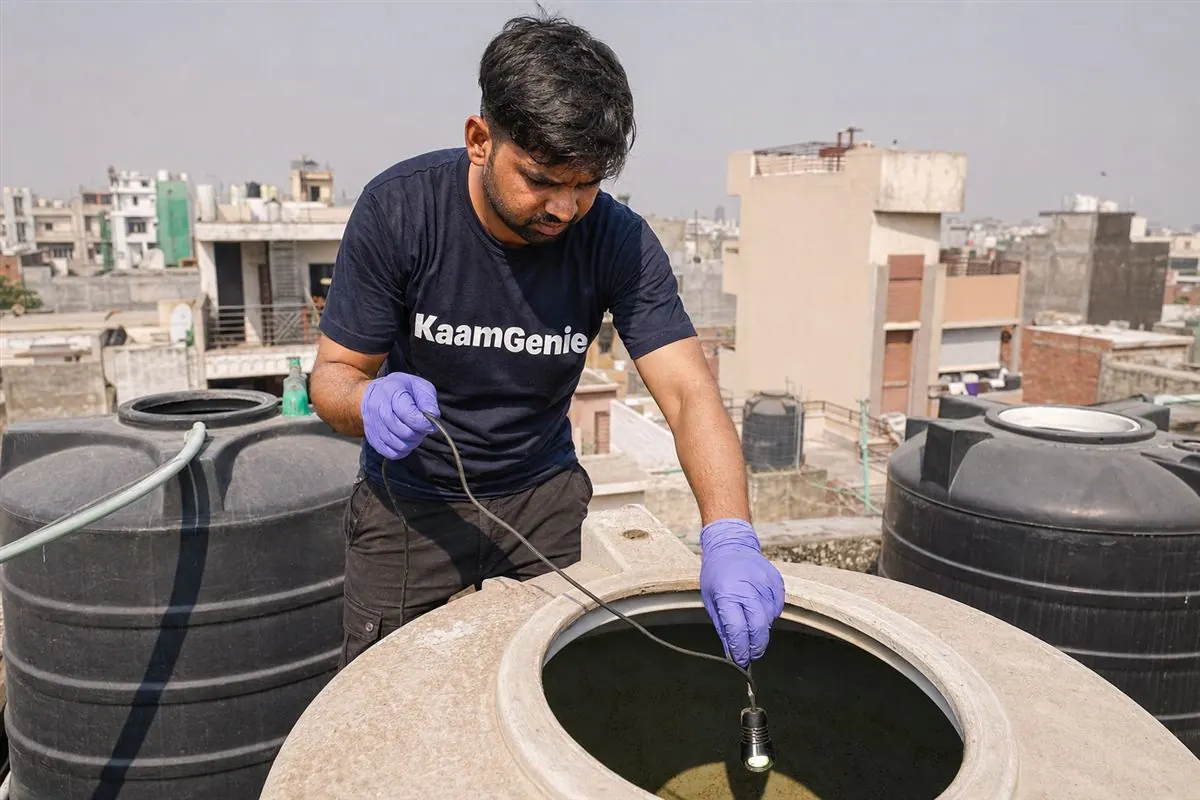
Your overhead tank or underground sump is the last place your water sits before it reaches your taps. Whether you’re on Delhi Jal Board supply or a borewell, that water carries fine sediment — sand, dust, rust from old pipes — which settles to the bottom over weeks. On top of that, hard Delhi water leaves calcium and magnesium scale on the walls, and any warmth and stillness lets a slimy bio-film of bacteria grow in the corners and around fittings. None of this is caught by your RO or candle filter, because it’s building up upstream of them.
That’s why cleaning matters: it’s a health, taste and maintenance issue at once. A neglected tank is linked to stomach upsets, skin irritation and that faint musty smell at the tap, while scale shortens the life of pumps, valves and the tank itself. The clearest early warnings show up in the water itself — if you want to know whether yours is already overdue, read our guide to the signs your tank needs cleaning urgently.
How often you should clean it
The short answer for most Delhi homes is every six months — a twice-yearly schedule that lines up with BIS and CPHEEO guidance for stored drinking water. But the right interval genuinely depends on your situation: borewell or hard water leaves scale faster, underground sumps and ground-level tanks pick up more grit, and restaurants, paying-guest accommodations and shared society tanks see far more turnover and contamination than a single family’s rooftop tank.
Rather than guess, work out your own number. Our how-often-to-clean-your-water-tank guide for Delhi breaks it down by tank type, water source and household, so you land on a schedule that fits instead of cleaning too rarely (risky) or too often (wasteful).
The cleaning process, in brief
A genuine cleaning is a sequence, not a single action: inspect and photograph, drain the old water, hand-scoop the bottom sludge, manually scrub every wall and the floor, high-pressure jet wash the corners and fittings, wet-vacuum out the dirty rinse water, disinfect with a food-grade chemical, then refill and hand over a record. The two parts cheap operators skip — sludge removal and disinfection — are exactly the two that decide whether your water is actually safe.
If you want to see each stage with timings and the equipment involved, our step-by-step water tank cleaning process guide walks through the full eight steps and flags precisely where corner-cutters cut.
Cleaning methods — manual, jet and vacuum
People often ask which method is “best” — manual scrubbing, high-pressure jetting, or vacuum extraction. The honest answer is that they aren’t alternatives; a proper cleaning uses all three. Manual scrubbing lifts the stuck film a jet alone slides over, the jet reaches corners, fitting threads and the pores of old RCC concrete that a brush can’t, and the wet vacuum removes the contaminated rinse water so it doesn’t redistribute everything when you refill.
Where each one fits, and which combination your particular tank needs, is covered in our water tank cleaning methods guide for Delhi.
Safe chemicals and disinfectants
The disinfection step is the one that actually kills bacteria, and the chemical you use matters. The standard, FSSAI-acceptable disinfectant is food-grade sodium hypochlorite at a 50–100 PPM solution — the same compound municipal supplies use — with hydrogen peroxide as a premium alternative. Industrial bleach and hardware-shop chemicals are not food-grade: they can leave residue you don’t want in drinking water and aren’t formulated for potable contact.
For the right products, the correct dosing, and how the contact-time and rinse work, see our guide to safe water tank cleaning chemicals in Delhi.
How long it takes
A standard 1,000-litre residential overhead tank, done properly, takes 75–90 minutes from the crew’s arrival to the final refill. Underground sumps run 2–2.5 hours because they hold more water and are slower to drain, and society reservoirs or industrial tanks can take 3–5 hours. The useful rule of thumb: if someone finishes a home tank in 20–30 minutes, they didn’t scoop the sludge, scrub the walls or wait out the disinfectant contact time.
For tank-by-tank time estimates and what drives them, see our guide to how long water tank cleaning takes.
What it costs
Residential cleaning with us starts at ₹699 onwards for a standard overhead tank, with underground sumps, society reservoirs and industrial tanks priced higher because they take more time and water. You’ll see quotes across the market ranging from ₹200 to ₹3,000 for what sounds like the same job — the difference is almost always whether the price covers a real eight-step cleaning or just a top-spray rinse.
Our water tank cleaning cost guide for Delhi (2026) breaks down fair pricing by tank type and explains exactly what a ₹200 quote leaves out.
Where the time goes — typical full clean by tank type (minutes)
Bigger tanks scale the scrubbing and disinfection steps proportionally
Indicative end-to-end times for a full clean including setup and pack-up. A 20–30 minute “cleaning” of a home tank means steps were skipped. Deeper breakdown in our timing guide.
DIY versus professional
Cleaning a small, easily accessible overhead tank yourself is possible — drain it, scrub it, rinse it — and for a tank that’s done frequently that may be enough between professional visits. What you can’t easily replicate at home is the high-pressure jet, the wet vacuum, correctly dosed food-grade disinfection, and the safety gear that makes entering an underground sump survivable. Sumps in particular can hold dangerous low-oxygen or gas pockets — this is not a DIY job.
For an honest line-by-line comparison of what changes between the two, read water tank cleaning vs DIY — what pros do differently.
How to choose a service
Once you’ve decided to hire someone, the deciding factors are simple to check: do they take before/after photos, hand over a written cleaning record, use food-grade chemicals, and quote a fixed price with no surprise add-ons? A crew that explains each step is a good sign; a ₹200–300 quote is a red flag, because that price only buys a rinse.
We’ve written two guides to help you compare. Start with how to pick the best water tank cleaning service in Delhi, then use the checklist in how to find a trusted water tank cleaning service in Delhi to vet anyone before they touch your tank.
Book in your area
We clean Sintex/plastic and RCC overhead tanks and underground sumps right across Delhi NCR. Pick your tank type and book in minutes. ₹699 onwards.
Ready to book in your area?
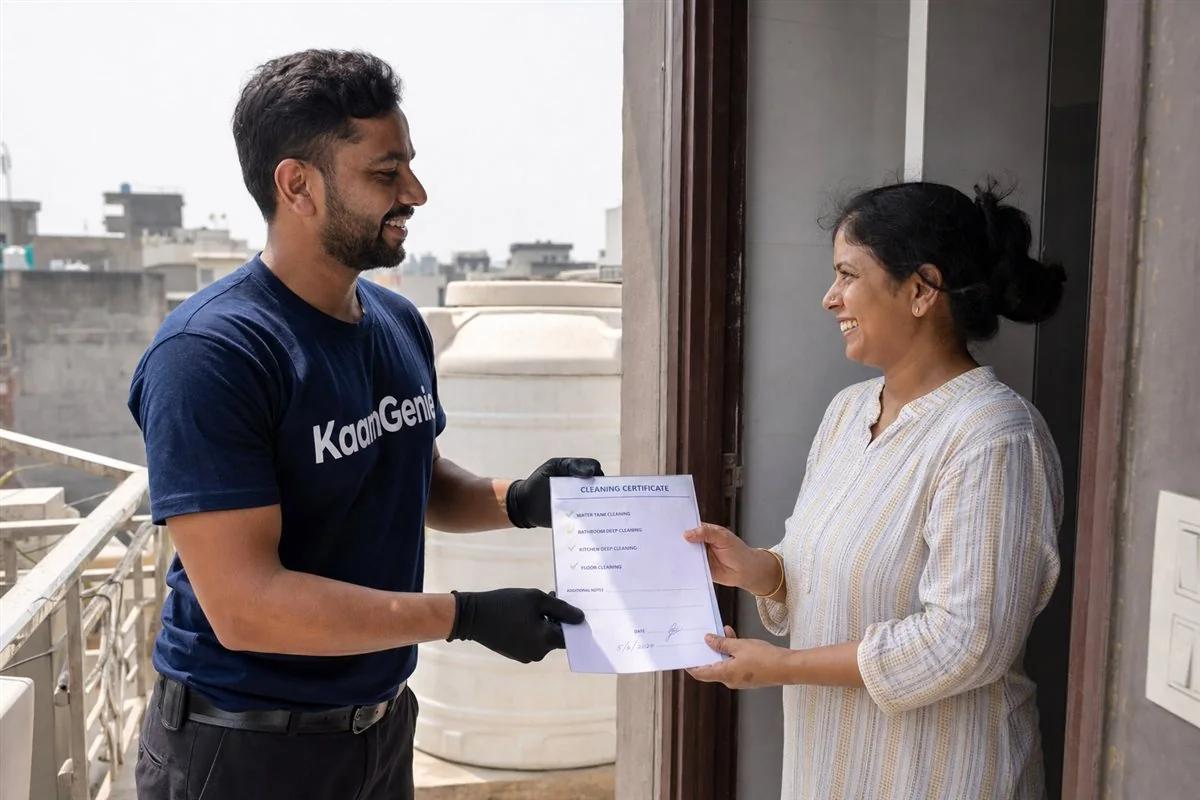
This guide is the overview — when you’re ready for the real thing, we do the full, no-shortcuts cleaning with before/after photos and a certificate every job. See pricing and book on our water tank cleaning service page.
To book, call +91 95603 66362 or use the booking form on this site — we’ll confirm shortly.
Frequently asked questions
What does water tank cleaning actually involve?
A real cleaning means draining the tank, hand-scooping the bottom sludge, manually scrubbing every wall and the floor, a high-pressure jet wash, vacuuming out the dirty rinse water, and disinfecting with a food-grade chemical before refill. A spray-and-rinse from the top is not a cleaning. We cover the full process in our dedicated step-by-step guide.
How often should I get my water tank cleaned in Delhi?
Every 6 months is the standard recommendation for most Delhi homes, and BIS/CPHEEO guidance supports a twice-yearly schedule. Hard borewell water, older RCC tanks, ground-floor sumps, restaurants and shared society tanks often need more frequent cleaning. See our frequency guide for a tank-by-tank breakdown.
How much does water tank cleaning cost in Delhi?
Residential cleaning starts at ₹699 onwards for a standard overhead tank. Underground sumps, society reservoirs and industrial tanks cost more because they hold more water and take longer. Quotes in the market range wildly from ₹200 to ₹3,000 for the same job — our cost guide explains why and what a fair price looks like.
Should I clean my water tank myself or hire a professional?
You can scrub a small accessible tank yourself, but you cannot replicate the jet wash, wet vacuum, food-grade disinfection and confined-space safety a professional crew brings — and entering a sump yourself is genuinely dangerous. Our DIY-vs-professional comparison lays out exactly what changes hands.
What chemicals are safe for cleaning a drinking water tank?
Food-grade sodium hypochlorite at 50-100 PPM (the same compound used in municipal water treatment) is the standard, FSSAI-acceptable disinfectant. Hydrogen peroxide is used for premium jobs. Industrial bleach and hardware-shop chemicals are not food-grade and leave residue. Our chemicals guide covers safe products and dosages.
How long does water tank cleaning take?
A 1,000L residential overhead tank takes 75-90 minutes done properly. Underground sumps take 2-2.5 hours, and society or industrial reservoirs run 3-5 hours. If a cleaner finishes a home tank in 20-30 minutes, they skipped the sludge removal, scrubbing or disinfection. See our timing guide for tank-by-tank estimates.
What are the signs my water tank needs cleaning urgently?
Yellow or cloudy water, a musty or chlorine-off smell, visible sediment at the tap, a slimy tank wall, or unexplained stomach and skin complaints in the household. Any one of these means book sooner rather than later. Our warning-signs guide explains each red flag in detail.
Which cleaning method is best — manual, jet or vacuum?
A proper cleaning uses all three together, not one instead of the others. Manual scrubbing removes the stuck film, the high-pressure jet reaches corners and pores a brush cannot, and the wet vacuum lifts out the dirty rinse water before disinfection. Our methods guide explains where each one fits.
How do I choose a trustworthy water tank cleaning service in Delhi?
Look for before/after photos, a written cleaning record, food-grade chemicals, fixed pricing with no surprise add-ons, and a crew willing to explain each step. Avoid anyone quoting a suspiciously low ₹200-300 — that price only covers a rinse. Our buyer’s guides on the best and most trusted services walk through how to compare.
Do you clean both overhead tanks and underground sumps?
Yes. We clean Sintex/plastic and RCC overhead tanks as well as underground sumps across Delhi NCR, using confined-space safety gear for sumps. You can book either on our water tank cleaning service page and pick your tank type in the form.
Sources & references
- Bureau of Indian Standards (BIS) — IS 10500:2012 is the canonical Indian Standard for drinking water specification, defining acceptable limits for physical, chemical, and biological parameters.
- WHO Guidelines for Drinking-water Quality, 4th edition — the global reference for water quality standards, including guidance on storage and disinfection.
- Food Safety and Standards Authority of India (FSSAI) — defines water quality requirements for food businesses, including hygiene standards for stored water and acceptable disinfection chemicals.
- WHO Fact Sheet on Drinking Water — overview of safe drinking water requirements and contamination risks.
- CPHEEO — Manual on Water Supply and Treatment — the Government of India’s engineering manual covering tank design, cleaning protocols, and disinfection practices.
Last verified: 24 June 2026. If you find any of these links broken, please let us know.