
The short version
- A water purifier (RO/UV) cleans one tap — usually the kitchen — just before you drink. It never touches your tank.
- Your storage tank feeds everything else: bathing, brushing, washing vegetables, the geyser, the washing machine, and the purifier itself.
- A dirty tank means recontaminated water, fast-clogging RO filters, and skin/bathing exposure your purifier does nothing about.
- In Delhi’s hard-water, DJB and tanker reality, the tank gets dirty fast — so you need both a clean tank and a working purifier.
- They are partners, not alternatives: the clean tank is the source, the purifier is the final polish.
If you own a purifier but have never had your tank cleaned, you’ve protected one glass and ignored the other 95% of the water your family touches every day.
Walk into almost any flat in South Delhi, Dwarka or Pitampura and you’ll find a water purifier mounted over the kitchen sink. Walk up to the roof of the same building and you’ll often find a tank that hasn’t been opened in two or three years. That gap — spotless at the tap, filthy at the source — is the single biggest misunderstanding about home water in Delhi. This article clears it up.
What a water purifier actually does (and where it sits)
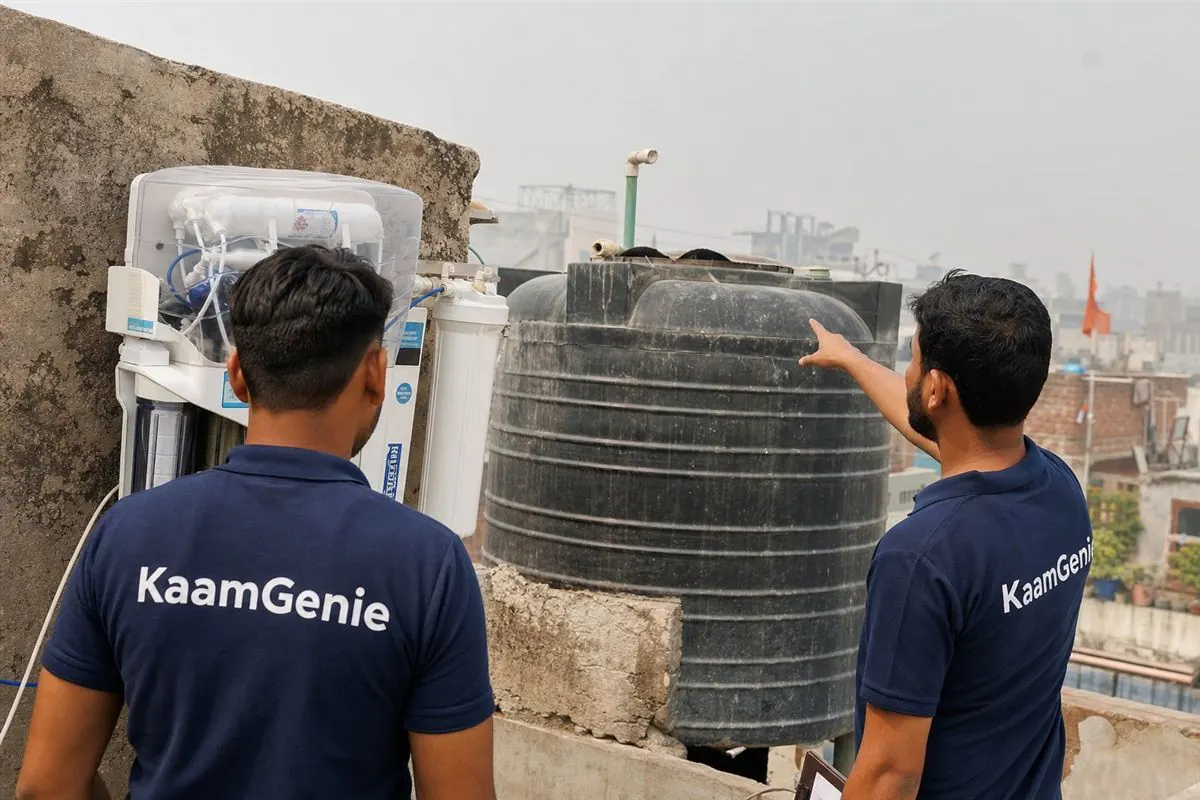
An RO or UV purifier is a point-of-use device. That phrase matters: it treats water at one point of use, right before consumption. It is plumbed into a single tap, almost always the kitchen, and it processes only the few litres a day that you actually drink and cook with.
Inside that small box it does real work — an RO membrane reduces dissolved salts and hardness, a UV lamp deactivates microorganisms, and a carbon stage handles taste and odour. For the water passing through it, a well-maintained purifier is genuinely effective. But notice the boundary: the purifier’s job begins at its inlet pipe and ends at its outlet nozzle. Everything upstream of that — the entire journey from the municipal main to your tank to the kitchen tap — is outside its world.
So when the marketing says “100% pure water,” read the fine print in your head: it means the water that came out of this nozzle, not the water in your home.
What a water tank does (and why it’s the real source)
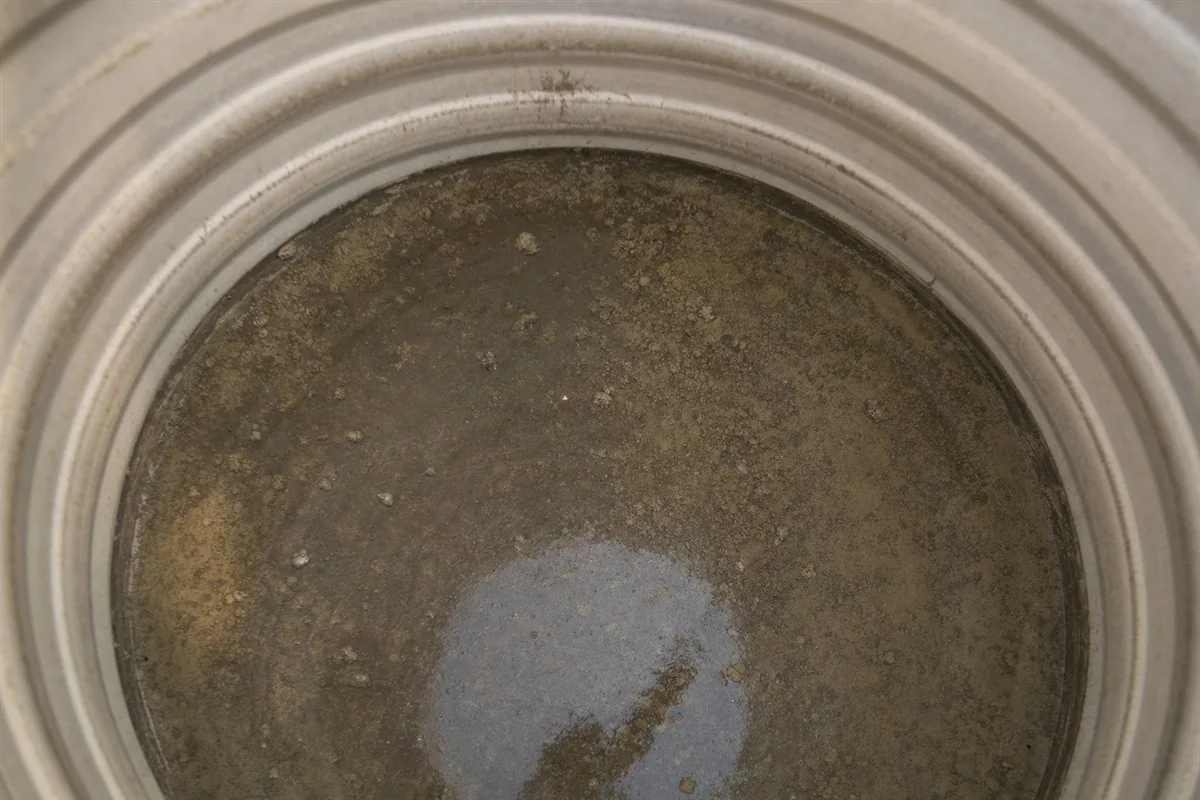
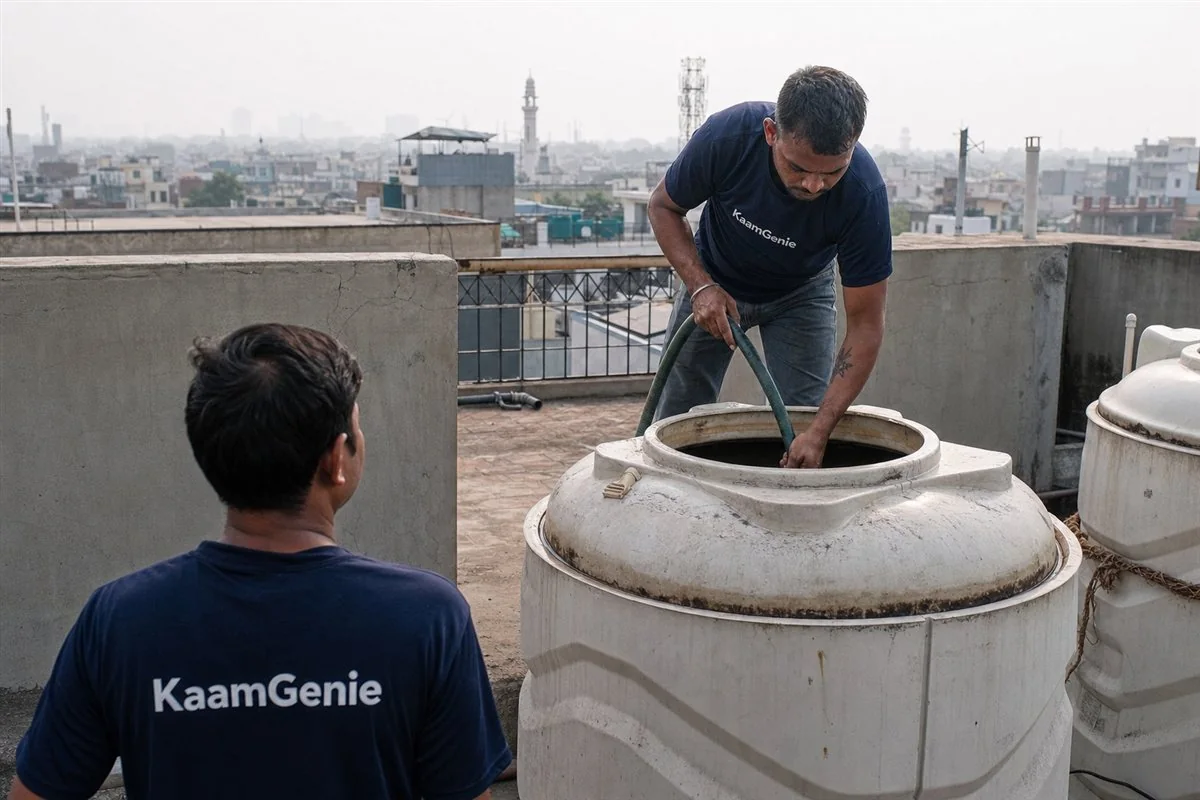
Your overhead tank or underground sump is the reservoir for your whole home. In Delhi, that water arrives from a mix of sources — Delhi Jal Board (DJB) piped supply, borewell groundwater in outer and unauthorised colonies, and private water tankers during the summer crunch. Whatever the source, it all lands in the same tank and sits there.
While it sits, things happen. Sediment — sand, silt, fine rust from old DJB pipes — settles to the floor. In Delhi’s many hard-water pockets, dissolved calcium and magnesium deposit as a chalky scale on the walls. Sunlight on a poorly covered plastic tank feeds algae. And on top of all of it, a slimy biofilm of bacteria grows in the corners and around the fittings. The Bureau of Indian Standards drinking-water specification, IS 10500, sets limits for exactly these kinds of contaminants — and a dirty tank quietly pushes water past them.
Here is the part people miss: this tank feeds every outlet. Your shower. Your geyser. The basin where you brush and gargle. The tap where you rinse vegetables and wash utensils. The washing machine. And, yes, the inlet of your purifier. The purifier handles a sliver of that water. The tank decides the quality of all of it.
| What it covers | RO / UV purifier | Tank cleaning |
|---|---|---|
| Where it works | One tap (kitchen) | The source for the whole home |
| Drinking & cooking water | Yes — final polish | Yes — clean source |
| Bathing / shower water | No coverage | Yes |
| Washing, utensils, brushing | No coverage | Yes |
| Sediment & sludge in tank | Cannot reach it | Removed physically |
| Hard-water scale on tank walls | Cannot reach it | Scrubbed & jet-washed off |
| Biofilm & bacteria growth | Treats only at the tap | Removed & disinfected at source |
| How often | Filter/membrane changes as needed | Every 3–6 months in Delhi |
Clean the source, not just the glass
Your purifier polishes the last litre. We clean the tank that feeds your whole home — before/after photos, food-grade disinfection, fixed price. ₹699 onwards.
Myth 1 — “The RO cleans my water, so the tank doesn’t matter”
This is the big one. The RO cleans the water it sees, which is the trickle going to one tap. It has no idea what is happening in the tank, and no ability to affect it. Think of the purifier as a security guard at the front door of one room in a large house — useful, but he isn’t guarding the other rooms, and he certainly isn’t cleaning the water tank on the roof.
Worse, a dirty tank actively works against your purifier. Heavy sediment and biofilm load up the RO’s sediment pre-filter and membrane far faster than they were designed for. We regularly meet families in hard-water belts who change filters two or three times more often than they should — and assume that’s normal. It isn’t. It’s the tank dumping the tank’s problems onto a ₹6,000 membrane. Clean the tank and your purifier suddenly behaves the way the brochure promised.
Myth 2 — “Only drinking water needs to be clean”
Stop and count the ways your family meets tank water that never goes near the purifier. You stand under the shower with your eyes, mouth and scalp exposed to it for ten minutes. You brush your teeth and gargle with it. You rinse the salad and the cooking pots with it. Children splash in it. Lenses, cuts and sensitive skin all meet it directly.
When a tank is thick with biofilm and algae, that bathing water carries bacteria straight to your skin and hair. It’s one of the most common — and most overlooked — causes of unexplained itching, scalp irritation, hair-fall complaints and recurring rashes we hear about from Delhi families. No kitchen purifier touches any of it. The only fix is a clean tank. If you’ve been noticing these signs, our guide to the signs your tank needs cleaning urgently is worth a read.
Myth 3 — “An RO handles hard water, so I don’t need to clean the tank”
Delhi’s hard water is real, and an RO does reduce the hardness in the water that passes through it. But the scale that hard water leaves inside the tank is a separate problem the RO can’t see. Calcium and magnesium deposit as a rough chalky crust on the tank walls and floor. That crust traps biofilm in its pores, and it flakes off into your supply over time. A membrane in the kitchen does nothing about a coating on a tank two floors up.
Removing that scale is physical work — manual scrubbing followed by a high-pressure jet wash, then disinfection. We cover the specifics in our piece on hard-water tank cleaning in Delhi, and the food-grade chemistry involved in our guide to water tank cleaning chemicals. The short point: the purifier and the cleaning solve two different halves of the hard-water problem.
The Delhi factor — DJB, borewell and tankers
Why does this matter more in Delhi than in many other cities? Because of how water gets to your tank here. DJB piped supply runs through old networks that pick up rust and sediment. Large parts of outer and unauthorised Delhi rely on borewell groundwater, which carries dissolved minerals and, in places, biological load. And every summer, when supply tightens, private tankers fill sumps across the city with water of wildly varying quality.
If you want to understand the source differences, our explainer on borewell vs DJB water in Delhi goes deeper. The practical upshot is the same: all of these dump extra sediment and contaminants into your tank, the tank gets dirty faster than the textbook six-month cycle, and your kitchen purifier remains blissfully unaware of any of it. A purifier in a Dwarka high-rise or a Chattarpur farmhouse faces exactly the same blind spot.
How fast RO pre-filters clog — by tank condition (typical Delhi homes)
Indicative pattern from our service visits, not a lab measurement
The dirtier the tank, the faster your purifier’s sediment filter and membrane clog — a clean tank quietly pays for itself in longer filter life. Figures are indicative of what we see on jobs, not a controlled study.
So which one do you actually need? Both — and here’s the order
This was never really a “versus” question. A purifier without a clean tank is polishing water that was contaminated upstream and leaving 95% of your household water untreated. A clean tank without a purifier gives your whole home good water but skips the final safety polish on the litre you drink. You want both, working together:
- Clean the tank first — it’s the source, and it protects bathing, washing and the purifier’s own inlet.
- Keep the tank on a schedule — every 6 months for most Delhi homes, every 3–4 months on tanker or borewell supply.
- Run a maintained purifier on the drinking tap — with filters that now last as long as they should, because the tank isn’t sabotaging them.
If you want the full picture on keeping the source clean, our complete water tank cleaning guide for Delhi walks through frequency, methods and what a real cleaning includes.
Already own a purifier? Finish the job at the tank
Get the source cleaned by a trained crew — before/after photos, food-grade disinfection, certificate. Standard residential cleaning ₹699 onwards.
Book the source clean across Delhi
We clean overhead tanks and underground sumps across the city — the same trained crew, fixed prices, and a certificate every job. See pricing and coverage on our water tank cleaning in Delhi hub, or our NCR-wide water tank cleaning services page. We’re active right across the city, including South Delhi, Dwarka and Pitampura. Your purifier handles the glass; let us handle the tank that fills it.
Frequently asked questions
Does a water purifier clean my water tank?
No. An RO or UV purifier sits at one tap — usually the kitchen — and treats the small amount of water that passes through it just before you drink it. It has no contact with your overhead tank or underground sump. The storage tank that feeds every tap, shower, geyser and washbasin in your home stays exactly as dirty as it was. A purifier is the last filter; a clean tank is the source. They do completely different jobs.
If I have an RO purifier, do I still need to clean my tank?
Yes, and arguably more so. The purifier only protects the water you drink from one tap. The tank feeds your bathing water, the water you brush your teeth and gargle with, the water you wash vegetables and utensils with, and the water that refills the purifier itself. If the tank is full of sludge and biofilm, all of that water is contaminated before it ever reaches the RO. Cleaning the tank twice a year is what protects the 95% of household water your purifier never touches.
Why do my RO filters clog so fast in Delhi?
Because they are doing the tank’s job. The sediment pre-filter and membrane in your RO are designed to handle normal supply water, not water carrying sand, rust, hard-water scale and biofilm from a neglected tank. In Delhi’s hard-water pockets, a dirty tank pushes that load straight onto the membrane, so filters that should last 8-12 months clog in 3-4. Cleaning the tank removes the bulk of that load and noticeably extends filter and membrane life.
Can a dirty tank make my purified water unsafe?
Indirectly, yes. A heavily contaminated tank can overwhelm a tired RO membrane or a UV lamp that is past its rated hours, letting more through than it should. More commonly, the recontamination happens after the purifier — the storage bottle, the nozzle, and the glass you fill from a tap fed by the dirty tank. A purifier is only as reliable as the water and surfaces around it, and a filthy tank stacks the odds against it.
The purifier only feeds my kitchen — what about bathing and washing water?
That is exactly the gap. Your shower, geyser, washbasin and washing machine all draw straight from the tank with no purification at all. Biofilm, algae and bacteria in a dirty tank reach your skin, scalp and eyes every single day through bathing water — a common cause of unexplained itching, hair fall complaints and recurring skin irritation in Delhi homes. No kitchen purifier does anything about this; only a clean tank does.
How often should I clean my tank if I already use a purifier?
The purifier makes no difference to the cleaning schedule. For most Delhi homes we recommend every 6 months, and every 3-4 months for homes on tanker supply, borewell water or in heavy hard-water pockets where sediment builds up faster. The purifier protects your drinking glass; the schedule protects the tank that feeds everything else.
Does an RO purifier remove Delhi hard-water scale from the tank?
No. The RO membrane reduces dissolved hardness in the water that passes through it, but it does nothing about the chalky calcium and magnesium scale that has already deposited on the inside walls and floor of your tank. That scale keeps building, traps biofilm in its rough surface, and breaks off into your supply in flakes. Only a physical cleaning — manual scrubbing plus a jet wash — removes it. Hard-water tanks specifically need this; the purifier cannot reach inside the tank.
Is tanker-supplied water safe once it goes through my purifier?
The drinking water from that one tap may be, but the tanker water that just filled your underground sump is sitting in the tank untreated. Private tanker water in Delhi varies a lot in quality and often carries extra sediment that settles at the bottom of your sump. Your purifier never sees the sump or the bathing water drawn from it. After a few tanker fills, the tank needs cleaning regardless of how good your purifier is.
What does professional tank cleaning cost, and does it replace my purifier?
Residential tank cleaning with KaamGenie starts at ₹699 onwards, with society, underground-reservoir and commercial jobs quoted on site. It does not replace your purifier — the two are partners, not alternatives. The clean tank delivers good water to your whole home; the purifier polishes the final litre you drink. Keeping both is far cheaper than constant filter replacements, recurring stomach trouble, or skin problems from contaminated bathing water.
Sources & references
- Bureau of Indian Standards (BIS) — IS 10500:2012 is the canonical Indian Standard for drinking water specification, defining acceptable limits for physical, chemical, and biological parameters.
- WHO Guidelines for Drinking-water Quality, 4th edition — the global reference for water quality standards, including guidance on storage and disinfection.
- Food Safety and Standards Authority of India (FSSAI) — defines water quality requirements for food businesses, including hygiene standards for stored water and acceptable disinfection chemicals.
- WHO Fact Sheet on Drinking Water — overview of safe drinking water requirements and contamination risks.
- CPHEEO — Manual on Water Supply and Treatment — the Government of India’s engineering manual covering tank design, cleaning protocols, and disinfection practices.
Last verified: 30 June 2026. If you find any of these links broken, please let us know.