
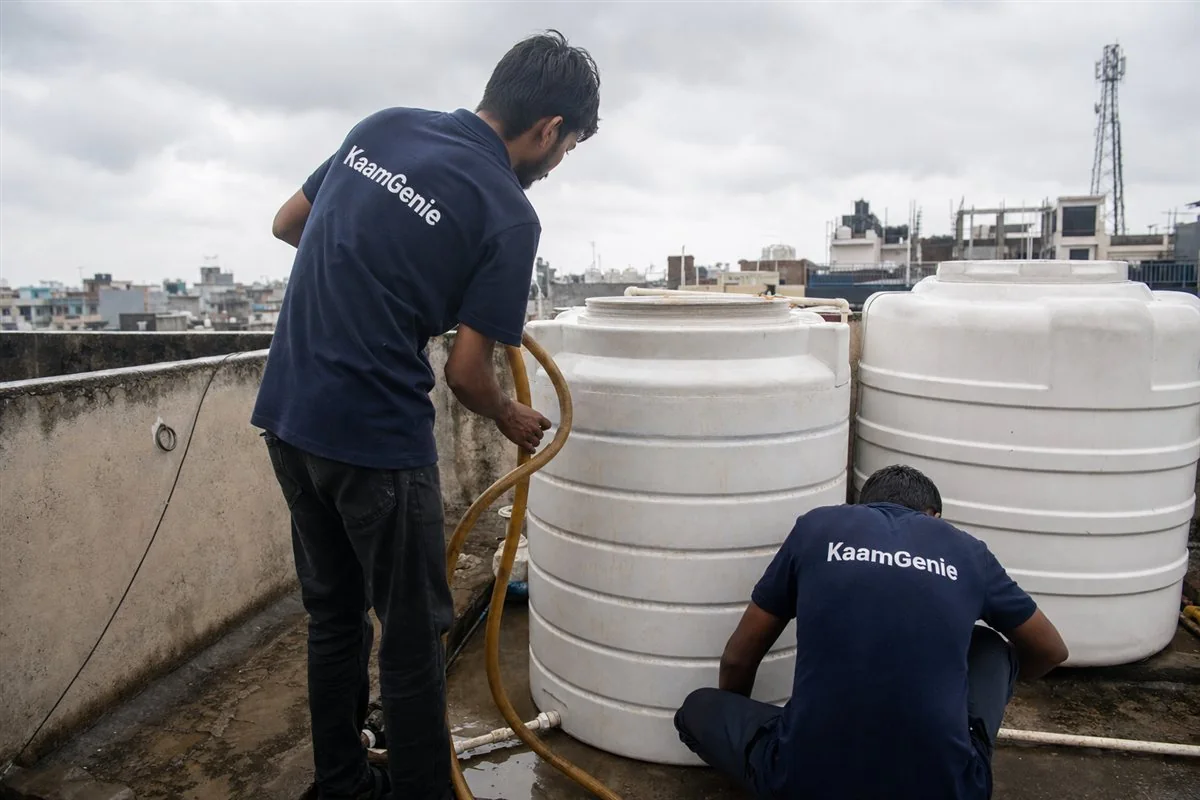
The short version
- The monsoon raises contamination in every Delhi tank at once — runoff, ingress, source-quality dips and algae all spike together.
- A cracked or loose lid is the number-one entry point; sealing it before the rains is the cheapest high-impact fix.
- Underground sumps are most at risk from waterlogging and groundwater seepage in low-lying pockets.
- This is peak waterborne-disease season — the same months bring typhoid, cholera, jaundice and gastro spikes.
- Do a pre-monsoon clean (April–May) and a post-monsoon clean (Sept–Oct); a mid-monsoon check if you’re on borewell, tanker or in a flood-prone area.
For the spring reset specifically, see our pre-monsoon water tank cleaning checklist for April–May. This article is about the rains themselves — during and after.
| Monsoon factor | What it does to your tank | Most at risk |
|---|---|---|
| Rooftop runoff & ingress | Dust, leaves, bird droppings wash into any lid/vent/overflow gap | Overhead tanks with cracked or loose lids |
| Waterlogging & seepage | Floodwater and contaminated groundwater seep into buried tanks | Underground sumps in low-lying colonies |
| DJB supply turbidity | Piped water runs muddy/discoloured after heavy rain | Older & low-lying DJB-served areas |
| Tanker & borewell dips | Stressed sources and a flooded water table raise contamination | Outer/unauthorised colonies, tanker-dependent homes |
| Heat + humidity | Algae and biofilm grow far faster on tank walls | Translucent plastic tanks, light-leaking lids |
| Degraded summer gaskets | Sun-brittled lid seals stop sealing right before the rains | Any tank not checked since April |
Get a monsoon clean & lid seal
Full scrub, disinfection, before/after photos and a sealed lid — so the rains stay out of your water. ₹699 onwards.
Why the monsoon is the riskiest season for your tank
Most people assume summer is the worst time for stored water — the heat, the dust, the water crisis. Summer is hard, but the monsoon is sneakier, because three different problems land on your tank at the same time and feed each other.
First, the air changes. Delhi’s July–September humidity, combined with warmth, is exactly what algae and bacterial biofilm need to multiply. A film that took months to build over winter can re-establish in a couple of weeks once the rains set in. Second, the rooftop changes. Every Delhi terrace collects a season’s worth of dust, pigeon and bird droppings, dead leaves and grime — and the first heavy shower turns all of that into runoff that streams across the roof looking for any gap to drain through. If your tank lid has a crack, a missing cap, or a gasket that went brittle in the May heat, that runoff has a direct path into your drinking water. Third, the source water changes — both the piped supply and the tankers and borewells that so much of Delhi relies on.
Put together, the monsoon doesn’t raise the risk on one tank in one neighbourhood. It raises it on practically every tank in the city at once. That’s why we treat monsoon cleaning differently from a routine clean, and why water tank cleaning in Delhi sees a clear seasonal jump in genuinely dirty tanks from July onwards.
The lid is the front door — and the rains find every gap
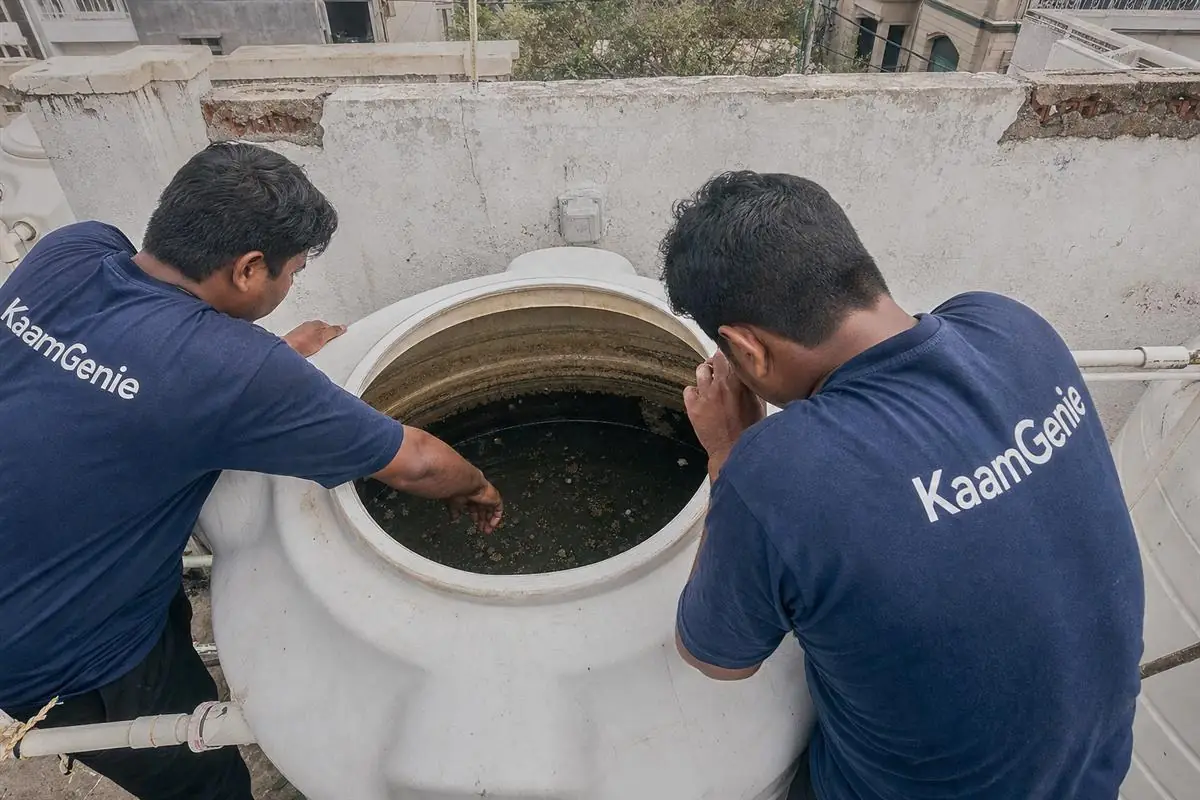
If we had to name the single biggest cause of monsoon contamination, it’s the lid. A well-sealed lid keeps the rooftop world out. A cracked, warped, sun-degraded or simply missing lid invites it in. We see the same pattern across South Delhi bungalows, DDA flats, builder floors and high-rise societies in Dwarka alike: the lid gasket cooks through a brutal Delhi summer, goes hard and brittle, and by the time the rains arrive it no longer seats properly. Now every storm pushes a little dirty runoff past it.
It doesn’t take much. A finger-width gap is enough for leaf litter and droppings to wash in, and those carry exactly the bacteria you don’t want — the kind that drive the season’s gastro and typhoid cases. Translucent plastic tanks add a second problem: they let light in, and light plus warmth plus nutrients washed in from the roof is a recipe for the green and brown algae many residents notice on their tank walls by August.
The fix is genuinely cheap relative to the risk. As part of a monsoon clean we replace or reseal the lid gasket, make sure the lid seats flush, and screen the overflow and vent so they let air and overflow out without letting runoff and insects in. If you do nothing else this season, get the lid sorted.
Underground sumps: waterlogging and seepage
Overhead tanks get the runoff; underground sumps get the floodwater. In Delhi’s low-lying and poorly drained pockets — parts of Shahdara, older trans-Yamuna colonies, and any street that puddles ankle-deep after an hour of rain — standing water around a buried sump is a serious problem. If the sump cover isn’t sealed, or there’s a hairline crack in the wall or around an old pipe penetration, contaminated groundwater and street runoff can seep straight into your stored drinking water.
This is the worst kind of contamination because you can’t see it from your tap until it’s bad, and floodwater in a Delhi monsoon is rarely clean. A sump that seeps during the rains needs more than a rinse — it needs to be fully drained, the silt vacuumed out, the walls scrubbed and disinfected, and the cover and penetrations sealed. If you have an underground tank in a waterlogging-prone area, a mid-monsoon inspection is well worth it. Our broader notes on this live in the complete Delhi water tank cleaning guide.
When the source water itself gets worse
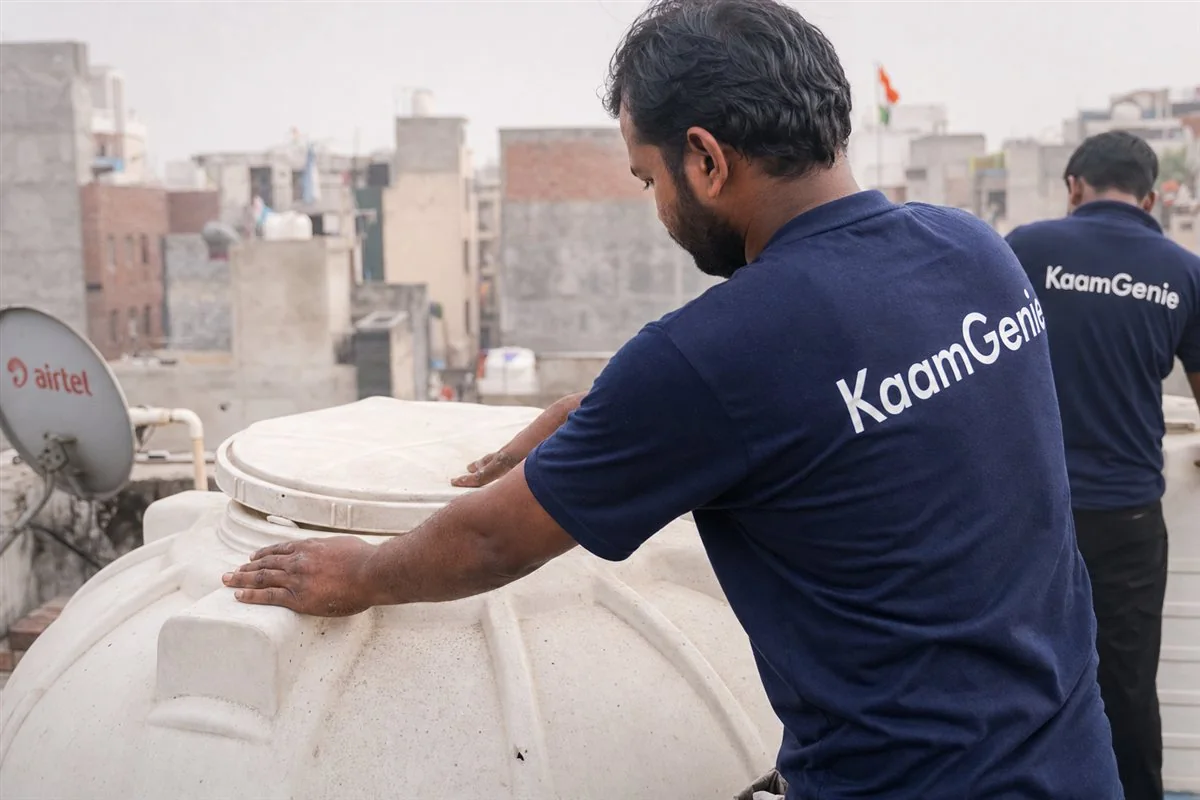
Even if your tank is perfectly sealed, the water going into it can drop in quality during the rains. After heavy downpours, Delhi Jal Board piped supply often runs visibly turbid and discoloured, particularly in older and low-lying areas where rainwater and sewage can infiltrate aging mains. Households on private water tankers — a daily reality across outer Delhi and the summer-crisis belt — are at the mercy of whatever source that tanker drew from. And in the outer and unauthorised colonies that depend on borewells, a flooded water table during the monsoon can push surface contamination down into the groundwater itself. If you want the bigger picture on where your water comes from, our piece on borewell vs DJB water in Delhi goes deeper.
You can’t control the source. What you can control is the tank that water sits in before it reaches your tap. A clean, sealed, well-maintained tank is the last line of defence: it won’t fix bad incoming water on its own, but a dirty tank actively makes everything worse, adding its own sediment and bacteria to whatever came in. That’s the whole case for monsoon-season cleaning. For the full scope of what a professional visit covers, see our water tank cleaning services.
This is peak waterborne-disease season
None of this is abstract. The Delhi monsoon is also the peak season for waterborne illness — typhoid, cholera, hepatitis A and E (jaundice), and ordinary but miserable gastroenteritis all rise during the rains, driven by exactly the contamination routes above. When a family comes down with recurring stomach trouble in August and can’t pin down the cause, the storage tank is one of the first things worth checking, especially if it hasn’t been cleaned since spring.
The uncomfortable truth is that an RO purifier doesn’t cover you here. RO treats the few litres you drink, but your tank feeds every tap — the water you brush your teeth with, cook with, bathe in and wash utensils in. Heavy monsoon silt also clogs purifier filters fast and overwhelms them. The tank and the purifier do different jobs, and during the rains the tank is the one carrying the bigger load.
The monsoon contamination curve — and where cleaning fits
Relative tank-contamination risk through the Delhi year
Illustrative pattern from what our crews see — risk climbs through the rains and peaks late monsoon
Illustrative, not a measured statistic — it reflects the seasonal pattern our crews observe across Delhi. The takeaway: contamination risk climbs from July, peaks in August, and a late-monsoon clean is what resets it.
This is why the timing of cleaning matters as much as the cleaning itself. A clean in March is undone by July. The two visits that earn their keep are the pre-monsoon clean in April–May — which resets the tank and lets you seal the lid before the first storm — and the post-monsoon clean in September–October, which clears out the silt, algae and runoff that accumulated over three months of rain. If your usage is heavy, your supply is tanker or borewell, or you sit in a flood-prone pocket, a quick mid-monsoon check between the two is cheap insurance.
What to watch for between cleanings
You don’t need to guess. Through the monsoon, keep an eye out for the warning signs that say “inspect now, don’t wait”:
- Sudden cloudiness or a muddy tint at the tap right after heavy rain — the classic sign of turbid supply or runoff ingress.
- A musty, earthy or off smell from the water — often algae or organic matter.
- Green or brown tint on the water or visible on the tank walls when you open the lid.
- Floating debris — leaves, insects, grit — which means something is getting in.
- New stomach upsets in the household during peak disease season, with no other obvious cause.
- A lid or overflow that looks damaged when you physically check after the first big storm.
Any one of these means it’s time to inspect, and probably clean, sooner than your scheduled date. We cover the full list in detail in 7 signs your water tank needs cleaning urgently. The first big storm of the season is the right moment to walk up to your terrace and look — it takes two minutes and it’s the cheapest inspection you’ll ever do.
Worried after the last downpour?
Book a monsoon inspection and clean — we scrub, disinfect, seal the lid and send before/after photos. Residential ₹699 onwards; sumps and societies custom-quoted.
What a monsoon clean involves — and booking across Delhi
A monsoon clean is the same thorough process as any proper job — drain, sludge removal, hand-scrubbing, jet wash, wet-vacuum, food-grade disinfection and refill — but with extra attention to the things the rains attack: the lid and gasket, the overflow and vent screens, and (for sumps) the cover and pipe penetrations. We finish with before/after photos and a record, so you have proof the tank is clean going into the worst of the season.
We work right across the city — from high-rise cooperative group-housing societies and DDA flats in Dwarka, to bungalows, farmhouses and builder floors across South Delhi, to plotted homes and colonies in Shahdara and the trans-Yamuna belt. Whatever your tank and wherever you are, the easiest way to protect your family this monsoon is a clean now and a sealed lid. Book through the Delhi water tank cleaning hub, call us, or use the form on this page.
Frequently asked questions
Why does the monsoon make my water tank dirtier in Delhi?
Three things change at once. Humidity and warmth let algae and biofilm grow far faster on tank walls. Driving rain pushes dust, leaves, bird droppings and rooftop runoff in through any gap in the lid, vent or overflow. And the source water itself dips in quality — DJB lines run turbid after heavy rain and borewell water rises in contamination as the water table floods. A tank that looked fine in April can turn green and silty within a few weeks of the first heavy showers.
Should I clean my water tank before or after the monsoon in Delhi?
Ideally both. A pre-monsoon clean in April–May resets the tank and lets you seal the lid before the rains. A post-monsoon clean in September–October clears out everything the rains pushed in over three months — silt, algae and runoff. If you can only do one extra clean this year, do the post-monsoon one, because that is when the contamination has actually accumulated. We cover the spring job separately in our pre-monsoon checklist; this piece is about the rains themselves and after.
My tank water turned cloudy or muddy after heavy rain — what does that mean?
Cloudy or muddy water right after a downpour usually means one of two things: turbid municipal or tanker water has entered the tank, or rooftop runoff is leaking in through a damaged lid or open overflow. Either way it is a signal to stop drinking from that tank, check the lid and overflow that day, and book a cleaning. Silt carries bacteria, so it is not just an appearance problem.
How does a cracked or loose tank lid cause monsoon contamination?
A cracked, warped or missing lid is the single biggest monsoon entry point. Rooftops in Delhi collect dust, bird and pigeon droppings, dead leaves and pooled rainwater. During heavy rain, all of that washes across the terrace and any gap in the lid lets it stream straight into your stored water. A sun-degraded lid gasket that has gone brittle over summer often no longer seals at all. Sealing the lid is one of the cheapest, highest-impact things you can do before the rains.
Is tanker and DJB water quality worse during the monsoon in Delhi?
Often, yes. After heavy rain, Delhi Jal Board supply can run turbid and discoloured where rainwater and sewage infiltrate aging pipes, especially in low-lying and older colonies. Private tankers drawing from stressed sources can also vary. None of this is fully in your control — but a clean, sealed, well-maintained storage tank is your last line of defence before that water reaches your tap, which is exactly why monsoon-season cleaning matters.
Why does algae grow faster in my tank during the rainy season?
Algae needs warmth, moisture and light. The monsoon delivers warmth and humidity, and any light leak — a translucent plastic tank, a cracked lid, an open inspection hatch — provides the rest. Add nutrients washed in from rooftop runoff and you get the green or brown slime many Delhi residents notice on their tank walls from July onwards. Removing light and giving the tank a proper scrub and disinfection breaks the cycle.
How often should I clean my tank during the monsoon months in Delhi?
For most Delhi homes, the right rhythm is a pre-monsoon clean before the rains and a post-monsoon clean once they ease in September–October, on top of your normal twice-yearly schedule. Homes on heavy borewell water, on regular tanker supply, or in waterlogging-prone pockets benefit from a mid-monsoon check too. Societies and PGs with high usage and large reservoirs should inspect more frequently through the season.
Does an RO purifier protect me, so I can skip monsoon tank cleaning?
No. An RO unit treats the small amount of water you drink, but the tank supplies every tap in the house — the water you brush, cook, bathe and wash utensils with. A purifier also struggles when the feed water is heavily silty or biologically loaded, as monsoon water often is, and a dirty tank simply clogs filters faster. The tank and the purifier do different jobs; you need both, and a clean tank makes the purifier last longer.
What should I watch for between cleanings during the monsoon?
Watch for sudden cloudiness or a muddy tint after heavy rain, a musty or earthy smell, green or brown tint on the water or tank walls, floating debris, and any new stomach upsets in the household during what is peak waterborne-disease season. Also physically check the lid and overflow after the first big storm. Any of these means inspect, and likely clean, sooner rather than waiting for your scheduled date.
Sources & references
- Bureau of Indian Standards (BIS) — IS 10500:2012 is the canonical Indian Standard for drinking water specification, defining acceptable limits for physical, chemical, and biological parameters.
- WHO Guidelines for Drinking-water Quality, 4th edition — the global reference for water quality standards, including guidance on storage and disinfection.
- Food Safety and Standards Authority of India (FSSAI) — defines water quality requirements for food businesses, including hygiene standards for stored water and acceptable disinfection chemicals.
- WHO Fact Sheet on Drinking Water — overview of safe drinking water requirements and contamination risks.
- CPHEEO — Manual on Water Supply and Treatment — the Government of India’s engineering manual covering tank design, cleaning protocols, and disinfection practices.
Last verified: 30 June 2026. If you find any of these links broken, please let us know.