
Quick answer
- Stop using the water now for drinking, cooking, brushing teeth and bathing. Tell everyone at home.
- Isolate the tank: switch off the motor, shut the inlet and close the outlet valve to the house, so the water stays where it is.
- Do not drain it through your taps. That carries the contamination into every pipe and the geyser.
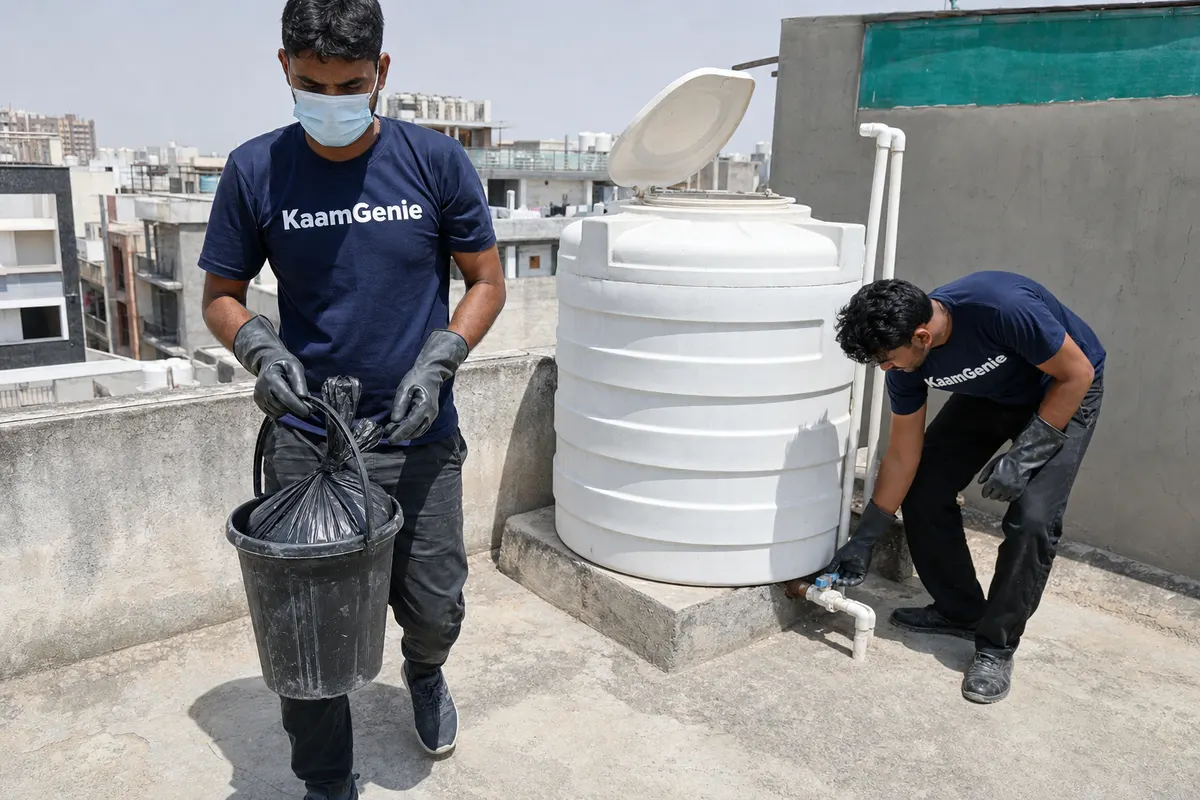
- Remove it only with gloves and a sealed bag, or leave it, close the lid and tell us about it when you book.
- Then get a full clean with disinfection on request. Afterwards, you or a plumber flush every tap, and the gap it came through gets sealed.
If anyone has already drunk the water and develops fever, vomiting or diarrhoea, see a doctor and mention what was found in the tank.
Found something in the tank? Call us now
Same-day where possible across Gurgaon. Tell us what you found when you book; we drain the tank to waste, clean it fully and add disinfection on request.
This is not as rare as it sounds, particularly on rooftops where pigeons gather, and in underground sumps where rats travel along drains and cable trenches. It is almost always a sign of an opening, not bad luck: a lid that does not close, an overflow pipe without mesh, or a sump cover that does not sit flat. The good news is that it is a fully fixable problem. Handled in the right order, the tank can be back in safe use quickly. To hand the carcass and the clean-up over straight away, call our Gurgaon water tank cleaning crew; urgent cases are reached the same day where possible. If you are not sure yet, and only have a sudden foul smell, our guide to why tank water smells helps you tell a rotting smell from the others.
The first hour: step by step
Work through these in order. None of them need special tools, and the aim is simple: keep the contaminated water contained in the tank until it can be cleaned.
- Tell everyone to stop using the water. No drinking, cooking, brushing teeth, washing fruit or bathing children from tank-fed taps. Put a note on the kitchen tap if you have house help or guests. Switch to bottled water or a separate supply.
- Switch off the motor and shut the inlet. This stops more water entering and overflowing, and stops the pump stirring the tank. In a building with a shared pump, tell the caretaker or the society office.
- Close the outlet valve from the tank to the house. Most rooftop tanks have a valve on the downpipe. Closing it keeps the tank water out of your pipes and geyser. If you cannot find it, simply stop opening taps.
- Keep children and pets away from the roof or sump. Close the access door if you can.
- Decide whether to remove it yourself. You do not have to. Closing the lid and waiting for a crew is perfectly fine and often wiser. If you do remove it, follow the safe-removal steps below.
- Note a few facts. Roughly how long it may have been there, whether there was any smell, and whether anyone has used the water. These decide what happens next.
- Call for a clean. Ask for a full clean with disinfection on request, and mention whether it was the overhead tank or the sump.
Removing it safely, if you choose to
- Wear disposable rubber or nitrile gloves, and a mask if the tank smells. Avoid touching your face.
- Use a long-handled scoop, a small net or a plastic bag turned inside out over your gloved hand. Do not lean deep into the tank.
- Place it straight into a strong plastic bag, then put that bag inside a second one and tie both firmly.
- Hand the sealed bag over with household waste. Do not throw it into a drain or an open plot.
- Close the lid again. The water stays in the tank for now.
- Remove the gloves by turning them inside out, put them in a bag, and wash your hands and forearms with soap and water for at least 20 seconds.
How serious is it? A decision table
Every case needs the tank cleaned, but how far the contamination has travelled changes what else you need to do. Find the row closest to your situation.
| Your situation | What it means | What to do |
|---|---|---|
| Found quickly, no smell, nobody used the water | Contamination is likely limited to the tank | Isolate, full clean with disinfection on request, flush taps |
| Found after a smell appeared, water used for some days | Contaminated water has been through pipes and the geyser | Clean and disinfect on request, flush every tap, have the geyser drained and refilled |
| Someone at home is unwell after using the water | Possible illness linked to the water | See a doctor and say what was found; clean the tank and consider a lab test after |
| Found in the underground sump | Everything pumped up from it may be affected | Clean the sump and the overhead tank together, in that order |
| Found in a shared society tank | Many flats are affected at once | Inform the facility team; tank isolated, cleaned and residents told when it is safe |
| Only feathers or droppings, nothing inside | Birds are using the lid or rim; a gap may exist | Clean the tank, seal the gap and deter birds before it gets worse |
Why a full clean, and why ask for disinfection this time
A dead animal can release germs into the water as it decays, and rats and birds can carry germs while they are alive too; rodents, for example, are associated with leptospirosis. The WHO drinking-water guidelines treat this kind of faecal and animal contamination as the main health risk in stored water. Under IS 10500:2012, coliform bacteria must not be detectable in 100 ml of drinking water, and you cannot tell by looking whether that is still true.
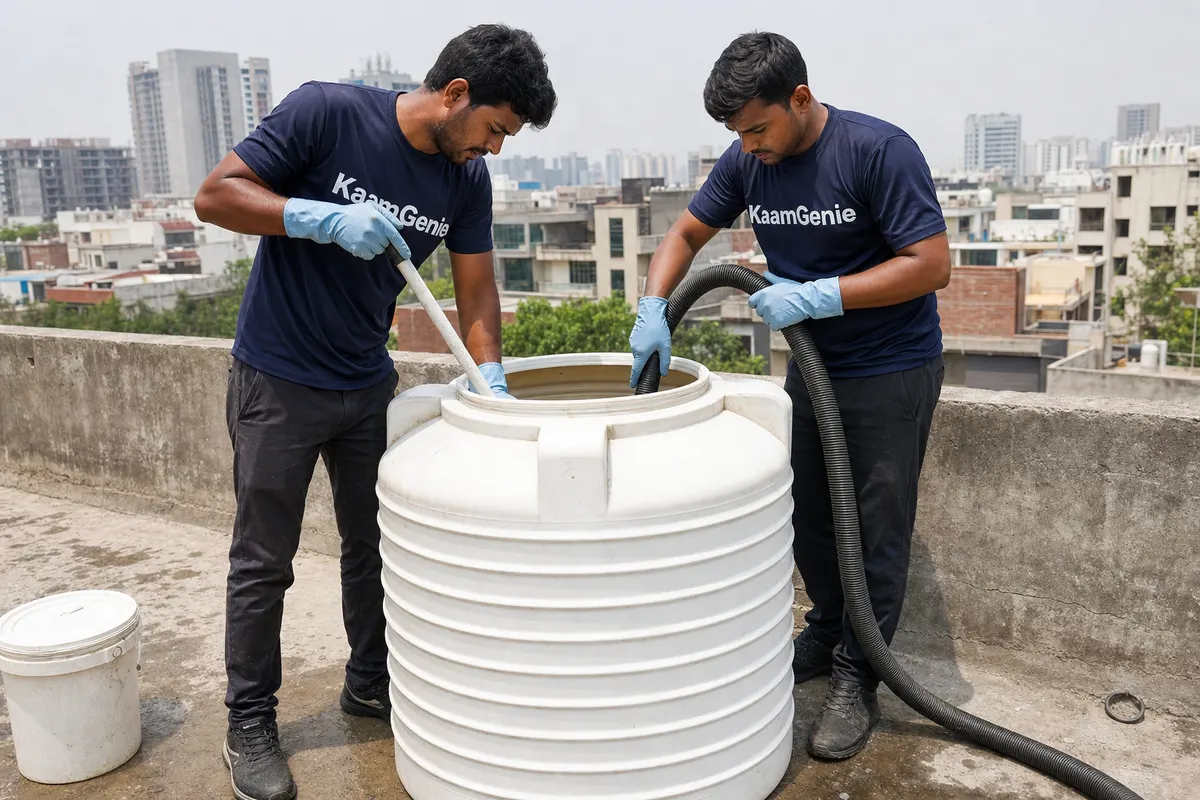
Removing the animal does not remove what it left behind. Germs settle into the sludge on the floor and the film on the walls. That is why the whole tank has to be emptied and scrubbed, not topped up or rinsed. Our standard clean never uses chemicals by default, but contamination like this is exactly the case where we recommend asking for disinfection on request after the scrub, so that the clean surfaces are treated before refilling. Our guide to water tank disinfection in Gurgaon explains how that optional step works.
If anyone at home has symptoms such as fever, diarrhoea, vomiting or muscle aches after using the water, see a doctor promptly and tell them what was found in the tank. Do not try to judge it yourself. Our article on waterborne diseases and tank hygiene in Gurgaon covers how stored water can contribute to illness.
After the clean: pipes, geyser and a test
- Flush every tap. This is your job or a plumber’s once the crew has finished. When the tank is refilled with clean water, open each tank-fed tap, one at a time, and let it run for a few minutes. Include showers, the washing machine inlet and outside taps.
- Empty the geyser. If the water was used for days, the geyser needs draining and refilling so it does not hold back old water. Switch the geyser off at the mains before draining it, or have a plumber do it.
- Replace purifier filters. If your RO or filter was fed by the contaminated water, change the pre-filters.
- Consider a lab test. If the animal was there for a long time, or you simply want certainty, a coliform test from an NABL-accredited lab after the clean confirms coliforms are absent, as IS 10500 requires. It covers that one parameter, not everything in the water.
How they get in, and how to stop it
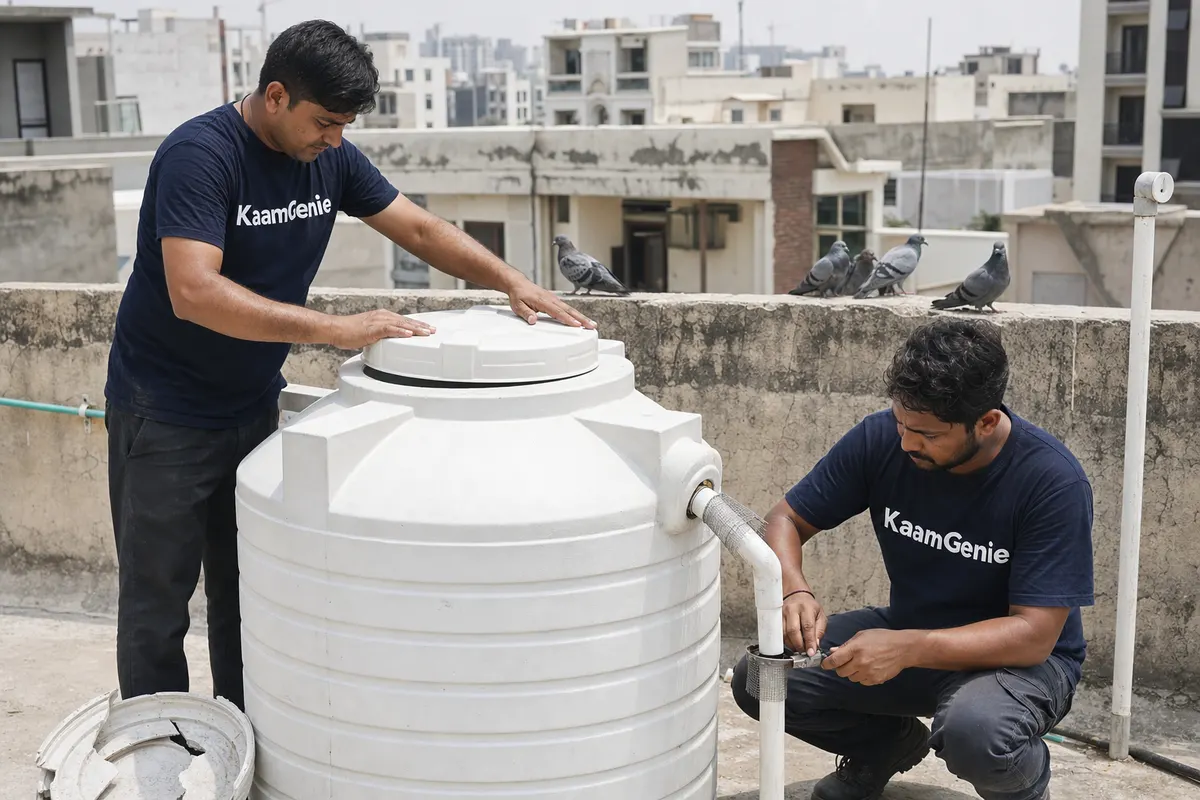
Birds, mostly pigeons on Gurgaon rooftops, perch on tank rims, nest in the warm space between a tank and the parapet, and fall in through a lid that is open, broken or just resting loose. In summer, they also come looking for water. On builder-floor roofs in sectors such as Sector 46, our crews often find pigeon nests tucked into the narrow gap between the tank and the parapet. Rats climb pipes and wall edges, squeeze under poorly fitted sump covers and travel along drains and cable ducts to reach underground tanks. In older plotted sectors such as Sector 15, our crews regularly see cracked collars on ageing brick sumps, which is exactly the kind of gap a rat uses. The same gaps let in light and insects, so a tank with a dead bird often has green walls too; our post on algae in Gurgaon tanks covers the light side of sealing.
- A lid that is clamped, strapped or locked. Replace warped or broken lids, and never rely on a brick or a weight on top; birds and wind shift them and leave a gap.
- Mesh on the overflow pipe and vents. An open overflow is a direct route to the water surface for small animals. Fix fine mesh over the outlet with a clamp.
- Seal pipe entry holes. Holes cut wider than the pipe leave a ring gap; seal it.
- A heavy, tight sump cover. The manhole should sit flat on its frame with no gap, and stay closed after every check.
- Keep birds off the tank. Netting around the tank area, or spikes on rims and ledges, discourage perching and nesting. Do not feed pigeons near the tanks.
- Cut the rat routes. Rat guards on vertical pipes and sealed gaps in walls near the sump help. For an ongoing rat problem, our pest control team in Gurgaon can deal with it alongside the tank work.
Do not want to handle it yourself?
Close the lid, isolate the tank and send us a WhatsApp saying what is in there. A carcass job is priced and fixed before work starts, paid only after the clean and photos, and we tell you which taps to flush.
Shared tank, rented flat: who needs to know
In a society or condominium, a find in a shared tower tank or the common reservoir affects every flat on that supply, so tell the facility team or maintenance office straight away, with a photo of the closed tank and the time you found it. Ask them to switch off that tower’s supply, clean the affected tank and tell residents when it is safe again. Neighbours who have been drinking from the same tank need to know too. For how shared and private tanks are looked after in general, see the complete guide to water tank cleaning in Gurgaon.
If you are renting, the tank belongs to the building and the landlord or society normally pays, but contamination is not a reason to wait for that conversation. You can book the clean first and settle who pays afterwards; our tenant’s guide covers how that usually works.
How KaamGenie handles a contaminated tank
The clean itself follows our usual sequence, set out in the Gurgaon cleaning process guide. What changes after a dead animal is the order and a few extra precautions:
- Tell us about it when you book. Say whether it is still in the tank, whether it was the rooftop tank or the sump, and roughly how long it may have been there, so the crew comes prepared with gloves, bags and a covered bucket.
- Drain to waste, never through the house. With the inlet shut, the water is pumped out away from your plumbing, so nothing from the tank reaches your pipes, geyser or purifier.
- Sump before rooftop. If it was found in a sump, the sump is de-sludged and scrubbed first and the overhead tank second, so clean water is never pushed up into a dirty tank.
- Disinfection on request, after the scrub. A standard clean uses no chemicals, but this is the situation where we suggest asking for disinfection, which is applied to the scrubbed surfaces before refilling. We explain what is used before we start.
You get before and after photos on WhatsApp. Once the tank is refilled, you or your plumber flush the taps and deal with the geyser, as set out above. Our same-day tank cleaning in Gurgaon page explains how urgent visits are scheduled; same-day is possible where our schedule allows.
What not to do
- Do not drain the tank through the house taps. It carries the contamination into every pipe, the geyser and the purifier.
- Do not pour bleach in and carry on using the water. A DIY dose does not remove what has settled, is easy to get wrong, and gives false reassurance.
- Do not rely on boiling or the RO while the tank is still dirty. You still bathe, brush and wash dishes in that water.
- Do not handle it bare-handed, and do not lean deep into the tank to reach it.
- Do not throw it into a drain or an empty plot. Seal it in two bags.
- Do not refill and forget the gap. Without a proper lid and mesh, it can happen again.
Call us, then keep the tank shut until we arrive
Once the tank is isolated, there is no need to panic, only to get it cleaned properly. Cleaning out a dead bird or rat starts at ₹699 for an overhead tank and ₹1,499 for an underground sump, fixed before work starts, with disinfection on request quoted alongside and mesh or a new lid quoted separately. You pay after the clean, once the before and after photos have reached you. Contamination call-outs reach Sector 57, Nirvana Country and Malibu Towne; see the full list on our Gurgaon water tank cleaning page, or call +91 95603 66362 and tell us what you found and where.
Frequently asked questions
I found a dead pigeon in my water tank. Is the water safe to use?
No, not for drinking, cooking, brushing teeth or bathing until the tank has been cleaned. A dead bird can release germs into the water, and you cannot see whether they are there. Switch off the motor, close the outlet valve to the house so the water stays in the tank, and use bottled water meanwhile. Then arrange a full clean, and ask for disinfection on request in this situation.
We used the water for a few days before finding a dead rat. What now?
Stop using it at once and isolate the tank. Watch everyone who used it for fever, vomiting, diarrhoea or muscle aches, and see a doctor if any appear, mentioning that a rat was found in the tank. After the tank is cleaned and disinfected on request, flush every tap, have the geyser drained and refilled (switch it off at the mains first, or ask a plumber) and change purifier pre-filters, because contaminated water has been through them.
Can I just remove the animal and add bleach?
It is not enough. Germs settle into the sludge and the film on the walls, and these stay behind when you simply take the animal out and pour something in. DIY doses are also easy to get wrong, in either direction. The tank needs to be drained to waste, de-sludged and scrubbed. After that, asking for disinfection on request treats the clean surfaces before the tank is refilled.
Should I empty the tank myself straight away?
Not through the taps. Draining it through the household pipes spreads the contamination into every line, the geyser and the purifier. If the tank has its own drain valve that empties to the roof drain, that is safer, but the walls and floor still need scrubbing. In most cases it is best to isolate the tank, leave the water in place and let the crew pump it out to waste.
How did a rat get into an underground sump?
Usually through a manhole cover that does not sit flat, a gap where pipes enter the sump wall, or a crack in an older brick or concrete sump. Rats also follow drains and cable trenches. Once the sump is cleaned, a heavy, tight-fitting cover and sealed gaps close those routes. If rats are a regular problem around the house, pest control alongside the tank work helps.
How do I stop pigeons getting into the tank?
Fit a lid that is clamped, strapped or locked rather than one that rests on top or is held by a brick, put fine mesh on the overflow pipe and any vents, and seal holes around pipes. Netting around the tank area or spikes on rims and ledges discourage perching and nesting. Avoid feeding pigeons near the tanks, and check the lid after any rooftop work, when it is often left loose.
Do I need a water test after the tank is cleaned?
It is a sensible extra if the animal was in the tank for a long time, if someone fell ill, or if you want written reassurance. Ask an NABL-accredited lab for a coliform test, taken after the tank has been cleaned and refilled. It confirms coliforms are absent, as IS 10500:2012 requires (not detectable in 100 ml). It checks that one parameter only, so it is not a full water analysis.
How much does it cost to clean a tank after a dead animal in Gurgaon?
Dead-animal clean-ups are priced from ₹699 for an overhead tank and from ₹1,499 for an underground sump, with the figure fixed before the crew starts; if the animal is still inside, mention it when you book. Disinfection is never automatic, but after a carcass we recommend requesting it, and it is quoted with the job. Payment is due only after the work, once the before and after photos are on your WhatsApp.
Sources & references
- WHO Guidelines for Drinking-water Quality, 4th edition: faecal and animal contamination as the main microbial risk in stored drinking water.
- Bureau of Indian Standards (BIS): IS 10500:2012 requires coliform bacteria to be not detectable in 100 ml of drinking water.
- National Centre for Disease Control (NCDC): guidance on waterborne and zoonotic diseases, including leptospirosis.
- NABL (National Accreditation Board for Testing and Calibration Laboratories): directory of accredited labs for drinking-water testing.
Last verified: 22 November 2026. If you find any of these links broken, please let us know.