
Quick answer
- Rotten eggs: hydrogen sulphide made by bacteria living in the sludge at the bottom of the tank or sump. If it is only in hot water, suspect the geyser.
- Musty, earthy, like a wet pot: algae and slimy bio-film on the tank walls, usually in a tank that is poorly covered or where water sits still for days.
- Metallic or like a coin: corroding iron pipes or fittings, or iron-rich borewell water.
- Sewage or drain-like: treat it as urgent. Dirty water may be getting into your sump or pipes through a crack, a leaking joint or backflow.
Any sewage or rotting smell, or a smell with a change in colour or stomach upsets at home: stop all use of the tank water today.
Tank water smelling bad? Get it checked
Smell removal from an overhead tank is a fixed ₹699. We lift out the sludge behind the odour, send before and after photos, and you pay once you have seen them. No chemicals unless you ask.
Each smell points to a different process in your water system, and in Gurgaon, where homes mix GMDA supply, borewells and tankers, neighbouring buildings can smell alike for different reasons. This guide is about smell only. If your water has also changed colour, our post on yellow or brown water from your tank in Gurgaon covers that side of the diagnosis. A smelly tank can also be traced on site: our Gurgaon water tank cleaning crews open it and say what they find.
The smell decoder
Describe the smell to yourself in plain words before you do anything else. Then find the closest match below. The “how urgent” column matters most: a musty smell is unpleasant, a sewage smell is a safety problem.
| It smells like | What is usually behind it | Where it starts | How urgent |
|---|---|---|---|
| Rotten eggs, sulphur | Hydrogen sulphide gas from bacteria feeding in oxygen-poor sludge | Bottom layer of the tank or underground sump; sometimes the geyser | Act within days; stop drinking it |
| Musty, earthy, damp soil | Algae and bio-film releasing earthy compounds | Tank walls and lid underside, worst in still or warm water | Clean soon; use other water for drinking |
| Metallic, like iron or a coin | Corroded GI pipes, rusting fittings or iron in borewell water | Plumbing or the source, not always the tank | Test the water; plan pipe work |
| Sewage, drain, toilet | Dirty water entering through a crack, leaking joint or backflow | Underground sump, buried pipes, a cross-connection | Urgent: stop all use and inspect today |
| Rotting, sweetish, very foul | Something has died or decayed inside the tank | Open or broken lid, missing overflow mesh | Urgent: stop all use, see below |
The sniff test: trace the smell in four checks
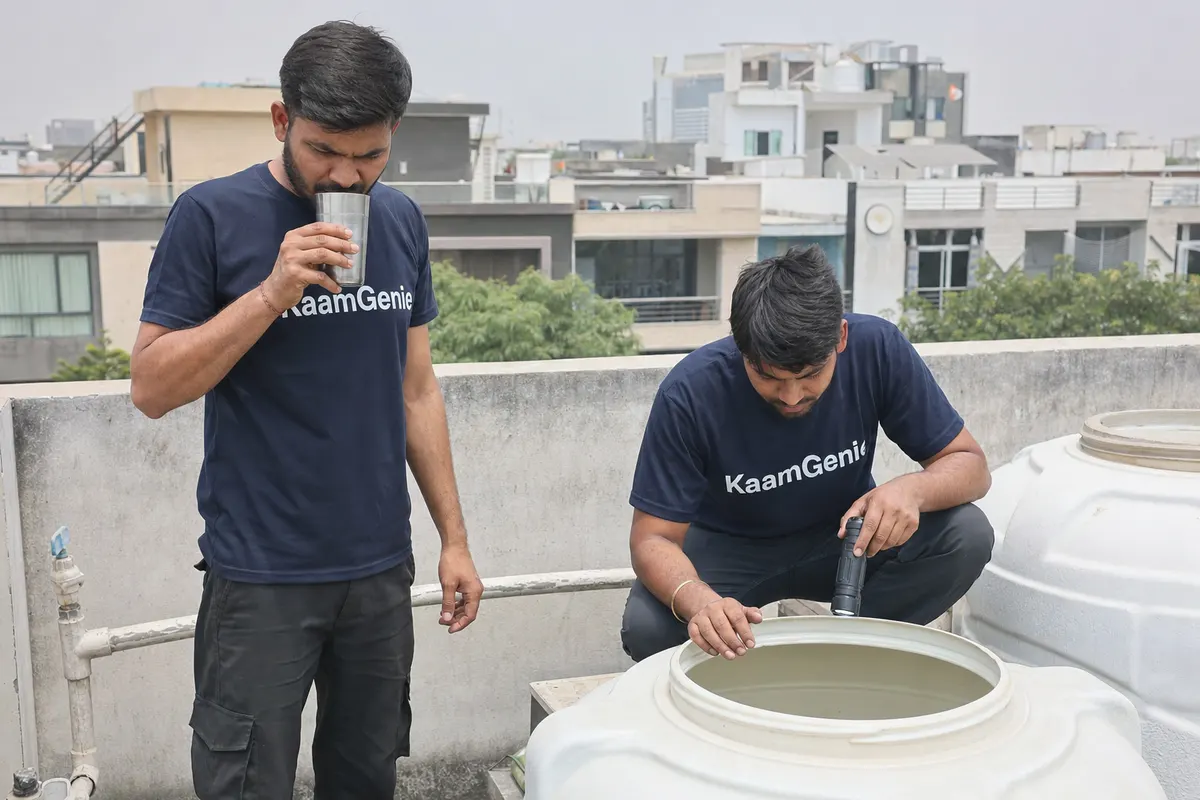
You can narrow the source down with a clean steel glass and about fifteen minutes. Change one thing at a time. Smell the water, not the tap: fill the glass, then walk away from the sink before you sniff.
- Glass away from the drain. Fill a glass at the bathroom basin, carry it to another room and smell it there. If the smell has gone, the water is fine and the odour is coming up from the basin drain or a dry trap. Pour a mug of water into rarely used drains and floor traps to re-seal them.
- Hot against cold. Fill one glass from the cold tap and one from the hot tap of the same basin. A rotten-egg smell in the hot glass only usually points to the geyser: the magnesium anode in a water heater can react with bacteria in warm water to produce a rotten-egg smell. A smell in both glasses points further back, to the tank or the source.
- Tank tap against direct supply. Fill one glass from a tap fed by the rooftop tank and one from a tap that bypasses it. In many builder floors this is the kitchen tap on the GMDA line or the outside garden tap; in borewell homes it is the tap at the pump outlet. Smell in the tank glass only means the tank is the source. Smell in both means it is arriving that way, from the sump, the supply line or the borewell.
- Morning against evening. Repeat the tank-tap glass first thing in the morning, before anyone runs water, and again in the evening after heavy use. Water that smells worst in the morning has been sitting still overnight in a tank or pipe with sludge or bio-film. A smell that gets worse after the motor runs, or after a tanker fill, means the pump or the inflow is stirring up the sludge layer.
Note down each result; it settles arguments with a landlord and tells our crew which tank to open first.
Reading your results
| Result | Most likely source | Next step |
|---|---|---|
| No smell once away from the sink | Drain or dry trap, not the water | Re-seal traps; call a plumber if it persists |
| Hot water only | Geyser tank and its anode rod | Have a plumber flush the geyser and check the magnesium anode |
| Tank taps only, worst in the morning | Sludge or bio-film in the overhead tank | Overhead tank cleaning |
| Tank and direct taps both smell | Underground sump, supply line or borewell | Sump cleaning; water test for a borewell |
| Any tap smells of sewage | Possible contamination entering the system | Stop use; inspect sump and pipes today |
Rotten eggs: the sludge layer is the usual culprit
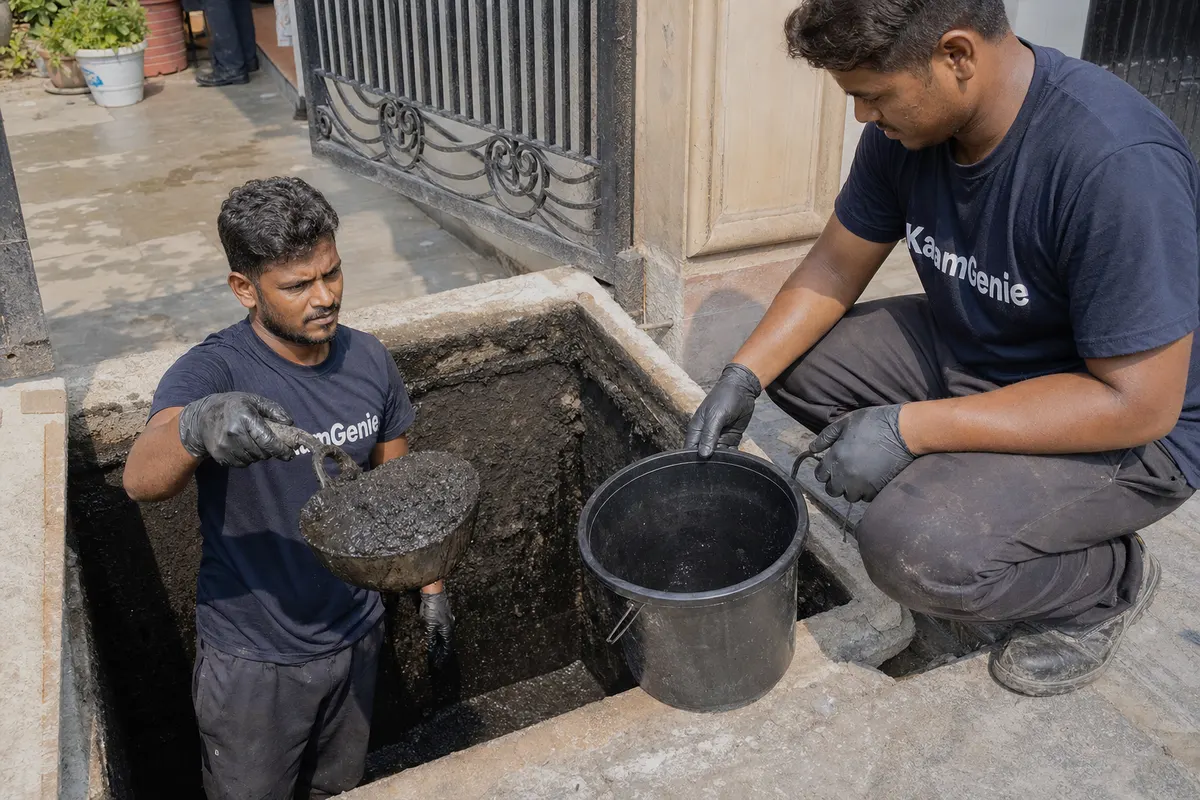
The sulphur smell comes from bacteria that thrive where there is little oxygen and plenty of organic matter to feed on. That describes the bottom of a tank that has not been cleaned for a long time almost perfectly: a soft layer of silt, dust, leaves and dead bio-film, with still water above it. In Gurgaon, dust through lid gaps, tanker silt and hard-water scale all feed that layer.
Underground sumps in plotted houses and society reservoirs are especially prone, because they are dark, cool and often only partly emptied. Our crews often find this sulphur smell in the sumps of plotted colonies such as Sushant Lok, where the manhole sits under a driveway and is rarely lifted. Our guide to underground sump cleaning in Gurgaon explains why the two should be done together.
What fixes it: draining the tank completely and physically removing the sludge. Rinsing over it, or adding something to the water, leaves the bacteria’s home in place and the smell returns.
Musty or earthy: a short note
A smell like damp earth or an old clay pot usually means algae and slimy film on the tank walls. A wall that feels slippery near the waterline confirms it. Because the cause is growth on the walls rather than rot on the floor, the fix and the prevention are different, and they are covered in full in our post on green water and algae in Gurgaon tanks, including what tank build keeps light out. For the wet season, see our monsoon tank care guide.
Metallic: often the pipes, not the tank
A coin-like smell or taste is the one most likely to start outside the tank: in corroding old galvanised iron pipes, or in iron-rich borewell water. If your sniff test shows the metallic smell at the direct-supply tap too, a tank clean will help with settled rust but will not cure it. A lab test for iron, compared with the IS 10500:2012 limit of 0.3 mg/l, tells you whether you need an iron filter on the borewell line or new pipes. Rusting tank fittings such as the inlet, float valve and outlet are worth checking at the same time, and our post on borewell water tank cleaning in Gurgaon covers the borewell side.
Sewage or drain smell: treat it as urgent
Drinking water should never smell of sewage, so the likeliest explanation is that dirty water is getting in somewhere. Three places are worth checking first:
- A cracked or leaking underground sump. Older brick and concrete sumps sit in the ground next to drain lines and, in some houses, close to a soak pit or septic arrangement. A crack in the wall or a gap around the manhole lets seepage in, especially after rain.
- Backflow when pressure drops. When supply stops or the line runs at low pressure, a leaking joint in a buried pipe can draw in dirty water from the soil around it. The smell often appears right after supply resumes.
- A cross-connection. During renovation a drinking-water line can get joined to a pipe it should never touch, or a hose is left sitting in a bucket of dirty water.
What to do: stop all use of the tank water, not just for drinking. That means no drinking, cooking, brushing teeth, washing vegetables or bathing until the source is found. Switch to bottled water, inform your society office or landlord, and get the sump and pipes inspected the same day if you can. Once the leak or connection is fixed, the tank needs a full clean, and this is a case where we suggest asking for disinfection on request as well. Our guide to water tank disinfection in Gurgaon explains when it is worth asking for that optional step. If anyone at home has diarrhoea, vomiting or fever, see a doctor; the post on waterborne diseases and tank hygiene in Gurgaon explains how stored water can contribute.
A sudden, rotting smell
A very foul, sweetish smell that appears over a day or two, in a tank that was fine last week, often means a bird, rat or lizard has fallen in through a broken lid or an unmeshed overflow pipe. Stop all use of the water and look in with a torch from the opening, without leaning in. What to do next, including the geyser and the taps, is set out step by step in our post on a dead bird or rat in your water tank.
Where to sniff first, depending on your building
Building type matters for smell in one way: it decides how many tanks sit between the supply and your tap, and which of them is shared. That changes where you start looking. For how each property type is cleaned in general, see the complete guide to water tank cleaning in Gurgaon.
| Your building | Tanks between supply and tap | Suspect first |
|---|---|---|
| Society or condominium flat | Common reservoir, then a tower or terrace tank | If neighbours on several floors smell it too, the common reservoir; if only your flat, your geyser or drain traps |
| Plotted house or builder floor with a sump | Underground sump, then the rooftop tank | The sump, especially if the smell is worst after the motor runs |
| Borewell-fed home | Borewell, sometimes a sump, then the rooftop tank | The borewell water itself, if the tap at the pump outlet smells before it reaches any tank |
Not sure where the smell is coming from?
Tell us on WhatsApp what you smelled and which taps. We will tell you honestly whether it sounds like the tank, the pipes or the drain, and quote a fixed price if a clean is needed.
How KaamGenie gets rid of the smell
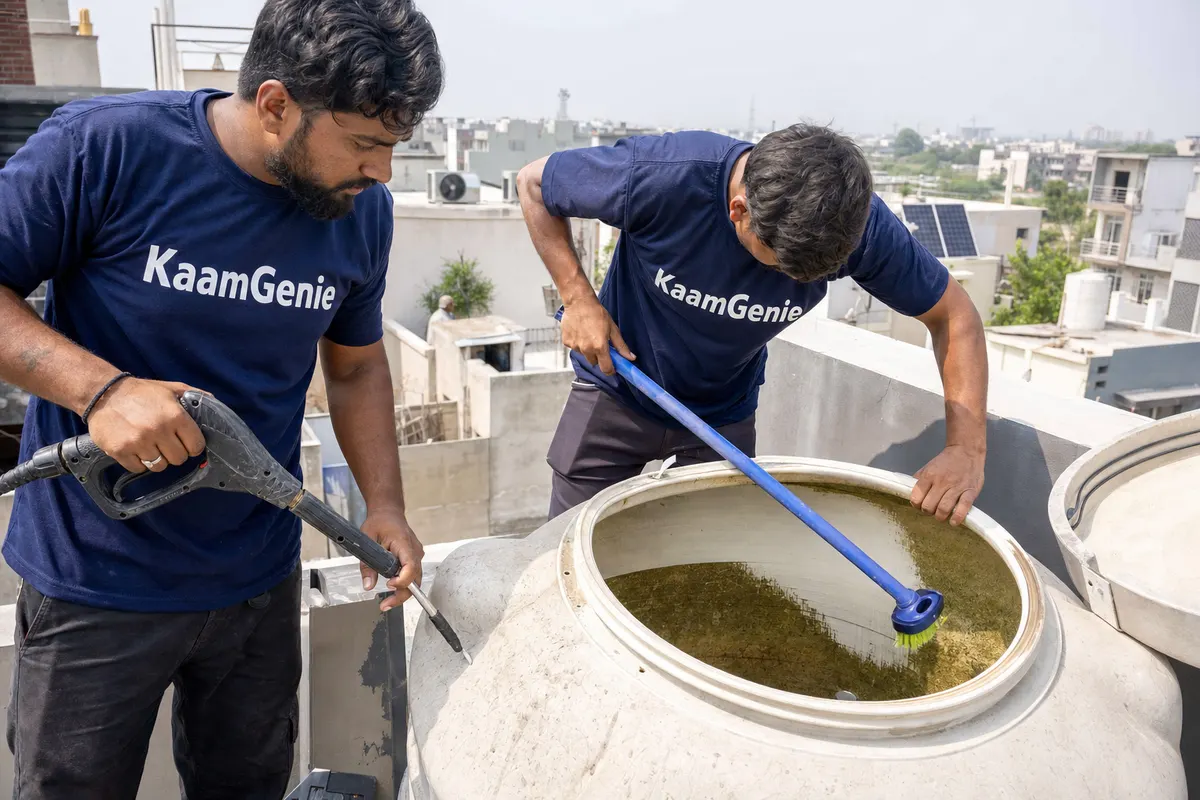
Smell is caused by things living or rotting inside the system, so the job is to take them out, not to cover them up. The full sequence is in our Gurgaon cleaning process guide; for a smelly tank, these are the parts that decide whether the smell comes back:
- The sludge leaves the building. The soft floor layer where the sulphur bacteria live is scooped and wet-vacuumed out and carried away in buckets, never washed into your drains, where it would only start a new smell.
- The corners and lid underside get the same scrub as the walls. Bio-film clings hardest in joints, around the outlet and on the inside of the lid, which drips straight back into clean water if it is missed.
- The sump is opened, not just the rooftop tank. If your sniff test pointed past the overhead tank, the crew checks the sump walls and manhole collar for gaps where seepage could enter, and shows you what they find in the before and after photos on WhatsApp.
Getting rid of an odour needs no chemicals in our standard clean. After a sewage smell, a dead animal or months of standing unused, ask for disinfection on request and we will explain what we use. For the question of timing, rather than a fixed rule, read how often to clean your water tank in Gurgaon.
If the smell comes back after a clean
A tank that has been properly de-sludged should not smell again within days. If it does, the clean has told you something useful: the source is somewhere else.
- Back within a day or two, in cold water: the water is arriving with the smell. Check the sump if only the rooftop tank was done, and have a borewell tested.
- Only in hot water: the geyser was never the tank’s fault. Have it flushed and the anode checked by a plumber or the service centre.
- Only at one basin or floor trap: a dry or broken trap, which is a plumbing job.
- Sewage-like, after rain or after supply resumes: seepage or backflow is still happening. The leak has to be found and fixed before any clean can last.
What not to do
- Do not pour bleach, phenyl or potassium permanganate into the tank yourself. Phenyl is not meant for drinking water at all, and a wrong dose of bleach makes the water unpleasant and can be harmful, while the sludge producing the smell stays where it is. Our post on chemicals and tank cleaning in Gurgaon explains why DIY dosing is best avoided.
- Do not clean the overhead tank and forget the sump. If the sump smells, a clean rooftop tank will smell again within days.
- Do not mask it at the tap. Scented tablets, a new carbon cartridge or a fragrant cleaner in the basin can hide the smell while the cause keeps growing in the tank.
Book a clean once you know it is the tank
Run the sniff test first. Smell removal from an overhead tank starts at ₹699 and from an underground sump at ₹1,499, fixed before work begins with no surprise extras for the cleaning itself. You pay after the clean, once the before and after photos are on your phone. Call us the same day if the smell is sewage-like or sudden, or comes with stomach upsets at home; for slower warning signs see signs your Gurgaon tank needs cleaning. Odour visits reach South City, Sector 15 and DLF Phase 3; the full list is on our Gurgaon water tank cleaning page. Or call +91 95603 66362 and tell us what you smelled and at which taps.
Frequently asked questions
Why does my tank water smell like rotten eggs in Gurgaon?
That sulphur smell is hydrogen sulphide, a gas made by bacteria that grow in oxygen-poor sludge at the bottom of a tank or sump that has not been emptied for a long time. Tanker silt, summer dust and old leaves give them plenty to feed on. If the smell is only in hot water, check the geyser first. If it is in cold tank water too, the sludge needs to be drained and physically removed.
Is it safe to drink water that smells bad?
Do not drink or cook with it until you know the cause. A musty smell from algae is mostly unpleasant rather than dangerous, but you cannot tell from the smell alone whether bacteria are also present, and a sewage or rotting smell can mean real contamination. Use bottled or separately stored water in the meantime, and if anyone at home feels unwell, see a doctor.
My hot water smells but the cold water is fine. Is it the tank?
Probably not. When only the hot tap smells of rotten eggs, the usual cause is the geyser. The magnesium anode in a water heater can react with bacteria in warm water to produce a rotten-egg smell. Ask a plumber or the geyser service centre to flush the heater and check the rod. If the cold water starts smelling too, then look at the tank.
Can an RO purifier remove the smell?
An RO unit with a carbon stage often reduces smell in the glass of water you drink, but it does not treat the water you bathe, cook and wash clothes with, and smelly sludge water clogs its pre-filters quickly. It also does nothing about a sewage leak. Clean the tank and fix the source first; the purifier then works better and lasts longer.
Will adding bleach to the tank stop the smell?
It may hide it for a day, but the sludge and bio-film producing the smell stay in the tank and the odour returns once the bleach fades. Wrong doses are also common with DIY attempts. Draining, de-sludging and scrubbing is what removes the cause. After a real contamination event, a smelly tank can have disinfection added on request once it has been scrubbed.
Why does the water smell worse after a tanker comes?
A tanker fill pushes a lot of water in quickly, which stirs up the soft sludge lying on the tank floor and releases trapped gas and smell into the water. Some tanker water also arrives with its own silt and odour. Letting the water settle for an hour helps in the short term, but if it happens after every delivery, the sludge layer has grown thick and the tank needs cleaning.
Who should fix a smell in a rented flat or society tower?
The tank, sump and pipes belong to the building, so the owner, landlord or society normally pays. In practice, write down your sniff-test results and share them, because it shows clearly whether the problem is your drain, your geyser or the shared tank. In societies, complaints logged from several flats in the same tower help the facility team open the right tank first.
How much does it cost to clean a smelly tank in Gurgaon?
Smell removal costs from ₹699 for an overhead tank and from ₹1,499 for an underground sump, and the figure is fixed before the crew opens the lid. A thick, sulphur-smelling sludge bed takes longer but is still quoted upfront, and payment comes only after the clean, when you have seen the before and after photos. Odour jobs get no chemicals by default; disinfection is added on request, which we suggest after a sewage leak or a dead animal.
Sources & references
- WHO Guidelines for Drinking-water Quality, 4th edition: covers taste and odour in drinking water, including hydrogen sulphide and earthy compounds from algae.
- Bureau of Indian Standards (BIS): IS 10500:2012 requires drinking water to be agreeable in odour and sets limits for iron and coliform bacteria.
- CPHEEO Manual on Water Supply and Treatment: guidance on storage reservoirs, backflow and preventing contamination in distribution systems.
- Gurugram Metropolitan Development Authority (GMDA): the agency responsible for bulk water supply in Gurugram.
Last verified: 22 November 2026. If you find any of these links broken, please let us know.