
Quick answer
- Why before Diwali: guests, festive cooking and extra washing push water use up sharply, and all of it comes from your tank.
- The right order: finish any painting or terrace work, then clean the tank, then the kitchen, bathrooms and floors. Never the other way round.
- When to book: two to three weeks before Diwali. In the final week, slots across Gurgaon fill quickly.
- Societies: agree a tower-by-tower schedule early so every flat has clean water before the festival, not during it.
A clean house with a dirty tank is still serving guests water from a dirty tank.
Put the tank on your Diwali list
Book two to three weeks ahead for the widest choice of days. Your festive tank clean starts at ₹699, quoted before work, with sludge removed, photos sent and no chemicals unless you ask.
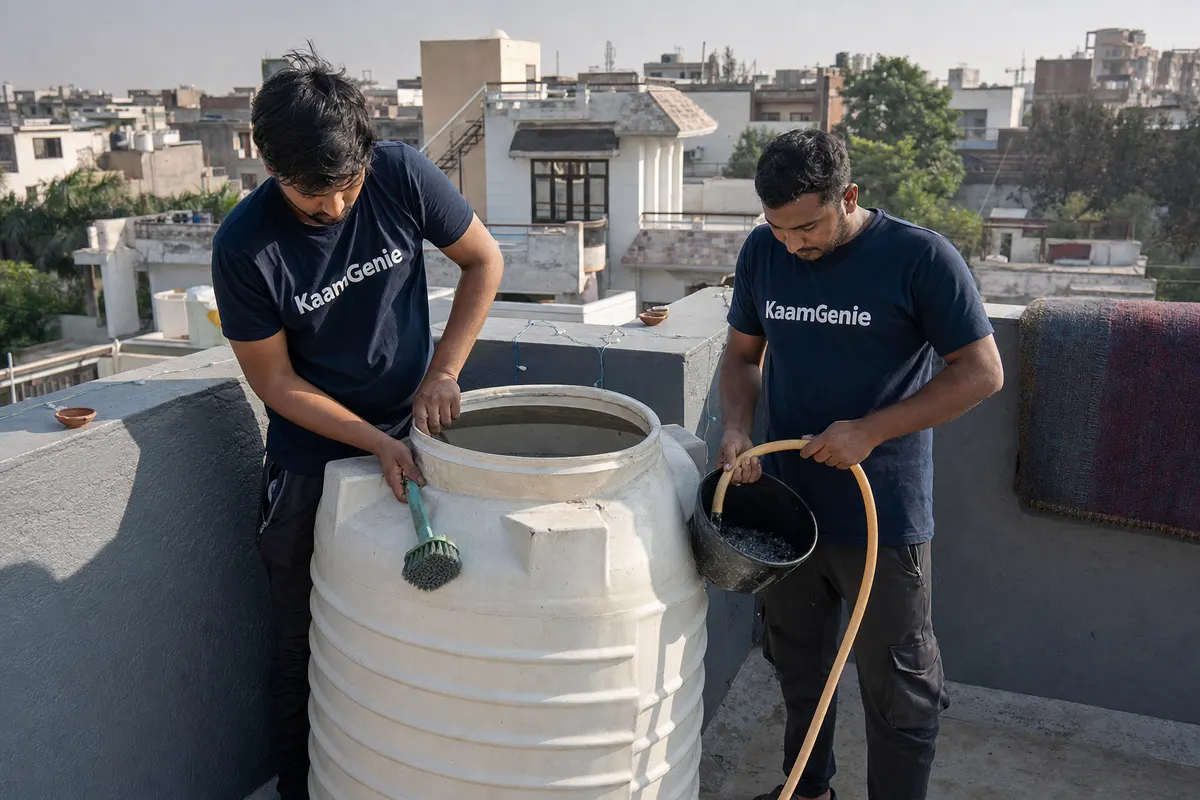
The pre-Diwali safai is one of the best habits in Indian homes. It is the one time of year when every family, in every kind of Gurgaon home, cleans the places that are normally ignored. The water tank fits that idea perfectly: it is out of sight, rarely opened, and quietly collects silt, dust and slime all year. Cleaning it before the festival means the water your family drinks, cooks with and offers to guests starts clean. Our crews offer water tank cleaning across Gurgaon through the festive season. If you want to know how the festival fits the year-round calendar, see the best time to clean a water tank in Gurgaon.
Why the tank belongs on the Diwali cleaning list
Diwali changes how a household uses water, and the change happens over just a few days.
- More people. Relatives stay over, friends drop in for pujas and meals, and children are home from school. Every extra person means more baths, more toilet flushes and more glasses of water.
- Cooking at scale. Mithai, namkeen, puris and big family meals all start with water from the kitchen tap: for soaking, kneading, boiling and washing up. When you cook for twenty instead of four, the quality of that water matters more.
- Washing everything. Curtains, bedsheets, utensils kept for guests, the puja silver, floor mops: the festive clean itself uses a lot of water.
- Drawing the tank low. Heavy use can pull the tank or sump down further than usual. When that happens, the outlet starts to pick up the sediment lying on the floor, and murky water can appear at exactly the wrong moment.
The WHO guidance on drinking-water quality treats safe storage as part of safe water: a clean, covered container matters as much as a clean source. When you are cooking for a crowd, that container is your tank. If your water already has a colour, smell or grit, our guide to the signs your Gurgaon tank needs cleaning will help you judge how urgent it is.
Clean the tank first, then the house
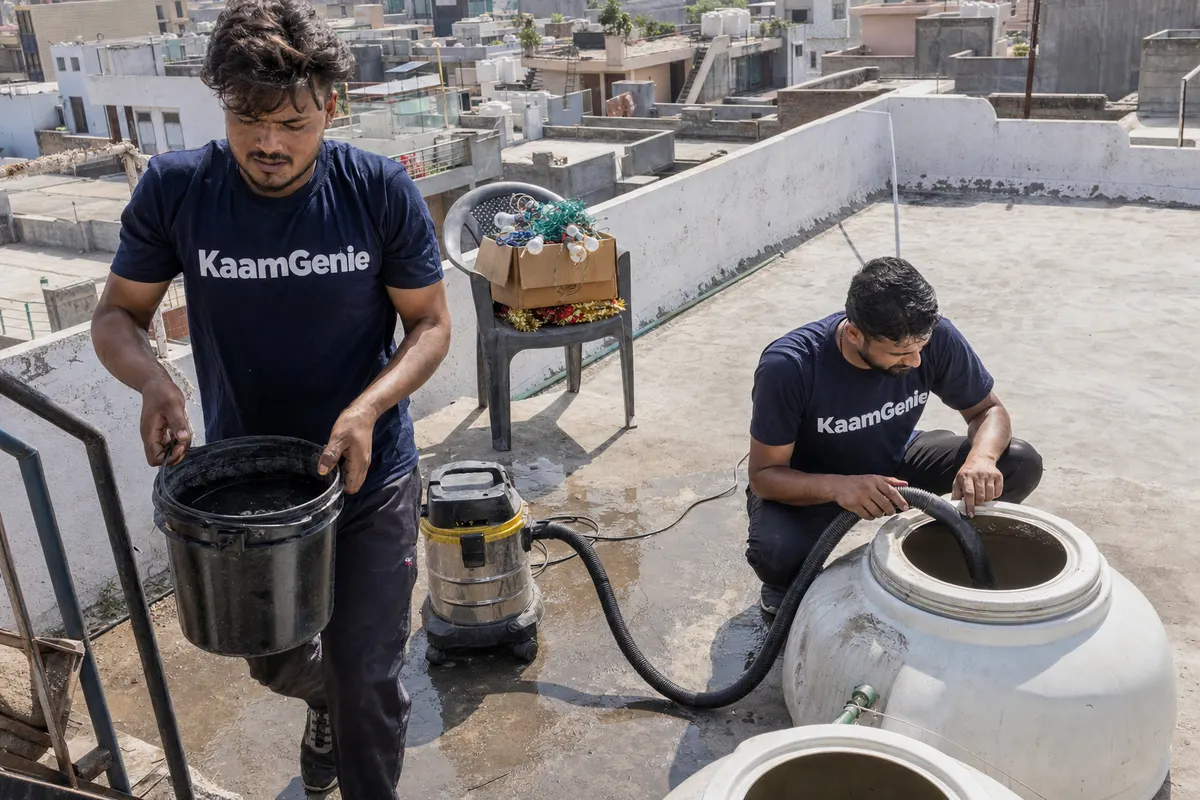
The order of the festive clean matters more than most people realise. Tank cleaning involves draining water, crew walking between the roof and the stairs, a hose line to the terrace, and fresh water pushing through the pipes when the tank is refilled. That first flush can carry loosened grit to every tap and leave marks in sinks and on bathroom tiles. If you have already polished the kitchen and mopped the floors, you will be doing parts of it twice.
Painting and whitewashing are the one exception. If painters are working on the terrace walls or parapet, let them finish first, because paint flakes and putty dust land straight in an open tank. Then clean the tank, then move indoors.
| Step | Job | Why it goes here |
|---|---|---|
| 1 | Painting, whitewash, terrace and parapet repairs | Paint flakes and putty dust fall into open tanks; get them done before the tank is cleaned |
| 2 | Overhead tank and underground sump cleaning | Draining and refilling stirs grit through the pipes; do it before indoor surfaces are cleaned |
| 3 | Taps, aerators, shower heads and purifier pre-filter | Clear out any grit pushed through after the refill |
| 4 | Kitchen deep clean, then bathrooms | Now done with clean water, and stays clean |
| 5 | Floors, stairs and entrance | Last, so crew and painter footprints are cleaned away once |
| 6 | Decoration, lights and rangoli | Nothing left that will drip, splash or need moving |
Plan around the October and November rush
Diwali falls in October or November depending on the year, and the fortnight before it is one of the busiest periods for home services in Gurgaon. Painters, deep-cleaning teams, carpet and sofa cleaners and tank crews are all booked up at the same time, and many families leave the tank until the very end. In the final week, especially around Dhanteras, it is genuinely hard to get a slot on the day you want.
Booking two to three weeks before the festival gives you three advantages: a much wider choice of days, the job is not squeezed between other urgent calls, and if the crew finds something that needs fixing, such as a cracked lid, a leaking float valve or a broken overflow, you still have time to get it repaired before guests arrive. If you do leave it late, ask about same-day cleaning in Gurgaon, though availability in the festival week depends on how busy the crews are.
Your pre-Diwali tank countdown
Use this as a simple plan, counting back from the festival.
- Three weeks before: open the tank lid and shine a torch inside. Note whether the floor has a sludge layer, the walls are slimy, or the lid fits badly. Book the clean, and if you are in a society, ask the maintenance office when the common tanks are scheduled.
- Two weeks before: make sure any painting or terrace work is finishing. Tell the painters not to wash brushes or rollers near the tank or into the overflow area.
- The evening before the clean: let the tank run down by using water normally and not topping up, so very little is wasted. Fill a few buckets for the kitchen and toilets as a backup.
- Cleaning day: clear a path to the roof, keep children and pets off the terrace while the crew works, and check the before and after photos when they arrive on WhatsApp.
- Right after the refill: run each tap for a minute, clean the aerators, and change or rinse the purifier pre-filter if it looks discoloured.
- Festival week: keep the lid locked, and avoid letting the tank or sump run very low on the days you are cooking for a crowd.
If your home runs on tankers: extra guests mean extra deliveries in the run-up, and each one adds silt. Still clean two to three weeks ahead, then let each delivery settle in the sump, about an hour after a routine fill, before you pump up to the roof. Our guide to tanker water and your Gurgaon tank explains why.
If you share a terrace: on a builder floor, every floor’s tank sits side by side, and all the families are hosting at once. Booking all the tanks on one visit with your neighbours saves each household a separate day of disruption; our builder floor tank cleaning guide covers how shared terraces work.
For how this festive clean fits with the rest of your year, see how often to clean a water tank in Gurgaon.
For RWAs and condominiums: bulk scheduling before the festival
In a society, every flat depends on the same reservoir and tower tanks, so one cleaning plan covers everyone. The festive season is when residents are most likely to notice a problem and least willing to tolerate a water cut, so planning early is essential.
- Fix the dates early. Agree the schedule at least three weeks ahead and send a notice to residents with the time each tower will be without water.
- Reservoir first. Clean the underground reservoir before the rooftop tanks, otherwise the tower tanks are refilled from a dirty source. Our underground sump cleaning guide explains the sequence.
- One tower at a time. Working tower by tower keeps water flowing to the rest of the complex.
- Coordinate with the whitewash. Many societies paint common areas before Diwali. Finish terrace and facade work before the tanks are opened.
- Finish before the festival week. Leave a buffer of a few days in case of a delay or a repair.
Our society water tank cleaning guide covers the full process for committees and facility managers, and the complete guide to water tank cleaning in Gurgaon covers every kind of building.
What matters in a festive-season clean
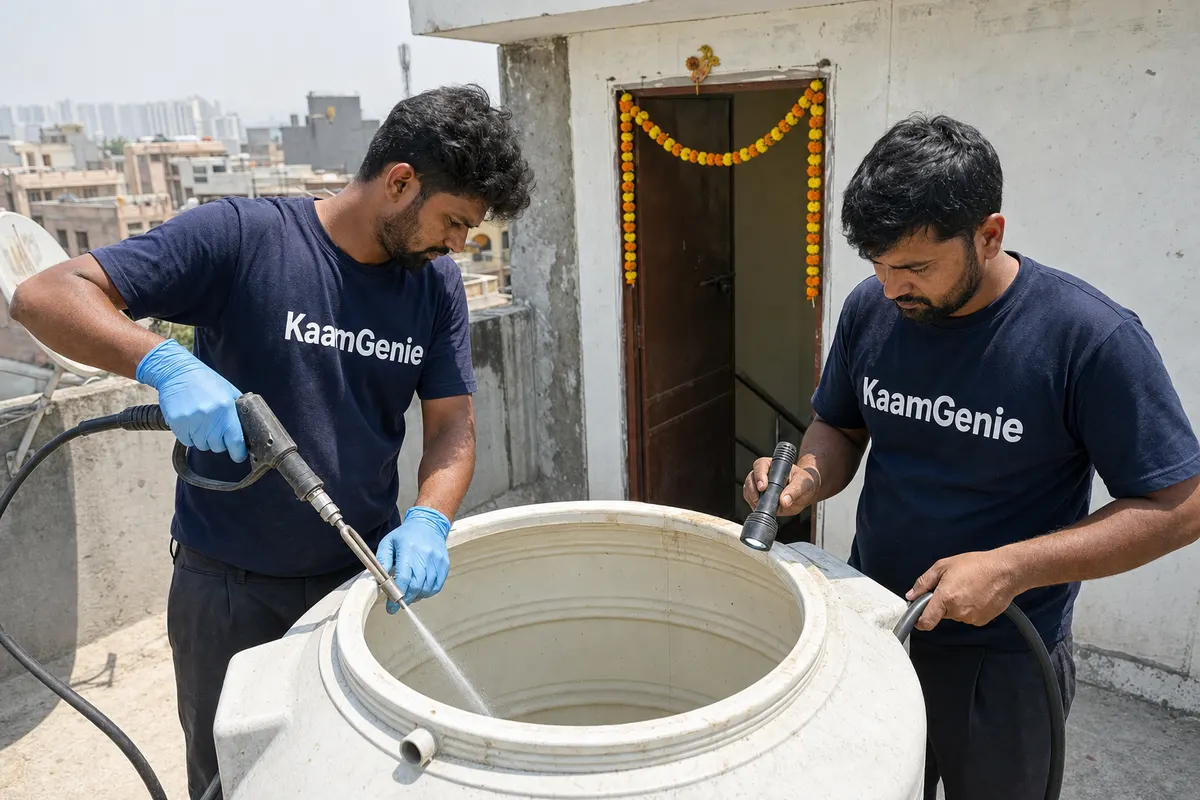
The method does not change for the festival; every step is in the Gurgaon cleaning process guide. Three parts of it matter most in a house that is in the middle of its safai:
- The sludge comes out in one go. Silt and sediment are scooped and wet-vacuumed out after the inlet is shut and the tank drained, until the tank floor is clear. That is why the tank comes before the floors.
- Repairs are spotted while there is time. The lid, float valve and overflow are checked and photographed. Booking two to three weeks ahead means a cracked lid or a sticking valve can be replaced before guests arrive; any such part gets its own price from us, kept apart from the cleaning charge.
- The first flush is yours to manage. After the scrub, jet wash and fresh-water rinse, the tank is refilled and you get before and after photos on WhatsApp. Run each tap and clear the aerators before you clean the sinks, as the countdown above suggests.
The festive clean adds no chemicals, and disinfection is optional, on request: if you are hosting a big family gathering and want that extra step, ask when you book. In tree-lined colonies such as South City and Nirvana Country, our crews often lift the lid in October to find dry leaves and twigs on the water, because the trees shed after the monsoon and loose lids let them blow in. Families in Malibu Towne book their Diwali slots with us as well.
RWA or facility team? Lock in the festive schedule now
We clean the common reservoir first, then tower by tower, and with early dates we aim to finish before the festival week, so the busy days are left alone.
After the festival: a quick look
Firecracker debris and smoke residue land on rooftops on Diwali night. The next morning, lift the lid and check that nothing has fallen in or lodged in the overflow; if the lid was clamped and the openings meshed, a wipe of the top is usually enough. How to secure the openings is in our dust-storm guide, and what the smog weeks after Diwali do to a tank is in our winter tank guide.
What not to do
- Do not clean the tank after the kitchen and floors. The refill and the crew’s path to the roof will undo part of your work.
- Do not let painters rinse brushes or buckets near the tank. Paint water in the overflow area or near an open lid ends up in your drinking water.
- Do not add bleach or phenyl to the tank as part of the safai. Household cleaners are not meant for drinking water, and they do nothing to remove the sludge.
- Do not leave it to Dhanteras. Slots in the final days are hard to get, and there is no time left for repairs.
- Do not store festive sweets or extra water containers on top of the tank lid. The weight cracks plastic lids, and a lid that no longer seats properly lets dust and debris in right when the house is full.
Add the tank to this year’s list
Look inside the tank three weeks before the festival, and if the floor is not clean, book it before the painters leave and the kitchen deep clean begins. Before Diwali, a family’s rooftop tank starts at ₹699 and an underground sump at ₹1,499, with the exact amount told to you before we begin and no festive surcharge; you pay once the photos show the tank is clean. Our festive-season slots for tank cleaning in Gurgaon open well ahead. Call +91 95603 66362 or send us your preferred dates on WhatsApp. RWAs can ask for one plan covering the reservoir and every tower.
Frequently asked questions
How early should I book tank cleaning before Diwali?
Two to three weeks before the festival is ideal. That gives you a choice of day and time, keeps the job out of the last-minute rush, and leaves room to repair anything the crew finds, such as a cracked lid or a leaking float valve. In the final week, and especially around Dhanteras, slots across Gurgaon fill quickly. Societies should plan earlier still, because residents need notice before each tower’s water is turned off.
Should I clean the water tank before or after cleaning the house?
Before the house, but after any painting or terrace repairs. Draining and refilling a tank sends a first flush of water and loosened grit through the pipes, and the crew needs to move between the roof and the stairs. If the kitchen, bathrooms and floors are already done, you will end up cleaning parts of them again. Paint dust, on the other hand, falls into open tanks, so let the painters finish first.
Will we have water on the day of the cleaning?
For one overhead tank, the crew works for 60 to 90 minutes, and the tank then fills again as fast as your supply allows. Let the tank run down the evening before and fill a few buckets for the kitchen and toilets, and the day goes smoothly. Sumps and society reservoirs take longer, so they are scheduled section by section. We tell you the expected timing before we start.
Is it worth cleaning the tank if the water looks clear?
Clear water can still come from a tank with a sludge layer on the floor and slime on the walls. The sediment usually shows itself only when the level drops or the tank is refilled hard, which is exactly what happens during the festival when water use goes up. A quick look with a torch three weeks before Diwali tells you whether the floor is clean. If you cannot see it, the tank needs attention.
Can our RWA get all towers cleaned before Diwali?
Yes, with early planning. We start with the underground reservoir, then clean the rooftop tanks tower by tower so the rest of the complex keeps water. The schedule is agreed in advance, residents get notice of their tower’s timing, and with early dates we aim to leave a buffer of a few days before the festival week. If the society is also whitewashing common areas, the terrace work should be finished before the tanks are opened.
Are chemicals used in a festive clean, or only on request?
No chemicals are used in a standard clean, festive or otherwise. The tank is drained, de-sludged, scrubbed, jet washed and rinsed with fresh water. With a houseful of festival guests coming, some families ask us to disinfect too; that happens only on your request, and we explain it before starting. Please do not add bleach, phenyl or floor cleaner to the tank as part of the safai; they are not made for drinking water.
What does pre-Diwali tank cleaning cost in Gurgaon?
Prices do not go up for the festival. In the festive weeks a rooftop tank is still from ₹699 and a sump from ₹1,499; you agree the figure before the crew starts and receive before and after photos of your own tank on WhatsApp. Societies and condominiums can ask for a single quote covering the reservoir and all tower tanks, scheduled to finish before the festival week.
Sources & references
- WHO Guidelines for Drinking-water Quality, 4th edition: guidance on safe storage of household drinking water.
- National Centre for Disease Control (NCDC): public health information on water-borne illness in India.
- Gurugram Metropolitan Development Authority (GMDA): the agency responsible for bulk water supply in Gurugram.
- Central Pollution Control Board (CPCB): air quality bulletins for the NCR, including the festive and winter months.
Last verified: 22 November 2026. If you find any of these links broken, please let us know.