
Quick answer
- When winter is: after Diwali through February. The weeks from late October up to Diwali are a busy booking period of their own.
- Smog and dust: during the smoggy weeks, fine dust settles on Gurgaon rooftops and gets into any tank with a loose lid, an open vent or an uncovered overflow.
- Stagnation: households use far less water in winter and travel over the holidays, so water stands in the tank for longer and can turn stale.
- Cold: it is a reason to plan the clean for the warm middle of the day, not a reason to skip it.
- The upside: winter is a low-demand period, so slots are easy to get, there is no rain or shortage to work around, and societies can schedule calmly.
A grey film on the water means it is time to clean. A stale smell after a trip: run the taps to waste first, and clean the tank if the smell returns.
Smog dust on the water? Book a winter clean
Ask for a late-morning or midday visit. In the cold months an overhead tank still starts at ₹699, quoted before we climb. Dust and sludge out, photos sent, no chemicals unless you ask.
Winter is the season people forget about their water tanks. Nobody is complaining about warm water or tanker silt, the monsoon is long over, and the roof is not a place anyone wants to be on a foggy morning. But the tank is still there, and the conditions above it are quite different from the rest of the year. If you want the full-year calendar, see the best time to clean a water tank in Gurgaon. This article is only about the cold months: the dust, the still water, and how a winter clean actually works. Our crews offer water tank cleaning across Gurgaon right through the season.
What smog season puts on your roof
Smog often starts building in late October, and from Diwali through February the air over Gurgaon and the rest of the NCR can turn thick and grey for days at a time. Cold, still air near the ground traps smoke, vehicle exhaust, construction dust and road dust, and the Central Pollution Control Board regularly reports poor air quality across the region in these months. Much of that material does not stay in the air. It drifts down and settles on every flat surface: balcony railings, parked cars, solar panels and rooftop tanks.
A tank with a tight lid shrugs this off. A tank with any opening does not. Fine dust gets in through:
- a lid that has warped in the summer sun and no longer sits flat;
- a cracked or broken lid propped in place with a brick;
- a vent pipe with no mesh, or a mesh that has torn;
- the overflow pipe mouth, which faces outward and collects whatever the wind carries;
- the gap around the inlet pipe where it enters the tank.
Once inside, the dust behaves in two ways. The lightest part floats and forms a dull grey film on the water surface, sometimes with a faintly oily sheen. The heavier part sinks slowly and joins the sediment already on the floor, adding a fine grey-black layer on top of the brown silt from the rest of the year. Neither is something you want in water you bathe, cook or brush your teeth with. Tanks close to busy roads and active construction sites usually collect more of it. Securing each of those openings properly, lid, vent and overflow, matters just as much for smog dust as for the dust storms of summer: a clamped lid, fine mesh on the vent and a mesh cap on the overflow.
Why water goes stale when nobody uses it
The second winter problem is quieter. A household’s water use drops sharply in the cold months: no coolers, fewer baths, less garden watering, and often a family trip over the December holidays. The tank was sized for summer demand, so in winter the same volume of water takes much longer to be used up and replaced.
Water that is constantly flowing through a tank stays fresh. Water that sits for days loses its freshness, picks up a flat or stale taste, and gives any biofilm on the walls more time to shed into it. Cold slows microbial growth but does not stop it, and a tank with sediment on the floor still offers plenty for bacteria to live on. A typical winter complaint: a family comes back from a week away, opens the tap, and notices a smell they have never had before.
Flats that stand empty for part of the winter, second homes, and rented units between tenants are the most affected. If you are moving into one, our guide on cleaning the tank before moving in applies directly.
The winter dust and stagnation check
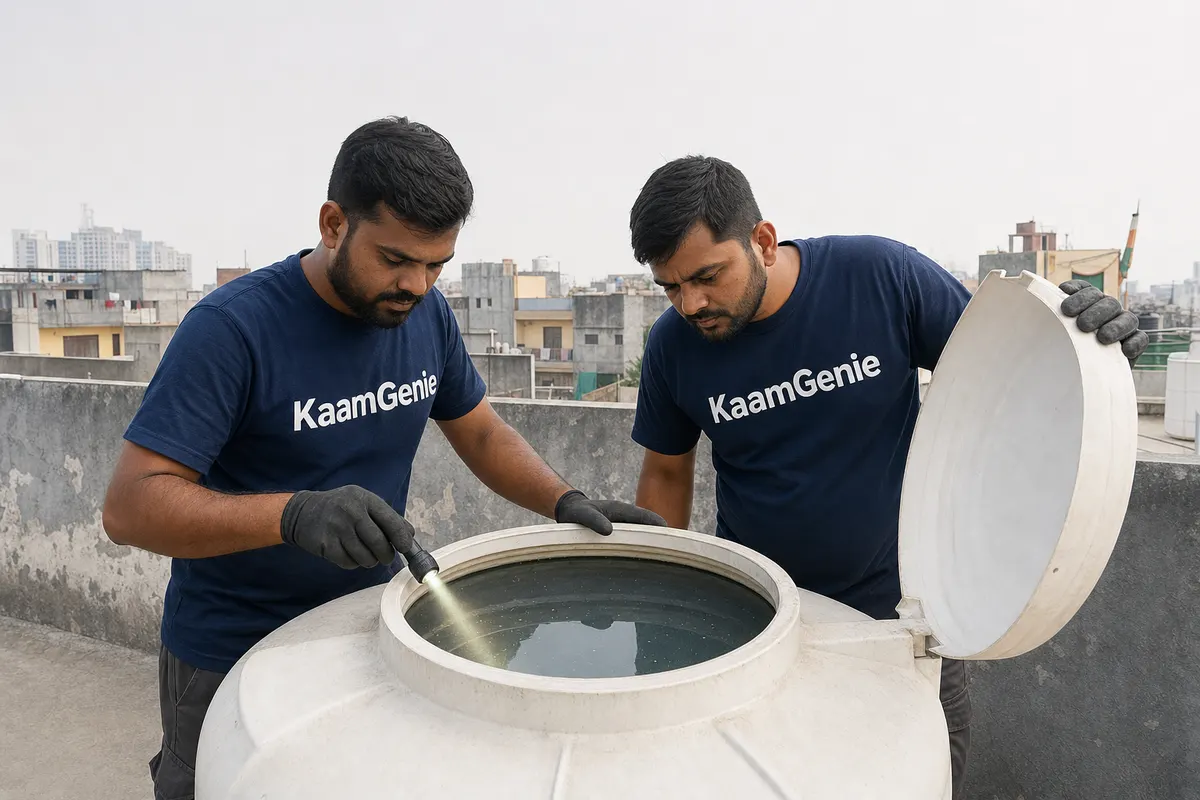
You can check your own tank in ten minutes on any clear afternoon. Take a torch, a clean white cloth or tissue, and a steel tumbler.
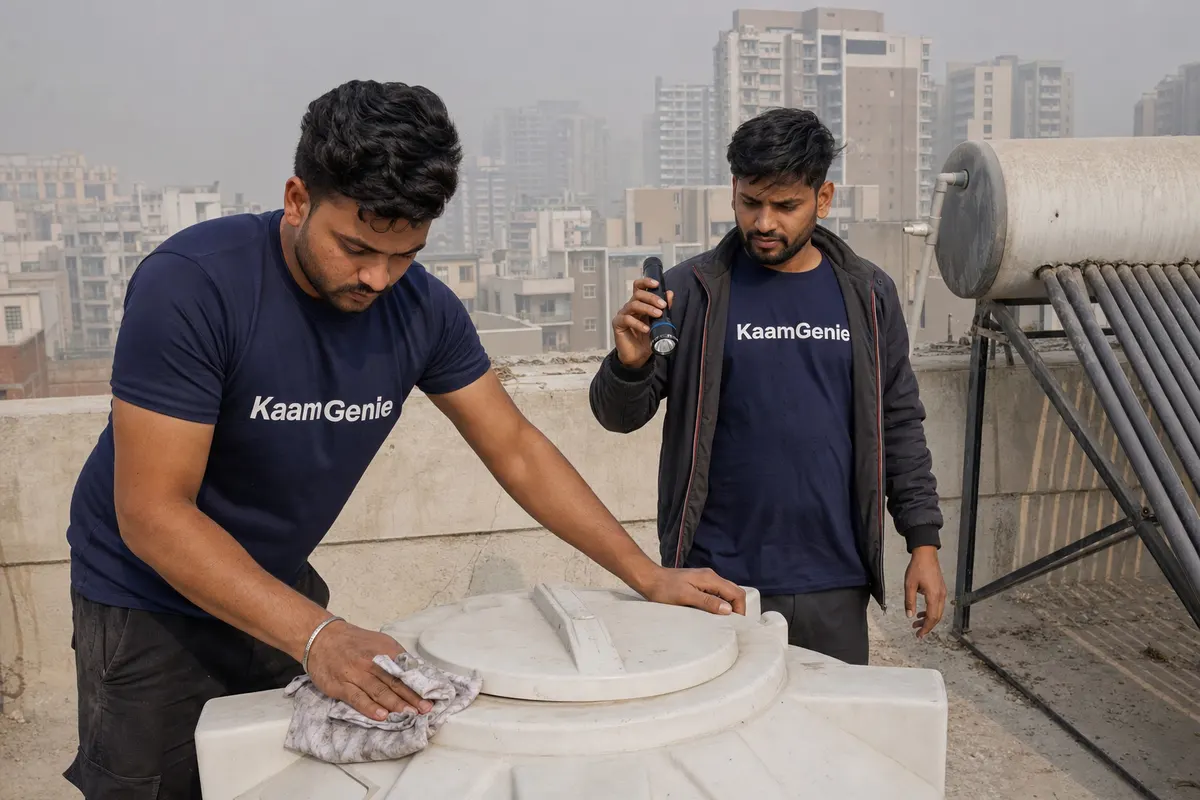
- Wipe the lid. Run the white cloth across the top of the lid and then along the underside of its rim. Grey or black smudges on the top are normal in winter. The same smudges on the underside mean dust is getting past the lid and into the water.
- Look at the surface. Lift the lid and shine the torch across the water at a low angle, not straight down. A grey film, floating specks or a rainbow sheen show that dust has settled in.
- Check the openings. Look at the vent and the overflow pipe. Is there mesh on both? Is it intact and clear of dust, leaves and cobwebs?
- Smell the first water. If the tank has not been used for a few days, fill the tumbler from a tank-fed tap and smell it before you run anything else. Stale, musty or sour means stagnant water.
- Note the floor. If the water is low enough, see whether you can make out the tank floor in the torch beam. A dark, soft layer means sediment is building up regardless of the season.
Then use this table to decide what to do.
| What you find | What it means | What to do |
|---|---|---|
| Dust only on top of the lid, underside clean, water clear | The lid is doing its job | Nothing urgent; wipe the lid and keep checking |
| Dust on the underside of the lid rim | Air and dust are getting past a warped or loose lid | Replace or refit the lid; look at the water surface |
| Grey film or specks floating on the water | Smog dust has entered the stored water | Book a clean; use other water for drinking meanwhile |
| Vent or overflow with no mesh, or torn mesh | An open path for dust, insects and lizards | Fit fine mesh now, on both the vent and the overflow |
| Stale or musty smell after a few unused days | Water has stood still too long; biofilm is shedding | Run taps to waste; clean if the smell returns |
| Soft dark layer visible on the floor | Sediment build-up, independent of the season | Book a full clean with de-sludging |
For other warning signs that are not specific to winter, see 7 signs your Gurgaon water tank needs cleaning.
Coming back from a winter trip
If the house has been shut for a week or more, do not drink from the tank-fed taps straight away. Open each tap and let it run to waste for a couple of minutes, working from the top floor down, so the water that stood in the pipes is cleared out. Then check the first fresh water for smell. If it is still off, the tank itself needs cleaning, not just flushing. Turning off the tank’s inlet before a long trip, and filling only after you return, is a simple habit that avoids most of this.
How the cold changes a cleaning visit
Cold weather does not stop a tank from being cleaned. It changes when and how the visit is planned.
- Later start. Winter mornings in Gurgaon are often foggy and damp, and the terrace can be slippery with dew. Where the schedule allows, we try to start late morning, when the roof is dry. Ask for that when you book.
- Refill before evening. In winter, nobody wants to be without hot water at night. On a cold day the crew needs 60 to 90 minutes on one overhead tank, and then the tank fills again at the speed of your supply. A late-morning start gives the tank time to refill before the geyser is needed, supply permitting.
- Work around the household. We avoid the morning rush, when everyone needs hot water before school and office, and ask you to fill a couple of buckets beforehand if you want a backup.
A brief word on geysers: most geysers in Gurgaon homes are fed directly from the overhead tank, so the sediment and dust in the tank also reach the geyser and settle in its inner tank. A clean tank means less muck building up in the heater. Descaling or servicing the geyser itself is a plumber’s job, but it is worth doing around the same time.
Why winter is a good low-demand window
Demand for tank cleaning in Gurgaon peaks before summer and around the monsoon. Winter is the quiet period, and that works in your favour:
- Choice of days. Once the pre-Diwali rush is over, there is usually more choice of days, including weekends.
- No supply stress. There are no summer shortages and no monsoon runoff, so draining and refilling is simple.
- Lower water levels. Because usage is low, it is easy to let the tank run down the evening before, which means very little water is wasted during the clean.
- Calm planning for societies. RWAs and facility teams can schedule every tower and the common reservoir without juggling tanker deliveries.
A winter clean also means your tank goes into the next summer with the smog dust and the year’s sediment already out. How it fits your own schedule depends on your supply and building, which we explain in how often to clean a water tank in Gurgaon. If you are reading this in October, the festival weeks are a different, busier window, so book a few days ahead of the rush. And the heat that follows winter brings its own problems, from warmer water to faster algae growth on the walls of a sunlit tank.
For RWAs and facility teams, the low-demand window is the time to do every tower and the common reservoir in one planned sequence; our RWA and society tank cleaning guide covers how that scheduling works, and the complete guide to water tank cleaning in Gurgaon covers each kind of building.
What a winter clean concentrates on
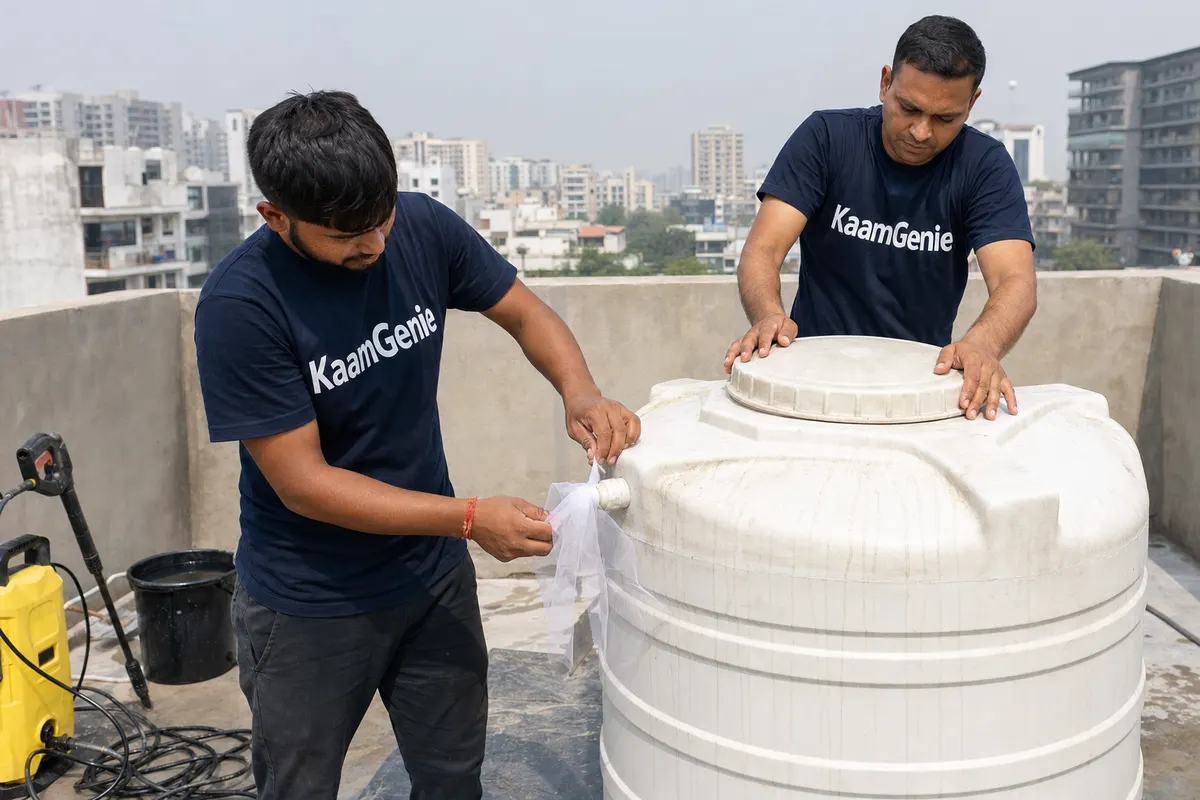
The clean itself is our standard sequence, laid out in the Gurgaon cleaning process guide. Smog dust and still water shift the effort to three places:
- The film line on the walls. As the tank drains, the floating grey film settles onto the walls in a band. That band, and the underside of the lid where dust collects, are scrubbed by hand and jet washed, or the next fill lifts the film straight back off.
- The fine layer on the floor. Smog dust is finer than tanker silt and sits as a soft grey-black skin on top of the year’s sediment. It is scooped and wet-vacuumed out of the tank with the rest of the sediment, then the tank is rinsed with fresh water.
- The way it got in. The lid fit, vent and overflow are photographed with the before and after shots on WhatsApp, so you can see exactly which opening let the dust in and get it fixed.
A winter clean stays physical, with nothing added to the water. After a long holiday away, or if you simply want more reassurance before the cold months, ask and we add disinfection; it is never done by default. On rooftops near the open plots and building sites along Golf Course Extension Road, our crews often find the winter film on the water thicker than usual, because construction dust settles along with the smog. Homes in Sushant Lok and DLF Phase 3 book us right through the cold months too.
Society or condo? Use the quiet season
Winter is the easiest time to clean every tower and the common reservoir without supply pressure. We can plan tower by tower so no tower is without water for long.
What not to do
- Do not seal the vent completely to keep dust out. A tank needs to breathe as water flows in and out. Cover the vent with fine mesh instead.
- Do not leave the lid resting loosely for weeks after checking. A lid that is not seated properly is the main way smog dust gets in.
- Do not pour bleach or other chemicals into a stale tank yourself. It covers the smell briefly and leaves the dust and sediment behind, and dosing it right in a home tank is harder than it looks.
- Do not burn leaves or rubbish on the roof. Ash and smoke land straight in the tank.
- Do not book a dawn slot on a foggy day. A wet terrace is a slipping hazard; midday is safer for everyone.
Use the quiet months
The tank you clean in December or January goes into summer without the smog dust and the year’s sediment, and you will not be competing with the pre-summer rush for a day. Smog season does not change the rate for tank cleaning in Gurgaon: a rooftop tank in December starts at ₹699 and a sump at ₹1,499, and you hear the exact figure before the crew starts. Call +91 95603 66362 or message us on WhatsApp with a photo of the water surface, and mention if you would like a late-morning start. When the weather turns again, our monsoon guide for Gurgaon tanks covers what the rains bring.
Frequently asked questions
Does smog actually get into a closed water tank?
If the tank is properly closed, very little gets in. The trouble is that many rooftop tanks are not fully closed: lids warp in summer sun, rims crack, vents lose their mesh, and the overflow pipe stays open to the air. Fine dust from the smog drifts through those gaps and settles on the water. Wiping the underside of the lid rim with a white cloth is the easiest way to tell whether your tank is letting it in.
Is it a bad idea to clean a water tank in winter?
No. Cold weather only changes the timing. Where the schedule allows, we try to start late morning, once the fog has lifted and the terrace is dry, so the tank can refill before the geyser is needed in the evening, supply permitting. After the pre-Diwali rush, winter is a convenient time because demand is lower, and there are no shortages or rain to work around.
Why does my tank water smell after we return from a holiday?
Water that stands still for days loses its freshness, and any biofilm or sediment in the tank has longer to affect it. Let each tank-fed tap run to waste for a couple of minutes, working from the top floor down. If the first fresh water still smells off, the tank needs a proper clean rather than flushing. Closing the inlet before a long trip prevents much of this.
How long will we be without water during a winter clean?
Expect 60 to 90 minutes of cleaning for one overhead tank, then however long your supply takes to refill it, so a late-morning start helps you have water again before the evening. Bigger tanks, sumps and society reservoirs take longer. Filling a couple of buckets beforehand gives you a backup for the kitchen and toilets. Our guide on how long tank cleaning takes in Gurgaon gives typical durations for each tank type.
Does a dirty tank affect my geyser?
It can. In most Gurgaon homes the geyser is fed straight from the overhead tank, so the sediment and dust in the tank flow into the geyser and settle in its inner tank, along with scale from the hard water. A clean tank reduces what reaches the heater. The geyser itself still needs servicing or descaling by a plumber from time to time, and winter is a sensible time to arrange it.
When does winter tank cleaning season run in Gurgaon?
For tank care, think of winter as the months after Diwali through February. The weeks from late October up to Diwali are a busy period of their own, as many families want the tank done before the festival, so slots fill faster then. Once Diwali has passed, demand drops, smog dust is at its worst, and water use is low, which makes it a sensible time for a full clean before the heat and the tanker season return in spring.
Are chemicals part of a winter clean, or only on request?
Not in a standard clean. We remove the dust and sediment physically by draining, de-sludging, scrubbing, jet washing, wet-vacuuming and rinsing with fresh water. After the house has been shut for the holidays, or if you want extra reassurance, you can ask us to disinfect as well, and we explain what it involves before starting. We advise against adding bleach yourself.
What does winter tank cleaning cost in Gurgaon?
Winter brings no seasonal surcharge. A rooftop tank in the cold months begins at ₹699 and an underground sump at ₹1,499, the figure is agreed with you before the crew starts, and you pay only after the before and after photos of your own tank reach you on WhatsApp. Societies and condominiums with several towers can ask for a combined schedule and quote for the whole complex.
Sources & references
- Central Pollution Control Board (CPCB): air quality monitoring and the national Air Quality Index for the NCR.
- India Meteorological Department (IMD): fog, cold wave and winter weather forecasts for Haryana and Delhi NCR.
- WHO Guidelines for Drinking-water Quality, 4th edition: guidance on safe storage and stagnation of drinking water.
- Gurugram Metropolitan Development Authority (GMDA): the agency responsible for bulk water supply in Gurugram.
Last verified: 22 November 2026. If you find any of these links broken, please let us know.