
Quick answer
- Hard water can contribute to dry, tight skin, a flaky or itchy scalp and dull, rough hair, because calcium and magnesium leave a film that soap struggles to rinse off.
- A dirty tank can add to it: sediment, scale flakes and bio-film make the water gritty and can irritate already sensitive skin.
- Hair fall has many causes (genes, hormones, thyroid, low iron, stress, illness, diet). Water alone is seldom the main one. See a dermatologist if it is heavy, patchy or sudden.
- Tank cleaning removes dirt, not hardness. It will not soften your water. Softening needs a softener on the supply line.
- Start with the checklist below: if only one person is affected and nothing changed with the water, look beyond the tap.
This article is general information, not medical advice. Persistent skin or hair problems need a doctor.
Gritty, chalky water at the shower? Start with the tank
Scale flakes and grit out of an overhead tank from a fixed ₹699, and you pay only after the before and after photos of your own tank. No chemicals unless you ask.
A common complaint from people who have recently moved to Gurgaon goes like this: “Since we shifted here, my skin is dry and my hair is falling.” Usually the same person has noticed white crust on the taps and a chalky ring on every bucket. Those signs say something about the water, but not how much of the trouble it causes. This guide separates the two. If you already suspect the tank, our Gurgaon water tank cleaning crew can start there.
Why people in Gurgaon blame the water
Gurgaon’s homes draw on a mix of GMDA canal supply, private borewells and tankers. Groundwater in much of the district is mineral-heavy, and many tankers fill from borewells too. So a large share of homes bathe in water with more calcium and magnesium than people from canal-fed or river-fed cities are used to. Our explainer on Gurgaon’s hard water and your tank covers where that hardness comes from.
Then there is the storage. Water in Gurgaon rarely goes straight from the supply to your shower. It sits in an underground sump, gets pumped to a rooftop tank, and waits there in summer heat. Scale, silt and bio-film build up on the tank walls and floor. When that tank is not cleaned, what comes out of the shower is not only hard; it can also carry fine grit and flakes.
Add dry winter air, smog, a new routine and the stress of a move, and the water easily gets blamed for everything at once.
What hard water and a dirty tank can actually do
It helps to keep two different things apart: hardness, which is dissolved in the water, and dirt, which is suspended in it or growing on the tank surfaces.
Hardness: the film you cannot see
Calcium and magnesium react with soap and many shampoos to form a sticky residue, the same scum you see on a bucket. On skin, that residue can leave a tight, dry feeling after a bath, and people with eczema-prone or sensitive skin often notice it more. On hair, mineral build-up can make strands feel rough, look dull and tangle more easily, and some people find their scalp flakier. Hard water can also make hair feel brittle, so it may break more when combed. Breakage and genuine hair fall from the root are not the same thing, and a dermatologist can tell them apart.
Dirt: what an uncleaned tank adds
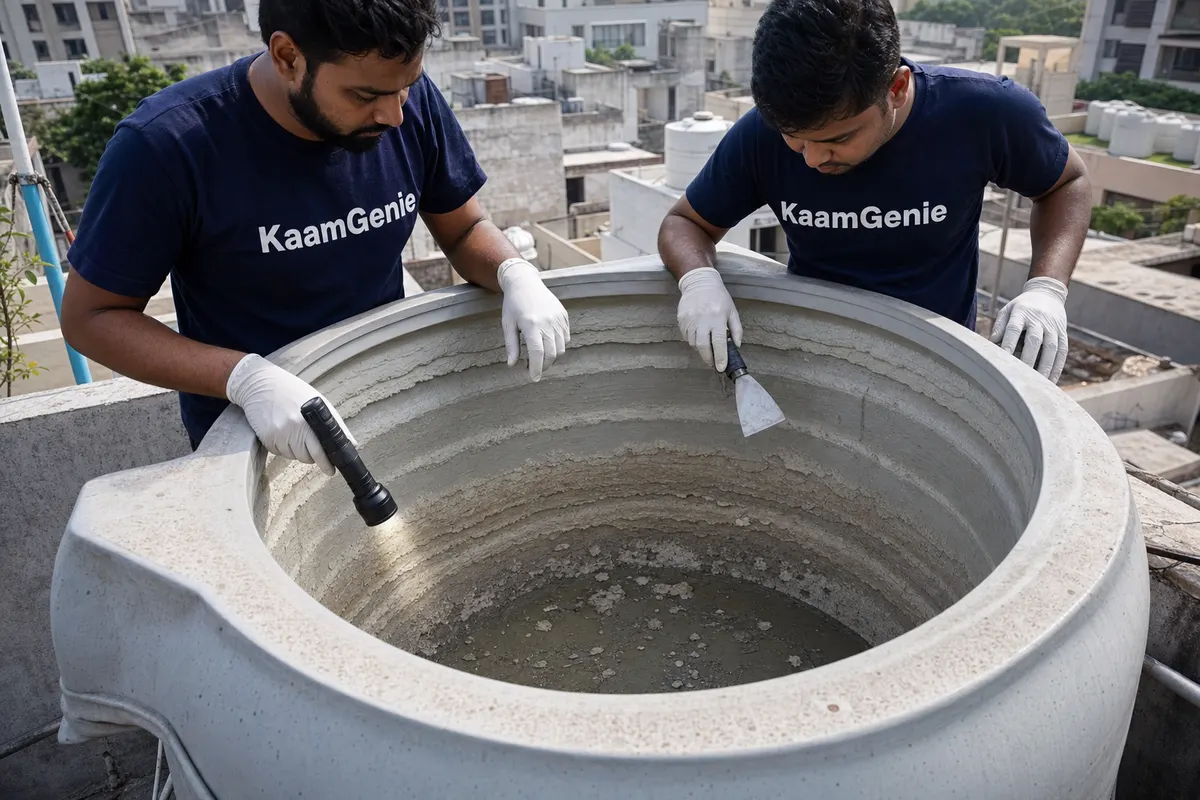
A tank that has not been cleaned in a long time holds a layer of sludge on the floor and slime on the walls. Every refill stirs some of it back up. That can mean gritty water, a faint smell, and flakes of scale that clog shower heads and aerators. For some people, washing in that water adds to scalp itching or skin irritation. If the water at your tap looks tinted, our guide to yellow or brown water from the tank helps you trace the source first.
What the water usually does not do
Hard water is not generally regarded as a direct cause of hair loss from the root. Heavy or patchy hair fall has many possible causes, including genetics, hormonal changes, thyroid problems, low iron or other deficiencies, stress, recent illness, crash dieting, some medicines and the months after pregnancy. A dermatologist may suggest blood tests to check some of these. Changing the water may help your hair feel better, but it is not a treatment for those causes, and nothing on this page should delay a visit to a doctor.
| What you notice | Can the water contribute? | Sensible next step |
|---|---|---|
| Skin feels tight and dry after every bath, white marks on taps | Yes, hardness often plays a part | Shorter, cooler baths, a moisturiser after bathing, consider a softener |
| Hair rough, dull, tangles easily | Yes, mineral build-up is a common reason | Rinse habits, a dermatologist-recommended shampoo, softer water for washing |
| Scalp itchy or flaky, water feels gritty | Possibly, hardness plus sediment from a dirty tank | Tank cleaning; a dermatologist if it persists |
| Heavy hair fall, patches or a widening parting | Rarely the main cause | See a dermatologist; ask about tests |
| Rash, blisters, redness or infection | Do not assume it is the water | See a doctor promptly |
| Problem began right after tanker deliveries started | Possibly, tanker water is often harder and siltier | Note the timing, test the water, clean the tank |
The “is it the water?” checklist
Before you buy a filter or change shampoos for the third time, spend ten minutes on these questions. Note the answers; a dermatologist will find them useful.
- Is the whole household affected? If everyone who bathes at home notices dry skin or rough hair, the water is a likely contributor. If only one person is affected, the cause is more likely personal (health, products, hormones, stress).
- Did it start after a move or a change of supply? Note the month you moved, or the month your building switched from canal supply to borewell or tanker water. A clear before-and-after points towards the water.
- Is it worse after tanker days? If skin and hair feel worse in the days after a tanker fill, the water arriving that week is probably harder or dirtier than usual.
- Does it improve when you travel? Many people notice their hair feels normal again after a week elsewhere. A useful clue, though a holiday changes stress and diet too.
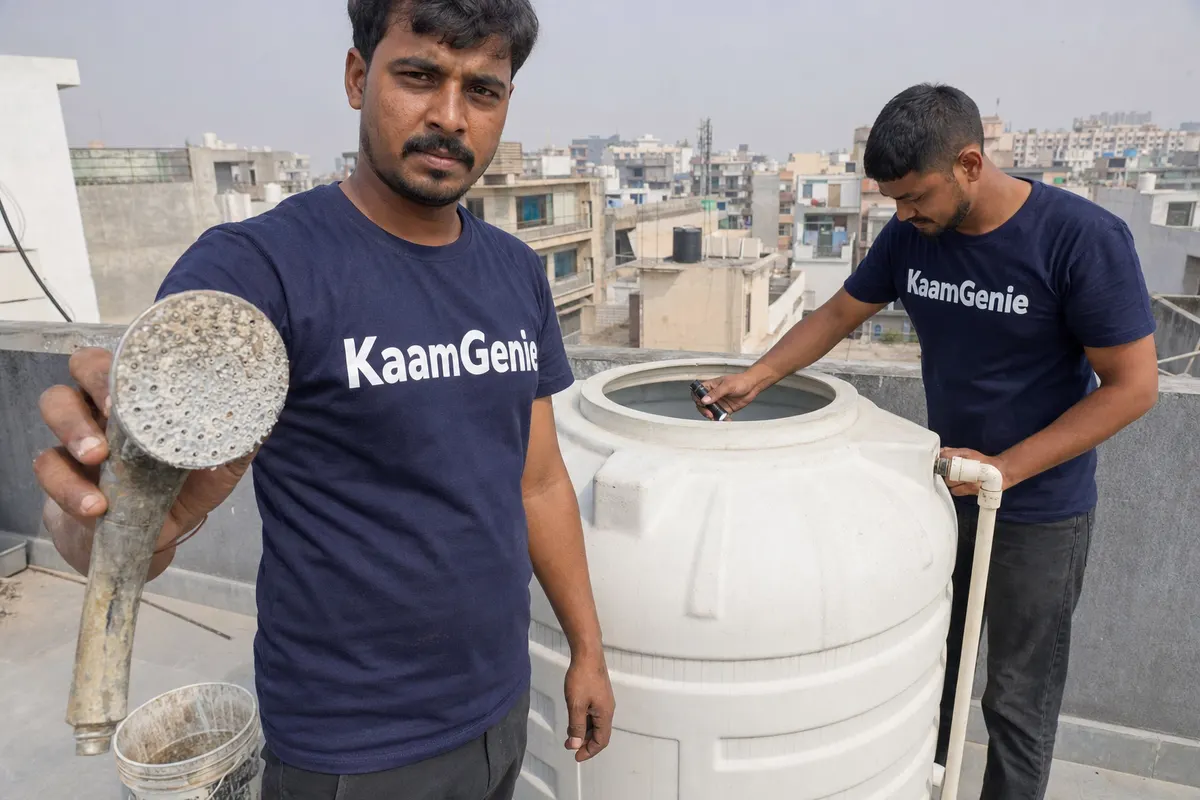
- What does the shower head look like? Unscrew it. White crust and blocked holes mean hard water. Brown grit or black slime inside it means the tank or pipes are adding dirt.
- Lift the tank lid. Look at the walls and floor with a torch. A white or grey crust on the walls, a slimy feel, or a layer of sediment on the floor means the tank has not been cleaned properly in a while.
- Get a basic water test. Ask an NABL-accredited lab for total hardness, TDS and pH at minimum. Take the sample from the shower, not the RO tap.
If questions 1 to 3 are mostly “yes”, the water is worth fixing. If they are mostly “no”, the water is probably a minor factor and a doctor is the better first stop.
Reading the hardness number
IS 10500:2012, the Indian drinking water standard, sets total hardness (as calcium carbonate) at 200 mg/l acceptable and 600 mg/l permissible where no better source exists. Those limits are about drinking water, not bathing comfort, so even water within the limit can feel harsh on skin and hair. Use the number to compare your supply over time and to size a softener, not as a verdict on your skin. TDS is a broader figure that includes hardness and other salts; our guide to reading TDS in Gurgaon water shows how to take three readings that mean something, and our guide to Gurgaon’s water supply explains why the source changes the number.
Shower filters and softeners: the honest picture
This is where most money is wasted, so it is worth being clear about what each product is built to do.
| Option | What it helps with | What it does not do | Watch out for |
|---|---|---|---|
| Cartridge shower filter | Catches some sediment and improves smell for many users | Most do not meaningfully reduce calcium and magnesium | Cartridges clog fast on gritty water; check exactly what the product claims |
| Whole-house water softener | Reduces hardness for all bathing and washing water | Does not remove sediment, bio-film or germs already in the tank | Needs salt top-ups, space and servicing; ask your installer about drinking water |
| RO purifier in the kitchen | Drinking and cooking water | Does nothing for the bath, shower or washing machine | Silt from a dirty tank chokes pre-filters quickly |
| Tank cleaning | Removes sludge, scale flakes, slime and grit from stored water | Does not soften water or change its dissolved minerals | A quick rinse leaves the sludge behind; check that the crew drains and de-sludges the tank |
A softener works by exchanging the hardness minerals for sodium, so the water feels slippery and soap lathers easily. People on a salt-restricted diet should check with their doctor before drinking softened water, and many homes keep a separate drinking line. A softener also does nothing about what is already living in the tank, so clean the tank before it is installed. Our page on tank cleaning versus a water purifier covers the filter side in more detail.
Free habits help too: shorter, warm rather than hot baths and moisturiser on damp skin. For products suited to your skin, ask a dermatologist; we are a cleaning company and will not pretend otherwise.
Before you buy a softener, check what your building already does
For this problem, the building type matters in one specific way: whether the water is already softened somewhere upstream, and where grit can get in after that. A flat softener helps little under a sludgy tank, and is wasted if a central plant already softens the supply. See the complete guide to water tank cleaning in Gurgaon for how each kind of building is cleaned.
| Where you live | Is anything softened upstream? | Where grit gets in | Ask this first |
|---|---|---|---|
| A condominium or society with a central plant | Sometimes; the facility team will know | The common reservoir and the tower tanks | Is the softener running and serviced, and when were the tanks last cleaned? |
| A builder floor or plotted house | Rarely; the rooftop tank holds the supply as it arrived | Your own sump and rooftop tank, and old iron pipes | Has the tank been cleaned recently, before anything is installed? |
| A home on tanker or borewell water | Almost never | Every delivery or pump run brings fresh silt | What does a lab test say about hardness, and is the tank settling the silt or passing it on? |
Borewell homes in particular should read our borewell tank guide, and tanker-fed buildings our note on how tanker water loads your tank. In tanker- and borewell-fed homes along Sohna Road and in New Gurgaon, our crews often find flaky white scale on tank floors, the same mineral load that reaches your shower.
What a clean changes at your shower head
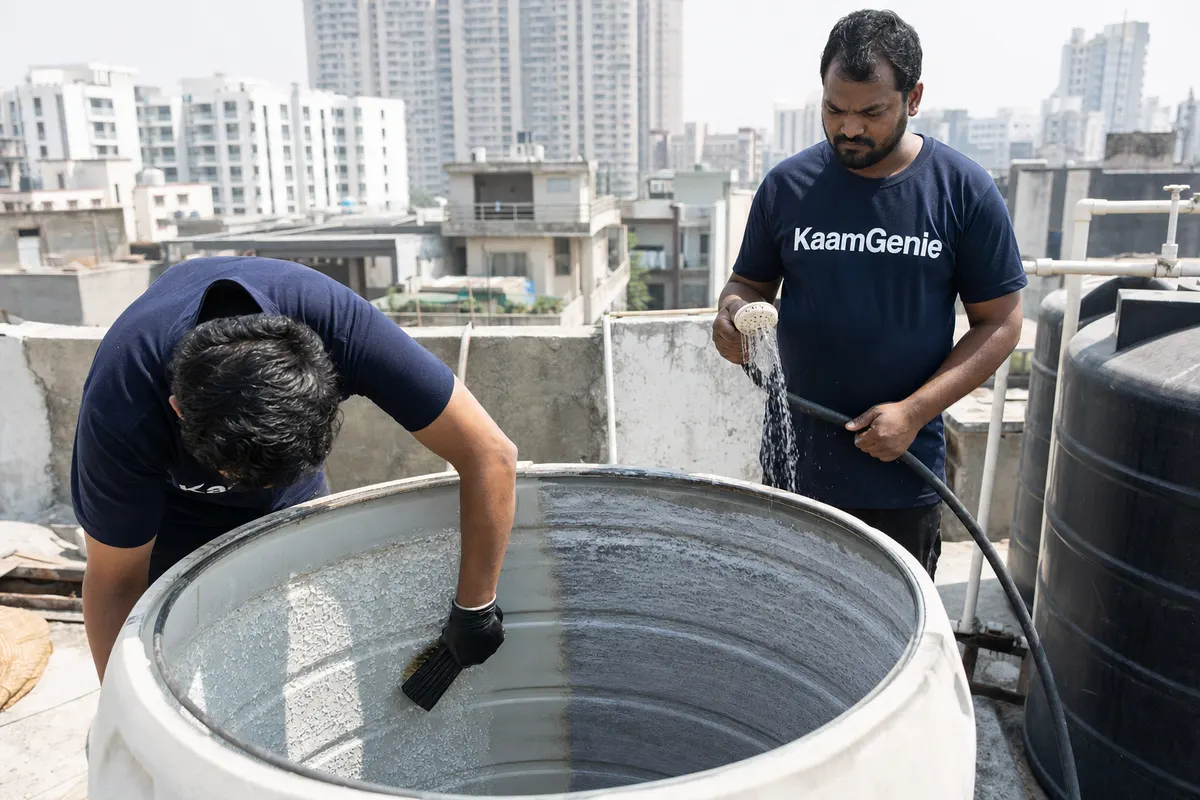
A tank clean will not change the hardness of the water that flows in tomorrow. What it removes is everything collected on top of that hardness: the scale crust, the sludge, the slime and the grit that make bathing water feel worse than it needs to. The full sequence is in the Gurgaon cleaning process guide; for skin and hair complaints, these are the parts that count:
- The murky bottom layer never goes down your bathroom lines. The inlet is shut first, and the settled sediment and fallen scale are drained, scooped and vacuumed out and carried away, rather than being pushed through the shower pipes and geyser.
- The scale crust and its slime come off the walls. Hand scrubbing removes loose scale and the bio-film that grows on it, which is the source of the flakes that block shower heads and the slimy feel some people notice.
- Your part afterwards: clear the outlets. Once the tank is refilled, unscrew shower heads and tap aerators and soak or brush out the crust that is already in them. Otherwise the old grit keeps coming out of clean water for weeks.
Taking grit and scale out of the water you bathe in needs no chemicals, so none are added by default; ask for disinfection if a lab report shows bacteria or the tank has stood unused. You get before and after photos of your own tank on WhatsApp, which are also handy if you are planning a softener. For timing, our guide on how often to clean a tank in Gurgaon explains what decides it for your building.
Not sure if the tank is part of the problem?
Send us a photo of your shower head and the inside of your tank lid on WhatsApp. We will tell you honestly whether a clean will help, and quote a fixed price if it will.
What not to do
- Do not put vinegar, lemon, bleach or descaling powders into the tank yourself. They will not soften the water, wrong doses are easy, and residue ends up on your skin.
- Do not assume the water is the reason for hair fall. If hair is coming out in clumps or patches, or you have other symptoms, see a dermatologist rather than switching filters.
- Do not buy a shower filter without reading what it removes. If the box does not say hardness, it probably does not reduce it much.
- Do not install a softener on a dirty tank. Clean first, or the new unit and its resin work on silty water from day one.
- Do not treat a rash or infection as a water problem. Redness, blisters or broken skin need a doctor.
A sensible order of fixes
If the checklist points at your water, work in this order: see a dermatologist for anything heavy, patchy or painful; clean the tank so the water stops carrying grit; then test the hardness and decide on a softener with real numbers in hand. Cleaning comes before the softener because it is the cheaper step and because a new unit should not start life on silty water. Bath-water tank cleaning starts at ₹699 for an overhead tank and ₹1,499 for an underground sump, fixed before work begins, and you pay after the clean, once you have seen the photos. Send a photo of your shower head on WhatsApp or call +91 95603 66362 and we will tell you whether the tank is likely to be part of the problem.
Frequently asked questions
Can hard water in Gurgaon cause hair fall?
Hard water can make hair feel rough, dull and brittle, so it may break more while combing, and that breakage is easily mistaken for hair fall. True hair loss from the root usually has other causes, such as genetics, hormones, thyroid problems, low iron, stress or recent illness. If you are losing a lot of hair, or it is patchy, see a dermatologist. Softer, cleaner water may help your hair feel better but is not a treatment.
Will cleaning my water tank stop dry skin?
Cleaning removes sludge, scale flakes, slime and grit, so the water that reaches your shower is cleaner and less gritty. That can help if the dirt was adding to irritation. It does not change the calcium and magnesium dissolved in the water, so if hardness is the main reason your skin feels tight, a clean alone will not fix it. Many homes clean the tank first, then decide whether a softener is worth it.
Do shower filters work on Gurgaon water?
Most cartridge shower filters are designed to catch sediment and improve smell. Few of them meaningfully reduce hardness, and on silty tank water their cartridges clog quickly. Read the product claims carefully: if hardness reduction is not stated clearly, assume it is limited. Cleaning the tank first means any filter you add lasts longer, because it is not fighting a layer of sludge from the tank floor.
Is a water softener safe for drinking water?
A softener swaps hardness minerals for sodium, which raises the sodium in the water a little. For most people that is not a concern for bathing, but anyone on a salt-restricted diet should ask their doctor before drinking softened water. Many homes keep a separate unsoftened or RO line in the kitchen. Ask your installer how they will plumb it, and have the tank cleaned before the softener goes in.
Why did my hair get worse after moving to Gurgaon?
Several things change at once when you move here: the water is often harder, storage tanks can be dirtier, the winter air is dry and smoggy, and routines, diet and stress shift. Any of these can affect hair. Use the checklist in this article: if everyone at home is affected and the timing matches the move, water is a likely contributor. If only you are affected, a dermatologist is the better first stop.
How do I test how hard my water is?
Take a sample from your shower or a tank-fed bathroom tap into a clean bottle and send it to an NABL-accredited lab. Ask for total hardness, TDS and pH at minimum. IS 10500:2012 sets total hardness at 200 mg/l acceptable and 600 mg/l permissible for drinking water. Those figures are drinking limits, so treat them as a reference point for comparing your supply and sizing a softener, not as a skin verdict.
Does tanker water make skin problems worse?
It can. Many tankers fill from borewells, so the water is often harder than canal supply, and each delivery adds silt that settles in your tank and gets stirred up by the next fill. If your family notices drier skin or rougher hair in the days after tanker deliveries, note the dates. Letting tanker water settle before bathing and keeping the tank clean both reduce the grit, though not the hardness.
How much does tank cleaning cost in Gurgaon?
Clearing the grit and scale that reach your shower costs from ₹699 for an overhead tank and from ₹1,499 for an underground sump, agreed as a fixed figure before the crew starts. A thick scale crust takes longer, but the agreed price stays the same, and you pay only after the job, once the before and after photos of your own tank are with you. No chemicals by default; disinfection only if you ask.
Sources & references
- Bureau of Indian Standards (BIS): IS 10500:2012, the Indian Standard for drinking water, including limits for total hardness and TDS.
- WHO Guidelines for Drinking-water Quality, 4th edition: background on hardness, calcium and magnesium in drinking water.
- Central Ground Water Board (CGWB): groundwater quality information for Haryana, including Gurugram district.
- NABL: the accreditation body for testing laboratories in India, useful when choosing a water-testing lab.
Last verified: 22 November 2026. If you find any of these links broken, please let us know.