
Quick answer for families
- Older people can be more vulnerable to waterborne infections, and a stomach upset can weaken them faster. Clean storage is a simple, low-effort safeguard.
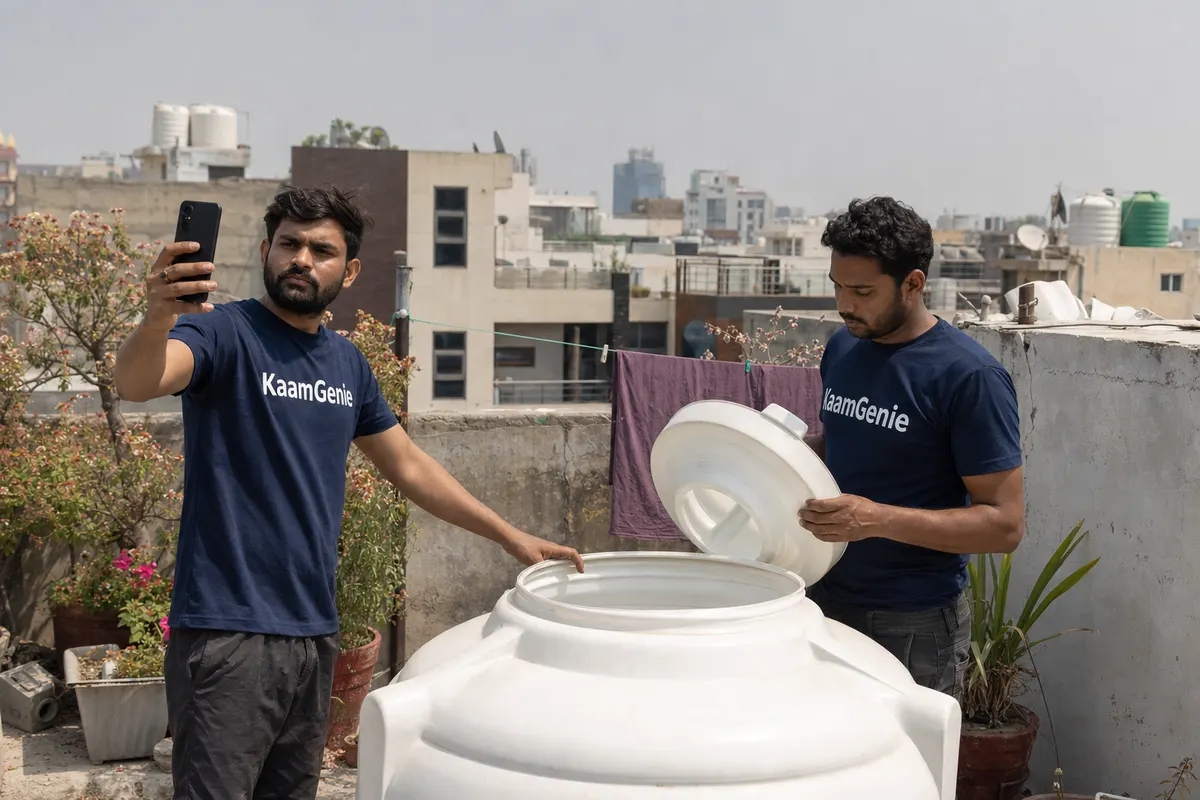
- Your parents should never climb to a rooftop tank or lift a sump lid. Let a trained crew do it and send photos.
- Keep the visit easy on them. A helper or neighbour opens the roof door and fills buckets; your parents only need to know who is coming. If you live away, the booking side is covered in our guide for remote owners.
- Give the carer five simple checks they can do from a tap, without going upstairs.
- Know who controls the tank: the RWA or facility team in a society, the family in a kothi or builder floor.
If a parent has diarrhoea, vomiting, fever or signs of dehydration, call their doctor first. The tank can wait a day; they should not.
Nobody at home should climb to that tank
Our crew does all the climbing and lifting. Your parents’ overhead tank starts at ₹699, agreed before the visit, and the photos come to you so nobody needs to look inside. No chemicals unless you ask.
Many Gurgaon parents built or bought their homes decades ago and still live in them. Their children have often moved for work. That arrangement works well until something on the roof needs attention, and the water tank is one of those things. This post is for the son, daughter, relative or carer who wants to make sure it is looked after, and it is about the parts that are different in an older household: health, the climb and the carer. For the general picture of how tanks are cleaned in the city, start with the complete guide to water tank cleaning in Gurgaon.
Why stored water matters more for older people
Health guidance generally treats older adults as one of the groups more vulnerable to waterborne infections. The immune system tends to weaken with age, many older people take medicines or live with conditions such as diabetes or kidney disease, and a bout of diarrhoea or vomiting can lead to dehydration more quickly than it would in a younger person. That does not mean a dirty tank will make your parents ill. It means the cost of getting it wrong is higher, and the effort of preventing it is small.
A tank that has not been cleaned for a long time collects sludge, silt and bio-film, and a loose lid lets in dust, insects and sometimes worse. Our guide to waterborne diseases and tank cleaning in Gurgaon explains how contamination reaches the tap. The practical points for an older household are simple:
- Drinking water should come through a filter that is serviced, or be boiled, even when the tank is clean.
- The tank water is still used for brushing teeth, washing vegetables, bathing and making tea, so its condition matters even with a purifier in the kitchen. We explain why in tank cleaning vs a water purifier.
- Symptoms need a doctor, not a plumber. If a parent has a stomach upset, fever or seems unusually weak or confused, contact their doctor promptly. Clean the tank as well, but do not treat it as the fix.
Rule one: nobody older goes up to the tank
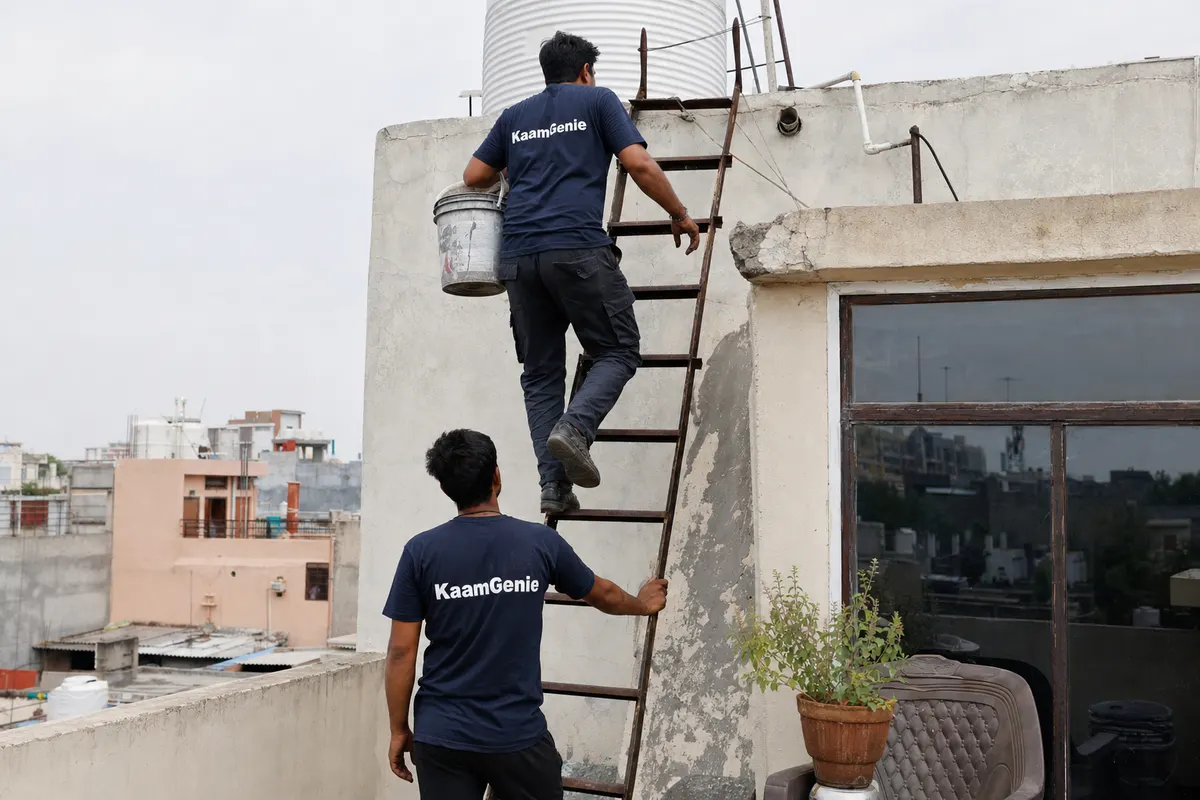
We say this plainly because the access is the real risk. Rooftop tanks in Gurgaon builder floors and kothis are often reached by a narrow iron ladder, a steep stair with no railing, or by standing on the parapet. Underground sump lids in driveways are heavy concrete or iron slabs. None of this is a job for someone in their sixties, seventies or eighties, however fit they feel.
- Ask your parents directly whether they have been going up to “check the tank” or to close the valve. Many do, quietly, out of habit.
- Ask the domestic helper not to go up either unless the access is safe. Lifting a lid and leaning into a tank is a fall risk for anyone.
- Let the crew send photos instead. Every KaamGenie clean ends with before and after photos of the tank on WhatsApp, so nobody at home needs to look inside it.
Five checks a carer can do from the tap
Whoever is with your parents most often, a helper, a nurse, a neighbour or your parents themselves, can do these in a few minutes. Nothing here needs a ladder.
- The glass check. Fill a clear glass from the kitchen tap and hold it against a white plate. It should be clear, with nothing floating or settling after a few minutes.
- The smell check. Smell the water from the bathroom tap and the geyser. A musty, sour or rotten-egg smell is a warning sign.
- The bucket check. Look at the bottom of a bucket after it has stood full overnight. Sand, grit or a brown film means sediment is coming from the tank.
- The kettle check. Brown flakes or a brown stain in the kettle point to rust or silt; white flakes are hard water scale.
- The pressure check. A tap that used to run strongly and now trickles can mean sediment at the tank outlet.
Ask the carer to send you a photo of the glass on WhatsApp whenever something looks off. If the water is yellow or brown, our yellow water guide explains a simple test to find the cause. For the full list of warning signs, see signs your Gurgaon tank needs cleaning.
Decide who does what
Most problems with older parents’ tanks are not technical. They are about nobody being sure whose job it is. This table helps families split it up.
| Task | Best person | Why |
|---|---|---|
| Booking the clean and paying | The son, daughter or relative, from wherever they live | Takes the effort and the haggling off your parents |
| Opening the roof door and the gate on the day | A caretaker, helper or trusted neighbour | Your parents only need to know someone is coming |
| Storing water before the tank is drained | The helper, with the crew if needed | Full buckets are heavy; parents should not carry them |
| Checking the photos and the job | You, on WhatsApp | You see the tank yourself without a trip home |
| The five tap checks | The helper or carer, or your parents if they are comfortable | Catches problems early, from the ground floor |
| Following up with the RWA or facility team | You, by phone or the society app | A child’s request is often answered faster than a polite parent’s |
| Watching for symptoms and calling a doctor | The carer and the family | Health comes first; the tank is only one possible cause |
Where the climb is in your parents’ home
The fall risk sits in a different place depending on the kind of home, so it is worth knowing which one applies before you talk to your parents about it.
In a plotted house or kothi, the family owns everything: usually a heavy sump lid in the driveway and one or more rooftop tanks reached by a ladder or a steep stair. This is the home where a parent is most likely to go up “just to check”, and where the sump lid is heavy enough to strain a back or trap a hand. In an independent builder floor, each floor’s owner has a rooftop tank, so parents living on a lower floor still have to climb past the other floors to reach theirs, often on an unrailed stair; our builder floor guide explains how the shared sump is handled.
In a society or condominium, the reservoir and tower tanks are the facility team’s job, so the main risk moves indoors: a loft or utility tank above the bathroom, reached by standing on a stool. Book that one so no one in the family climbs to it, and leave the common tanks to the RWA; our RWA guide explains how societies schedule them. In older plotted sectors such as Sector 15 and Palam Vihar, our crews often find the rooftop tank on a raised stand reached only by a steep iron ladder, because many of those houses had the tank added years after they were built; that ladder is exactly where an older parent should never be. Families in Sushant Lok call us for the same reason.
The day of the clean, from your parents’ side
The water is off while the tank is drained and cleaned. Plan for your parents to manage without tank water for the 60 to 90 minutes the crew spends on one overhead tank, and a little longer while it fills back up. For a younger household that is a minor inconvenience. For an older parent, it is the hours when a slip is most likely, so plan them.
- Buckets, but not heavy ones. Ask the helper to fill several half-buckets rather than a few full ones, and to place them where they will be used. Parents should not carry full buckets up stairs or across a wet floor.
- A non-slip mat in the bathroom. Bathing from a bucket means more water on the floor than usual. A mat and a stool to sit on make it safer.
- Drinking water within reach. Keep a filled bottle of filtered or boiled water by their chair, especially in summer and for anyone who takes medicines with water. Older people often drink less when the taps are off.
- A time that suits their routine. Late morning is usually easiest: after breakfast and bathing, and well before an afternoon rest.
- No surprises at the door. Older people are rightly wary of strangers asking to go upstairs. We confirm the visit with your local contact, and a call from you the evening before helps your parents feel at ease.
If you are arranging all of this from another city or country, the booking itself (the access person, the photos, and paying only after you have seen them) works exactly as it does for any remote owner; our guide for NRI and out-of-town owners walks through it. For timing between cleans, see how often to clean a water tank in Gurgaon, and if the water has suddenly turned smelly or dirty, see same-day tank cleaning in Gurgaon.
Working with the RWA, caretaker or facility team
In a society or condominium, your parents’ water depends on tanks they will never see. Older residents are often reluctant to complain, so a few practical steps help:
- Join the society’s WhatsApp group or app yourself, if the RWA allows family members, so you see notices about water shutdowns and tank cleaning dates.
- Ask for the last cleaning date of the reservoir and your parents’ tower tank, and whether photos are available.
- Give the guard or caretaker your number as a contact for water issues, so they can reach someone who can act.
- Ask that your parents are told in advance before the water is switched off for maintenance, so they can store water and are not caught out.
Pick a time that suits their routine
Tell us when your parents are usually up and settled, and who the local contact is. We confirm the visit with that contact and send you photos of their own tank.
How KaamGenie cleans the tank in an older household
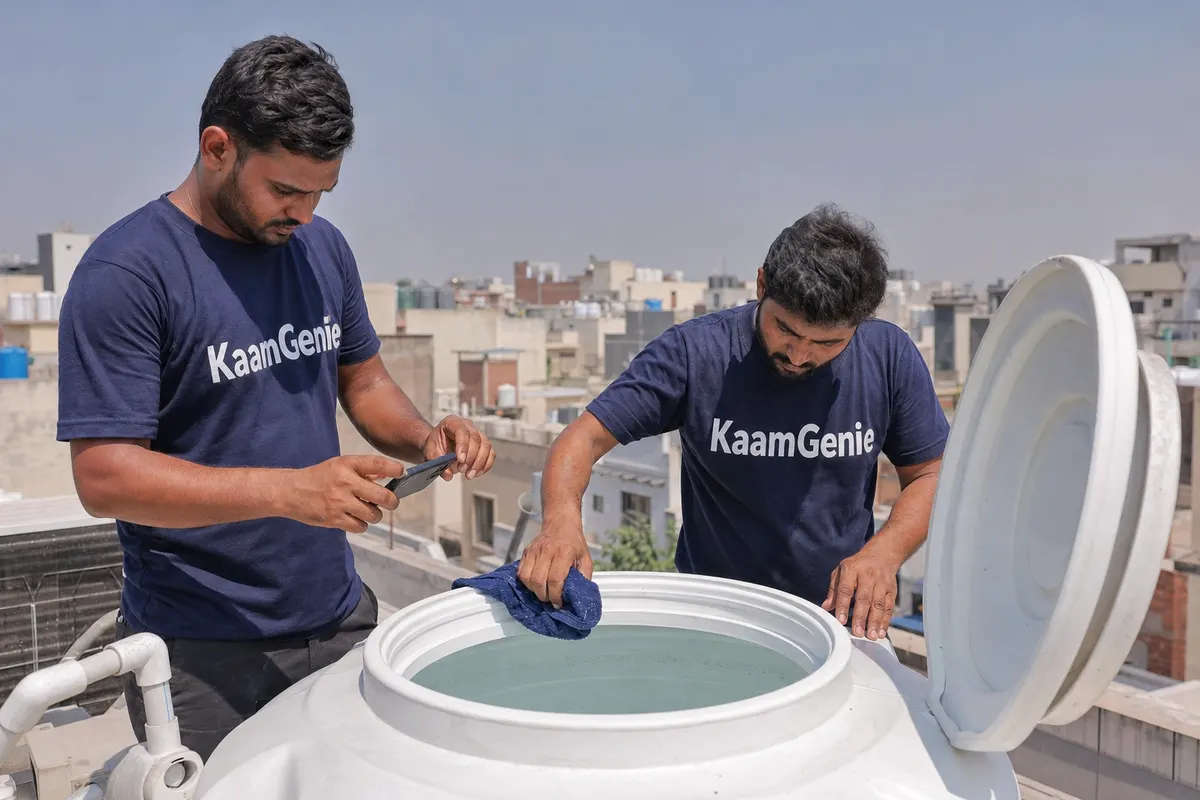
The clean itself is our standard process (inlet shut, drain, de-sludge, scrub, jet wash, wet-vacuum, fresh-water rinse, before/after photos on WhatsApp), explained in detail in the cleaning process guide. Three things matter more in a home with older residents:
- The sludge goes out of the house, not down the pipes. The settled silt is scooped and vacuumed out of the tank, so it does not reach the taps your parents brush their teeth and wash vegetables with.
- Faults are explained in plain words. A loose lid or open overflow pipe is photographed and explained, so the family can arrange the fix without anyone going up to look.
- The first water after the refill. Ask the helper to run each tap for a minute before your parents use the water. In a house with taps on more than one floor, open them from the top floor down, which clears any airlock.
A chemical-free standard clean also means no lingering smell for sensitive noses or skin. If the house stood empty while your parents stayed with you, or the tank was contaminated, a son or daughter can request disinfection, and it is added only on that request. Our disinfection guide explains when it is worth asking for.
What not to do
- Do not let your parents or the helper pour bleach or other chemicals into the tank. A wrong dose can irritate the stomach and skin, and it does not remove the sludge.
- Do not assume the purifier makes the tank irrelevant. The tank water is still used for brushing, bathing and washing food.
- Do not send a casual labourer up the ladder. If someone falls on your parents’ roof, they are left to deal with it.
- Do not leave a parent alone in the house on cleaning day if they are frail or unsteady. Someone should be there to fetch water and answer the door.
- Do not wait for a parent to complain. Many older people put up with odd-tasting water rather than trouble their children. Ask the carer for the glass photo instead.
When you are ready to arrange it
All we need is your parents’ address, a local contact and a time that suits their day. For your parents’ home, the rooftop tank starts at ₹699 and an underground sump at ₹1,499; you hear the amount before we come, and it is paid after the clean, once the photos have reached you. The crew does every bit of climbing and lifting. Homes in DLF Phase 1 and South City are on our routes; other sectors are listed on our Gurgaon tank cleaning page, or you can phone +91 95603 66362 on your parents’ behalf.
Frequently asked questions
Can I arrange my parents’ tank cleaning while living in another city?
Yes. Send us the address and a local contact, such as a helper, caretaker or neighbour, who can open the door and the roof and stay with your parents during the visit. We confirm the visit with that contact, you agree the price beforehand, and the before and after photos of their own tank come to your WhatsApp; payment is due only after you have seen them. Our guide for NRI and out-of-town owners covers the remote side in more detail; the main thing to add for parents is a call from you the evening before.
Do my parents need to do anything on the day?
Very little. Someone needs to open the gate and the roof door, and buckets should be filled beforehand for the kitchen and bathroom while the tank is empty. Your parents should not climb up to watch or lift any lids. If they would like to see the result, the crew can show them the after photos on the phone before leaving.
Is tank water a health risk for elderly people?
Older adults are generally among the people more vulnerable to waterborne infections, and stomach upsets can dehydrate them faster. A neglected tank can contribute to that risk, which is why clean storage and a serviced drinking-water filter are sensible. If a parent has diarrhoea, vomiting, fever or seems weak or confused, contact their doctor promptly rather than assuming it is the water or waiting for a tank clean.
What simple signs should a carer look for?
A glass of tap water that looks cloudy or has particles, a musty or rotten-egg smell from the taps or geyser, grit at the bottom of a bucket left overnight, brown flakes in the kettle, and a tap that has lost pressure. Ask the carer to send you a photo of the glass whenever something seems different. None of these checks need anyone to go up to the roof.
My parents live in a society. Who arranges the cleaning?
The RWA or facility team usually handles the underground reservoir and the tower or rooftop tanks, paid for from maintenance charges. Ask them for the last cleaning date and photos on your parents’ behalf. If the flat has its own loft or utility tank, that is usually the household’s responsibility, and it is worth booking it so no one in the family stands on a stool to reach it.
Should my parents stop drinking the water until the tank is cleaned?
If the water looks cloudy, coloured or smells odd, yes: use bottled or properly filtered water for drinking and cooking until the tank has been cleaned. Even with a clean tank, drinking water in an older household should come through a filter that is regularly serviced, or be boiled, because the tank is only one part of the supply chain.
Is the clean done without chemicals?
Yes. A standard clean uses no chemicals: the tank is drained, de-sludged, scrubbed, jet washed, wet-vacuumed and rinsed with fresh water, so there is no lingering smell to bother sensitive noses or skin. If you want disinfection after contamination, or when the house has been shut for a long period, it is optional and done on request, and we explain what it involves before doing anything.
How much does tank cleaning cost for my parents’ house?
For an elderly couple’s house, the overhead tank is from ₹699 and an underground sump from ₹1,499. The figure is agreed before the crew arrives, so neither you nor your parents face any surprise on the day, and it includes before and after photos sent to your WhatsApp. Nobody asks your parents for money upfront; the bill is settled after the work.
Sources & references
- WHO Guidelines for Drinking-water Quality, 4th edition: notes that some groups, including the elderly, can be at greater risk from waterborne disease.
- National Centre for Disease Control (NCDC): information on waterborne and diarrhoeal diseases in India.
- Bureau of Indian Standards (BIS): IS 10500:2012, the Indian Standard for drinking water quality.
- Gurugram Metropolitan Development Authority (GMDA): the agency responsible for bulk water supply in Gurugram.
Last verified: 22 November 2026. If you find any of these links broken, please let us know.